PathPulse AI has closed a $900,000 pre-seed funding round and grants, backed by a coalition of Web3 and mobility investors including CoinGecko, Brinc, Aptos Foundation, Metalabs Ventures, Prim3.vc, Decubate Ventures, Baselayer Capital, Sensei Capital and several other ecosystem partners. The funding will accelerate the expansion of PathPulse’s decentralized “road intelligence” network, which transforms ordinary vehicles into live data-nodes using only a smartphone.
Data From Ordinary Vehicles Powers Smart-City Infrastructure
PathPulse AI’s core offering enables any driver to contribute to a global mobility-intelligence network simply via their smartphone camera, rather than requiring expensive fixed infrastructure such as traffic cameras. The company’s mobile app named “Scout” or similar applies AI-driven video analytics (powered by computer vision) to extract more than 60 types of road- and traffic-related insights from live driving footage. These include detection of speeding, vehicle issues (e.g., broken tail lights), erratic driving behavior (e.g., abrupt lane changes), and road-infrastructure conditions such as potholes, damaged road markings, speed bumps, and more than 30 additional types of road issues or anomalies.
This crowdsourced, “every vehicle as sensor” approach aims to provide real-time, ground-level intelligence that can feed mapping platforms, urban planning efforts, road-safety monitoring, autonomous-vehicle systems, and broader smart-city applications.
Early Adoption, Deployment and Tokenized Incentives
According to PathPulse, the network already shows significant early traction: 35,000+ registered users; over 2,000 “Daily Active Agents” and 14,000 “Monthly Active Users”; more than 700,000 km of community-driving recorded; and upwards of 125,000 driving-hours of data captured across 15 countries spanning Africa, Asia and Europe.
PathPulse also employs a “tokenized contributor economy”: contributors (“node operators”) are slated to be rewarded via a token named $PULS once launched. The model seeks to align incentives so that citizens (or drivers) who help monitor roads are compensated — potentially shifting road-safety and infrastructure monitoring from costly fixed camera installations to distributed, community-driven networks.
Strategic Collaborations With Blockchain & Smart-City Networks
As part of its growth, PathPulse has formed collaborations with other organizations in the blockchain and smart-city space. For example, the company recently partnered with CRTAINetwork to integrate real-time mobility data into a decentralized data marketplace enabling secure, on-chain data exchange and AI-driven urban applications.
Similarly, in early 2025 PathPulse teamed up with REI Network (formerly GXChain) to integrate its AI-driven urban intelligence solutions with REI’s high-performance, energy-efficient blockchain infrastructure. The goal: build scalable, decentralized smart-city solutions that combine real-time road data, mapping intelligence, and blockchain-based tokenomics for governance and rewards.
Market Context: Rethinking Road Safety and Infrastructure Monitoring
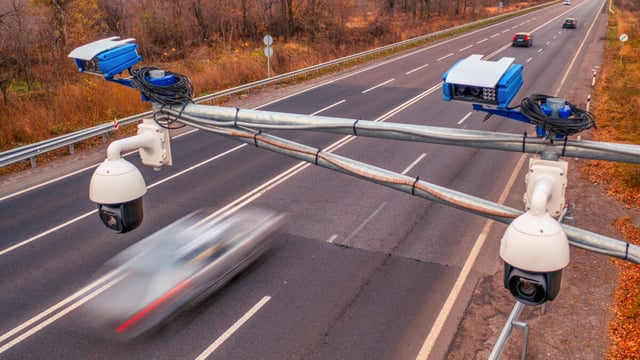
Traditional road-monitoring and traffic-enforcement systems, often centralized, camera-based and limited in coverage, have struggled to provide comprehensive, real-time road safety and maintenance data. By contrast, decentralized, crowdsourced networks like PathPulse’s are aiming for a far wider coverage, lower installation and maintenance costs, and dynamic, real-time updates.
In addition, with rising global interest in smart cities, autonomous navigation, real-time infrastructure monitoring and regulatory pressure to improve road safety solutions like PathPulse’s are hoping to gain traction among city governments, mobility providers, and mapping platforms seeking scalable, data-driven approaches.
Challenges & Considerations Ahead
Despite its promise, deploying a decentralized road-intel network based on crowdsourced smartphone video raises a number of technical and regulatory challenges: data privacy concerns, data quality and validation, legal admissibility of crowdsourced footage for enforcement, and incentive sustainability are among the key risks. While PathPulse claims to have captured and “validated” over $5 million worth of road-safety violations, public documentation around data-validation methods and regulatory alignment remains limited.
Moreover, scaling such a network globally will require widespread adoption among drivers, a nontrivial user-acquisition challenge, as well as cooperation from municipalities, regulators, and mapping providers to integrate PathPulse’s data into existing systems.
What This Means for Cities, Mobility and Smart-City Stakeholders
For city planners, transport authorities, mapping and navigation companies, and smart-city developers, PathPulse’s approach offers a potentially cost-efficient, high-coverage alternative to traditional infrastructure — especially in regions where fixed monitoring is lacking. For Web3 and blockchain infrastructure stakeholders, the platform represents a concrete real-world use case that combines decentralized data contribution, tokenized rewards, and AI-driven analytics.
If PathPulse succeeds in scaling — maintaining data accuracy, managing privacy and regulation, and sustaining user participation — it could become an important infrastructure layer for next-generation mobility, urban planning, and decentralized intelligence networks worldwide.