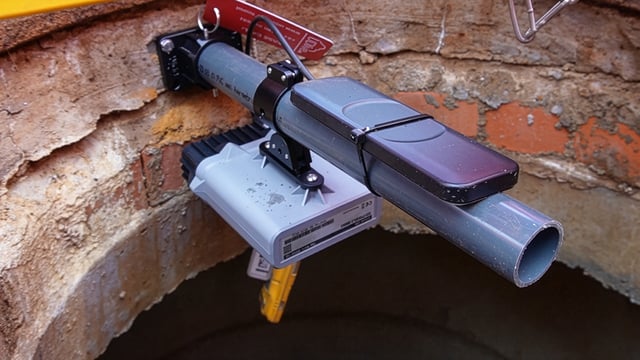
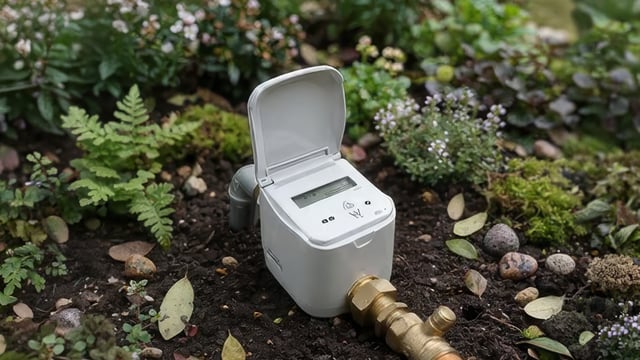
The City of Toronto is set to begin a three-year, CAD 103 million (approximately USD 75 million) programme in April 2026 to replace every one of its 470,000 water meter transmission units (MTUs) after widespread premature battery failures left roughly 70 per cent of the devices non-functional. The initiative represents one of the largest single municipal metering infrastructure overhauls currently underway in North America.
Battery Failures Accelerate a Decades-Long Timeline
Toronto deployed its automated meter reading (AMR) network between 2009 and 2015 as part of a sweeping modernisation of the city’s Water Meter Programme. The MTUs, manufactured by Aclara Technologies (a subsidiary of Hubbell Incorporated), were designed with a 20-year lithium-ion battery and were not expected to require replacement until at least the late 2020s.
That timeline collapsed well ahead of schedule. According to the city, battery depletion has been the primary cause of the failures. As of autumn 2025, more than 70 per cent of MTUs had already stopped transmitting data, with an additional 11,000 to 12,000 units failing each month. City officials estimate that all remaining units will be non-functional by September 2026 if left unreplaced.
The water meters themselves continue to accurately record household and commercial consumption. However, once an MTU fails, the city can no longer receive automated readings and must instead issue estimated bills based on historical usage patterns.
A Continent-Wide Problem, Not a Toronto Anomaly
City officials have stressed that Toronto’s experience is not isolated. Premature MTU battery failures tied to Aclara equipment have been documented in municipalities across North America, including Moncton (New Brunswick), Somerville (Massachusetts), Canton and Middletown (Ohio), Asheville (North Carolina), Georgetown, Plano and Houston (Texas), Melbourne (Florida), and San Francisco (California).
Minneapolis provides a notable parallel. The city awarded Aclara a USD 16.5 million contract in 2017 to install 47,000 residential meters and transmitters, only to discover widespread battery failures during a COVID-related installation pause in 2020. Minneapolis ultimately halted the rollout and opted to revert to an older radio-based meter reading approach with a different contractor, having already paid Aclara USD 9.65 million.
Plano, Texas, offers another cautionary example. The city entered a USD 10.2 million contract in 2019 for Aclara-based metering equipment, only to discover early battery depletion by late 2023. When the vendor attempted a firmware fix in November 2024, the update itself was defective, disabling more than 73,000 transmission units in a single incident. Plano has since approved USD 765,000 in emergency funding to revert to manual meter reading and is exploring legal avenues for cost recovery from the vendor.
Neptune Technology Group to Lead Installations
Neptune Technology Group (Canada), which managed the original city-wide AMR deployment, has been contracted to carry out the replacement installations. The company is a well-established player in the Canadian municipal water sector, having led similar large-scale meter projects for Ottawa (85,000 meters), Moose Jaw, Orangeville, and several other Ontario and Western Canada municipalities.
Aclara Technologies will supply the updated, compatible MTU hardware along with field programming tools and ongoing maintenance support. The city has noted that Aclara is the sole supplier of devices compatible with Toronto’s existing metering infrastructure. The devices are manufactured in Mexico and shipped directly to Canada.
The replacement programme will be rolled out across nine geographical zones, prioritised by failure rates, duration on estimated billing, and volume of customer accounts. The city plans to replace up to 20,000 units per month, with the full programme running from April 2026 through December 2028. Each individual replacement appointment is expected to take 20 to 30 minutes, at no charge to residents.
CAD 350 Million in Savings Offset the Setback
Despite the costly failure, the city has pointed to the broader economic case for automated metering. Toronto estimates that its AMR network has generated approximately CAD 350 million in operational savings since reaching full deployment in 2015, primarily through the elimination of manual meter reading and improved billing accuracy.
Toronto City Council formally approved the replacement strategy in May 2025 through the adoption of report IE21.2. The CAD 103 million budget will be funded entirely from the city’s existing capital budget. The programme builds on an earlier emergency procurement of CAD 3 million authorised by Council in November 2024 to source additional MTUs from Aclara for new construction and high-volume accounts while the long-term strategy was finalised.
Industry Context: A Growing Global Market Faces Reliability Questions
The global smart water meter market is expanding rapidly, valued at approximately USD 4.8 billion in 2025 and projected to surpass USD 8 billion by 2030, according to Mordor Intelligence. North America remains one of the largest regional markets, driven by ageing infrastructure replacement programmes and regulatory pressure to reduce non-revenue water losses.
However, Toronto’s experience highlights a significant risk in the sector: the long-term reliability of battery-powered transmission devices. As North American utilities increasingly shift from legacy AMR systems toward full Advanced Metering Infrastructure (AMI) with two-way communication capabilities, procurement decisions around battery longevity, vendor lock-in, and lifecycle costs are drawing greater scrutiny.
Several major North American metering programmes are underway simultaneously. San Antonio Water System is deploying 300,000 Diehl ultrasonic meters as part of a USD 215 million initiative, while New York City’s Department of Environmental Protection is upgrading 600,000 endpoints from AMR to AMI. In the UK, contracts such as Thames Water’s GBP 180 million smart meter award and Southern Water’s GBP 338 million deal reflect similar scale.
Toronto’s programme will serve as a closely watched case study for other utilities evaluating the true lifecycle cost of AMR and AMI investments, particularly those relying on battery-dependent transmission hardware from a single vendor.