 in Barcelona
 3 to 5 Nov 2026
Come with us as we head back to Marseille, France. This time to meet with a water utility that's developing a range of IoT -based services, some that have nothing to do with water use cases. It's innovation made possible by this utility's willingness to test a variety of connectivity. Proprietaries of Gigahertz Star Network by Byrds, MBIOT, Lorwan and Sigfox. demonstrating a pragmatic approach to simplifying and accelerating technology deployments rather than adhering to specific ideology. It's a journey that began in 2017. Eau de Marseille, a subsidiary of the French water utility Veolia that serves municipalities and private businesses, undertook a major IoT project, installing 300 ,000 AMI water meters over a three-year period. The project replaced more than no one. 90 % of ex -Marseille -Provence Metropole's water meters in an area with a population of just over a million people. It represents an investment of about 25 million euros and then there are costs of operation each year that will allow us to manage this system for 15 years. The municipality demanded extremely reliable connectivity as part of this expenditure. So Eau de Marseille turned to Byrds. Another Veolia subsidiary specialised by Veolia. virtualizing an environmental IoT. Byrds administered its sub-Gigahertz star network, a private network that provided Eau de Marseille a high rate of coverage at a time when telcos and public IoT network operators were not committing contractually for this. but to ensure maximum reliability it also opted for a double connectivity deploying a backup connection in the event the primary one failed. We have worked with the engineers of the BIRS company to put in place a redundant system. So the choice that we have made together concerns a connectivity in 868 MHz routed by repeaters. More precisely, this radio module... We communicate two times per day these information to the little modules called repeaters. Today, we have practically 12 .000 repeaters installed on points eau and candelabra in different cities. A repeater can be relayed to 32 computers, which allows us to transition these information daily to the concentrators. So on the toits of the cities, we have positioned almost 200 of these orders. industriels qu'on appelle des concentrateurs ou des gateways. Ce sont ces concentrateurs qui vont récupérer en permanence toutes les informations de consommation de tous les abonnés du service et qui vont ensuite, avec des antennes qui vont être connectées ici, renvoyer toutes ces informations en 3G, 4G sur le cloud. Nous avons souhaité en parallèle mettre en place un backup de communication en LoRa qui permet en cas de défaillance du matériel. to be able to have security and increase indexes on the entire territory. And it's quite efficient. Now at the heart of this dual connectivity approach is the ability of Bird's solution to communicate simultaneously through Bird's proprietary network and LoRaWAN. The network not only powered the AMI water meters, but many other sensors and devices that underpinned other use cases. cases. For example, the utility used the network to monitor energy consumption. It collected electric and gas meter consumption data for industrial clients, who could then access that data through a single application designed by Byrds. The utility also connected about 1 ,500 Gutterman NBIOT acoustic loggers to the network to detect leaks on its drinking water distribution network. Each loggers cost around 400 euros a piece. Some of these devices are placed in sections on the network prone to leakage for several months. Others are part of campaigns in which hundreds of acoustic loggers are rotated at a time. The data is then visualized and analyzed in an online app provided by the sensor's manufacturer. Annually, it costs a few euros per sensor. This is a look at the app. Every green dot corresponds to an acoustic sensor and the red to a potential leak. In this case, the app determines the location of the leak with a precision of 10 centimeters. That allows the team to verify the potential issue and conduct work in the exact area if needed. Recently, a utility has put its IoT infrastructure and knowledge to work in the Provence region, deploying a connected irrigation solution to assist winemakers battling against unpredictable rainfall. Claude de Saint Magdalene is among the wineries that has deployed the solution, which consists of a weather station, smart meters, water pumps, and irrigation pipes. via the vines, which is raccorded here to the little source of Solem. This module will then communicate. We have all these information on the passerelle which is located here. This passerelle has a 3G connective, so with a GSM, it will be able to send data so that the client can consult at distance. internet, on his interface, the different information of irrigation of his site. So here is the Meteo station, which will allow the Vigneron to follow the quantity of wind with its anemomètre. Here we have a pluviomètre, and in parallel we have a sonde of humidity, which is plunged into the earth and which measure permanently the quantity of water, so the humidity, available in the earth, available for the pieds of the Vignes. On voit de ce côté le module radio qui va communiquer en l 'aura avec la passerelle pour transmettre toutes ces infos. The winemaker can then access the collected data via an online app that shows real -time status of its vineyard conditions. He can also use the app to regulate the water pumps and schedule irrigation. The IoT solution amounts to an initial cost of 3000 euros for installation and a recurring fee of around 250 euros. a month for maintenance across the entire vineyard it's a business model that not only serves vineyards but flower nurseries too as seen in the municipality of cassis it ranked the highest among flowery towns in 2018 as it looks to maintain that honor now the town must battle the weather similarly to the wineries it turned to eau de marseille to develop an automatic water system now deployed it uses the same application as the one we saw in the vineyards. Now five of those cabinets have since been installed and it cost around 5,000 euros per unit for the municipality. And we can expect that number to continue to rise. Changing and unpredictable weather patterns have cities increasingly turning to IoT as a fix. Eau de Marseille sees wastewater as another big opportunity. The utility is now deploying three types of sensors to monitor the infiltration of rainwater, water fouling, and the level of hydrogen sulfide. The sensors operate on Sigfox connectivity and cost between €400 and €700 apiece, with a current fee of around €50 per year. Today, it has deployed… around 30 of those sensors, with many more on the horizon. For more coverage on how that project unfolds and more stories about this utility, be sure to stick with Current Insights.
Originals Meet the utilities Water
Eaux de Marseille Leverages the Full Potential of IoT
ConnectivityLoRaWANMarseilleMeet the utilitiesSmart meteringWater
In this video
-
 Lionel Ercolei
Innovation Director, Eaux de Marseille
-
 Sebastien Rabbia
Head of the Tertiary Industry Department, Eaux de Marseille
About this video
In this video we speak with Lionel Ecolei and Sebastien Rabbia from Eaux de Marseille, a water utility in southern France under Veolia, and its deployment of 300,000 smart water meters. These meters are leveraging a dual AMI system, provided by Birdz, a sister company. This system is notable for its use of proprietary connectivity technology backed by LoRaWAN, ensuring reliability and efficiency in data transmission.
Central to the video is the exploration of how the data and experience gained from this large-scale implementation are being leveraged by Eaux de Marseille. The utility is not just managing water resources but is expanding its services to encompass a broader range of environmental management tasks. These include monitoring energy usage, irrigation in vineyards, flower watering, and even wastewater monitoring. Such diversification in services showcases the utility’s commitment to environmental sustainability and resource management.
The video is particularly insightful for municipalities, businesses involved in environmental management, and entities interested in smart city technologies. It sheds light on the practical applications of IoT (Internet of Things) in managing natural resources and provides a real-world example of digital urbanization in action. By illustrating the use of smart meters for various environmental management tasks, the video serves as a case study for the effective use of technology in urban settings.
Professionals and decision-makers in the urban planning, environmental management, and utility sectors will find this video especially valuable. It offers practical insights into how smart technology can be used to enhance resource management and environmental sustainability. The video serves as a testament to the evolving role of IoT and smart systems in urban environments, encouraging viewers to consider the potential applications in their respective fields.
Read the transcript machine-generated
More from Meet the utilities
See all

More in Water
See all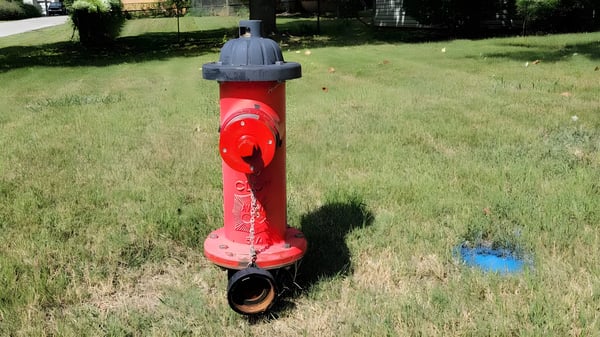 5:56
Kansas City Water Turns Fire Hydrants Into Leak Finders
 6:34
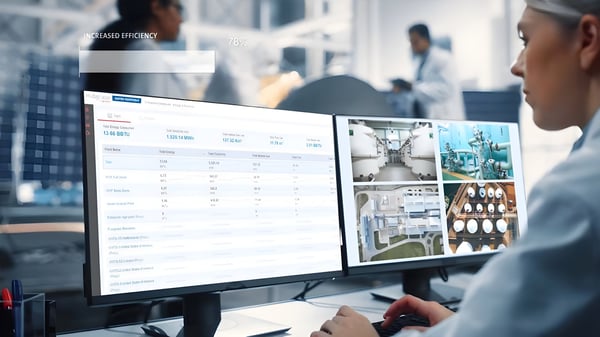
AI Set to Change Water Plant Operations
 7:03
UK Turns to Digital to Monitor Wastewater Network
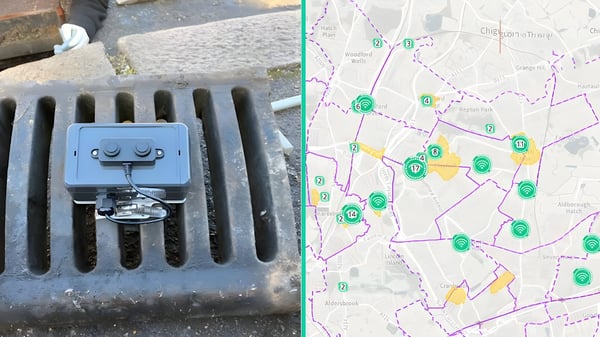 6:24
How a London Borough is Using IoT to Curb Urban Flooding
 6:49
Data Sharing Enhances AMI Rollout for Cities, Utilities, Customers
 6:20
Using GeoAI to Calculate Wastewater Taxes in Cologne
Latest news in water
All news- Ameresco Completes $5.9M Water Metering Upgrade Covering 8,000 Meters In Mustang, Oklahoma29 Oct 2026
- Houston City Council Raises Sensus Water Meter Contract Ceiling To $43.5M27 Oct 2026
- Riba-roja del Túria Pilots Four Grades Of Reclaimed Water Under €10M CircSyst Project27 Oct 2026
- Saanich Starts Five-Year Upgrade Of Water Meter Reading Equipment At 30,000 Properties25 Oct 2026
Kurrant advisory
Planning a water project? Talk to Kurrant.
Behind these interviews is Kurrant's advisory team, working with utilities, cities and the companies that serve them.
- Strategy AdvisoryKurrant is actively involved in resolving the challenges that cities, utilities and industry players are facing.
- M&A AdvisorySmart city and utility expertise for successful deals, turning insights into strategic gains.
- Engineering & ProcurementBetter engineering and procurement decisions, by identifying and developing digital and IoT solutions across use cases.
Or write to us: contact@kurrant.com
Send us a message