 in Barcelona
 3 to 5 Nov 2026
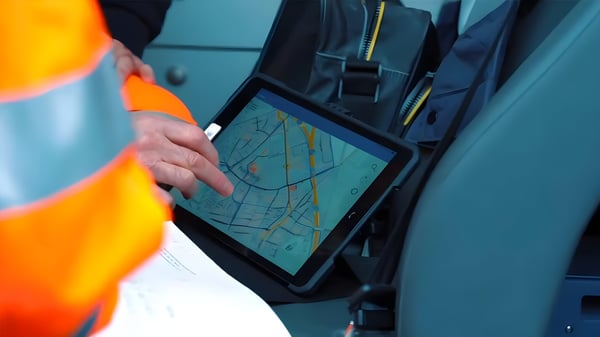
as the world experiences more and more extreme water events like droughts a big focus has been put on water loss and utilities are always on a tight schedule to find and repair leaks but finding leaks is no easy task as water networks can be incredibly large anglion water which has 39 ,000 kilometers of water pipe registered losses of some 182 .6 megalitres of water a day in 2022. To find leaks in urban areas they deployed some 800 ,000 smart water meters but now that the urban settings are under control the utility is looking to find less obvious yet crucial leaks. Leaks in main pipes in rural areas. Despite the difficult task after consideration and exploration the UK utility realized that the solution to their sub ground level issue was up in already invested a lot of a lot of money in in anglia and in in our advanced technology in city and urban environments we've got the world's largest fixed network hydrophone monitoring system for example but again that's mainly targeted at the urban environment so we approached we approached our supplier and we wanted to develop with them the technology from satellites to be able to identify leakage specifically large lengths of rural trunk mains and large diameter transfer pipes across agricultural land. With satellites they can cover large areas it's harder to find leaks in these pipes because they traverse vast agricultural lands roads rivers and railways. The great distances make it hard to deploy smart technology like sensors so they needed a solution that would holistically analyze a large geographical area for the satellite exploration and water turned to Earth observation data provider Asterra, which uses a technology similar to that used to find water on Mars. So this particular solution uses something called synthetic aperture radar and that synthetic aperture radar basically can detect underground water escaping potable water by analysing the interference. of the chlorinated compounds in treated water and how they then interact with the subsoil and it uses L -band radar. So basically it's radar using the L -band frequency that can detect chlorinated compounds up to two or three meters underground which would or should only be present in chlorinated water. It's then coupled to our supplier's patented algorithm. and patented analysis techniques to then produce points of interest for us to be able to send our technicians to investigate using some of our other advanced pieces of equipment. Asteria uses different satellites depending on the time of year to scan the surface for leaks. The solution works best on big leaks, but it can still identify small ones. However, it has an accuracy of 150 metres, so when it comes to a smaller leak, the satellite can identify... it but it can't pinpoint exactly where it is so the utility then has to use other methods like cameras inside the mains to follow up the investigation and narrow down the location of the burst pipe to then start an excavation we actually use in conjunction with the satellites when we follow up the investigations we actually use leakage sniffer dogs we also use drones and demographic imagery as well as well as some of the other on on board equipment that our leakage technicians carry you have to use all technology actually you can't you can't use one or another when you're trying to manage leakage to the levels that we are anglian water runs two scans per year one after summer to find out if the movement of soil during the dry season has caused any damage to pipes and one after winter in case of freeze damage since they started using the solution the utility has seen positive results since we've been running this specific project that's targeting rural rural trunk main leakage we found two just over two and a half million liters a day in leakage when you apply the cost -based model against that it comes out about 125 to 150 000 pounds per megalitre found that's roughly so far the investment that we've we've put in um In real terms, if you compare some traditional techniques, that's very good value for money. That's about a tenth of the normal cost of some other techniques. For the future, Anglian Water is exploring the use of the satellite solution for wastewater leaks as well to find sewer bursts on rising mains, but it's also looking at other technologies. It's been very much around water recycling, to be honest with you, for many years. clean water operations and water recycling operations have been as far apart as they could possibly be just because of the nature of the beast. You know, you can't mix clean water personnel and dirty water personnel because of hygiene factors, etc. But when you start to incorporate technology that's in space, there's no hygiene risk there at all. So starting to develop digital twins with water recycling networks and water networks is a really key part. of what i'm working on at the moment for james it is key to use different solutions to find leaks so from a digitalization perspective as more and more solutions are incorporated and more platforms are being used the utility is now looking to have a more centralized system where all the data from all their sources and all the historical data is ingested and integrated to make data more insightful and allow for a clearer decision-making process something we see many cities and utilities struggle with and be wary of when building their digital strategies.
Originals Meet the utilities Water
How Satellites are Helping Anglian Water Find Leaks
ConnectivityMeet the utilitiesSatelliteWaterWater distribution monitoring
In this video
-
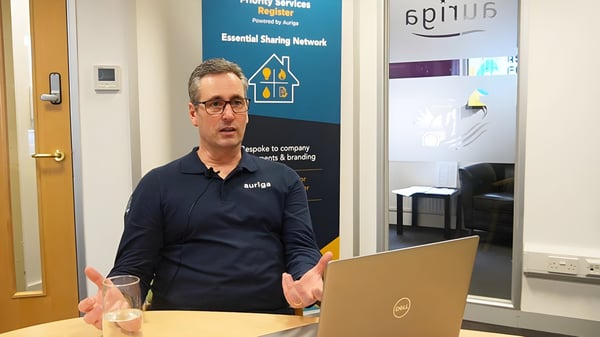
 James Hargrave
Regional Leakage Operations Manager, Anglian Water
About this video
In this video, we delve into the pressing challenge faced by utilities in conserving water resources, particularly focusing on the detection and prevention of water leaks. We begin by highlighting the significance of early leak detection in urban settings and the role smart water meters have played in this arena. The narrative then shifts to the more daunting task of locating leaks in rural areas, a task complicated by the vast distances and differing infrastructure.
Our exploration takes us to the UK, where we examine the innovative approach adopted by Anglian Water, one of the region's primary water utilities. Anglian Water has embarked on a pioneering journey, harnessing the power of satellite technology to tackle the rural leak detection challenge. This technology, provided by the company Asterra, represents a significant leap in managing water resources efficiently in less accessible areas.
Central to our video is an in-depth interview with James Hargrave, the Regional Leakage Operations Manager at Anglian Water. Hargrave provides valuable insights into how satellite technology is revolutionizing the way Anglian Water identifies leaks in main pipes across rural landscapes. He elaborates on the operational aspects, the efficiency gains, and the impact of this technology on their overall water management strategy.
Furthermore, the video sheds light on various other solutions and methodologies employed by Anglian Water to augment their leak detection capabilities. These diversified approaches demonstrate the utility's commitment to addressing the challenges head-on and their proactive stance in adopting new technologies.
Looking ahead, we delve into what the future holds for water leak detection and management. Hargrave shares his perspectives on the evolving technologies, the potential for future innovations, and the strategic directions Anglian Water is considering to enhance their efficiency and sustainability in water management.
Overall, this video serves as an essential resource for understanding the complexities and advancements in the field of water leak detection and management, especially in the context of rural infrastructure. It offers a comprehensive overview of the challenges, solutions, and future prospects, making it a must-watch for industry professionals, environmentalists, and anyone interested in sustainable resource management.
Read the transcript machine-generated
More from Meet the utilities
See all

More in Water
See all 5:56
Kansas City Water Turns Fire Hydrants Into Leak Finders
 6:34
AI Set to Change Water Plant Operations
 7:03
UK Turns to Digital to Monitor Wastewater Network
 6:24
How a London Borough is Using IoT to Curb Urban Flooding
 6:49
Data Sharing Enhances AMI Rollout for Cities, Utilities, Customers
 6:20
Using GeoAI to Calculate Wastewater Taxes in Cologne
Latest news in water
All news- Oman Water Ministry Signs Nama Deal For LoRaWAN Smart Meters On 1,000 Groundwater Wells11 Nov 2026
- Suez And Cornerstone Host Wize Water Meter Network On 100 UK Mobile Towers11 Nov 2026
- Intellihub Acquires Taggle Systems For A$50M To Add Water Metering Network And Aqualus Software8 Nov 2026
- Algarve Approves €9M ERDF-Backed Smart Water Telemetry Project Across 16 Municipalities8 Nov 2026
Kurrant advisory
Planning a water project? Talk to Kurrant.
Behind these interviews is Kurrant's advisory team, working with utilities, cities and the companies that serve them.
- Strategy AdvisoryKurrant is actively involved in resolving the challenges that cities, utilities and industry players are facing.
- M&A AdvisorySmart city and utility expertise for successful deals, turning insights into strategic gains.
- Engineering & ProcurementBetter engineering and procurement decisions, by identifying and developing digital and IoT solutions across use cases.
Or write to us: contact@kurrant.com
Send us a message