AI Agents: Gamechangers for Cities and Utilities?
View transcript auto-generated
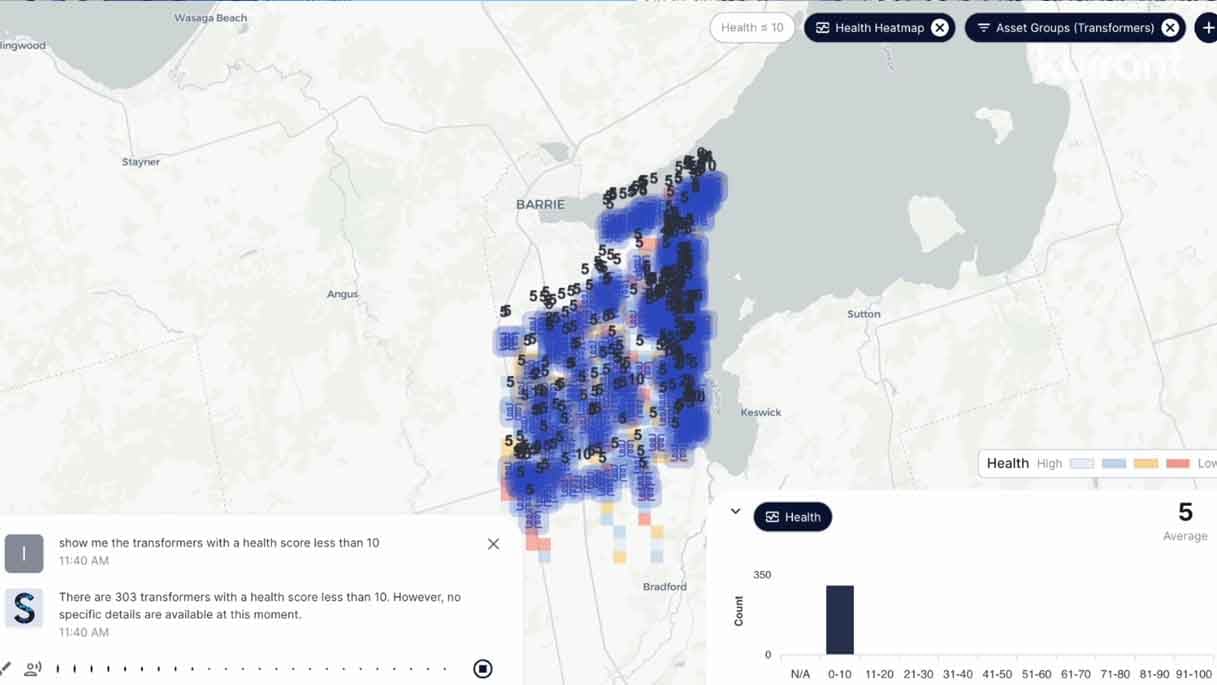
When we think about AI in the smart city and utility industry, it's mostly about machine learning and computer vision. But now, another type of AI is generating significant interest across the sector. AI agents. An AI agent is a software system that, through artificial intelligence and a defined goal, interacts with its environment, gathers data, decides on a course of action, and performs tasks- all autonomously. These capabilities have not escaped the attention of utilities, whose interest has been piqued by these new AI tools. To explore how AI agents can augment utility asset management, we spoke with Senpilot, a Canada based startup founded in 2023 that has created an AI agent for utilities. Mike, when I saw your AI agent Pilot at Distributech, I was like, wow, that's something. If I were to describe it very plainly, I would say it's kind of like a ChatGPT but for utility use cases. your team showed me how it works at Distributech. I mean, they wrote, what assets are around this one, and in seconds you could even see it on the map what was around that specific asset. And then they said, can you write a report? And boom, in seconds it was done. Can you tell me about these AI agents. Pilot is able to do, a lot of junior tasks, a lot of internship tasks, some senior tasks, such as doing basic power flow analysis, monitoring your grid using satellites and other tools, able to understand for customer support whether or not you can install an EV charger. Given, the last 12 months of meter feeder transformer data. So will it constrain your system or not? It can bring new capabilities as well. Already, think of climate change and this sort of AI models and databases you need. So, our tool is less of a tool and more of like a fake human. So it’s kind of like a fake human in terms of it being autonomous. But what about use cases? And also how do these AI agents help the actual humans that work at a utility? I'll tell you some of my favorite, because there's 140 use cases right now for an AI engineer. Number one outage management. In every utility, you'll have your data in multiple places, and the solutions out there require humans to use them. And so the dimension of time becomes critical. And that's again why I think it's a great use case for AI agents. AI agents can use all those tools. Run the analysis, find your most likely areas of outage, use tools that you probably don't have, such as satellite data, to help triangulate those pockets, and then even do pretty tricky calculations, such as planning the rolling of your trucks. Number two, asset reports and just reporting in general. If you think of AI agents, as data scientist, it's a fantastic use case and a lot of utilities are saving hundreds of thousands to honestly, some of them hundreds of millions on the resources there because Pilot can actually give you that data since it has access to a few different systems. It can give you that data in the Excel or CSV file format you want, or another format if you're doing machine learning. Our very first partner, who's the most embedded in the system, has been using it the longest, they’re the greatest case study we have. I mean, you're talking about 18% of all the engineers time free. And so that's like getting a full day back a week. It's kind of like the know it all colleague in the office. But this one actually helps. So you've developed this AI tool. Hey, Mike, there are 303 Transformers with a health score less than ten. What should we look at next? Have you encountered any challenges when deploying or any kind of resistance? All of the challenges come down to one word, which is trust. And so for us, it's been the challenge has been trust in knowledge. Given none of us are electrical engineers, it's been trust in cybersecurity because we are on cloud only. And that's been a sore spot. And then trust in roadmap and long term partnership. And so those have been the three challenges we've seen in this industry. With the knowledge in particular, we don't have an electrical engineering background. We rely on our advisory council who are senior VP engineers with experience at many utilities over their career. They're helping us with those parts. With the cybersecurity, we have to build the trust by having a higher level of cybersecurity than any other partner they work with. Big utilities have put their focus on these AI agents and are now starting to explore the concept. And you've caught the attention of big companies like EDF. But what's the type of utility you think will rely more on your solution? Utilities like National Grid, they can afford to spend $20-30 million a year on building their own custom AI solutions. But a lot of our partners can't do that, of course, especially the smaller ones. Even at a million homes a year, regulators don't really like to give you budget for innovation. And so somebody is going to have to be building this for the masses. And that's where we feel like it'll be our playground to help corral and build cool things. Last question is, you've been properly around as a team for about 11 months, which is when you raised $2.5 million with Afore Capital and Hyperplane. What has been your biggest learning? I think we did have one big learning. Or two big learnings. Number one, it's all about demo and in person in this industry more so now and then. Number two is spend less time on UI. We've heard from everyone that's come by and meet us at our booth, they've played with our platform or used our platform, that our UI is beautiful. It's like very simple to use and powerful. And I think that's a big failure because it means we've clearly spent too much time on something that might not matter, since this industry is willing to use tools that look horrendous. AI agents pose an incredible opportunity for utilities and even cities. The speed at which tasks and reports are performed is great. I saw it at Distributech. Freeing so much time from utility and city workers will mean that workers will be able to focus on other tasks, and municipalities and service providers will be able to do more with their budgets. So we expect it will be a matter of time before we see more and more utilities expressing interest in AI agents. It will also be interesting to see how a larger asset management solution providers react to these innovations. Will they acquire innovative startups like Senpilot or develop their own AI agents?


📰 Latest News



🎬 Kurrant Originals



🎥 Recent Event Coverage


🎯 Featured Case Studies
Real client work behind the news — strategy, M&A and engineering projects we've delivered for cities and utilities.


Stay in the Loop
Get smart cities and utilities insights delivered your way. Choose your channel
Join our WhatsApp Channel