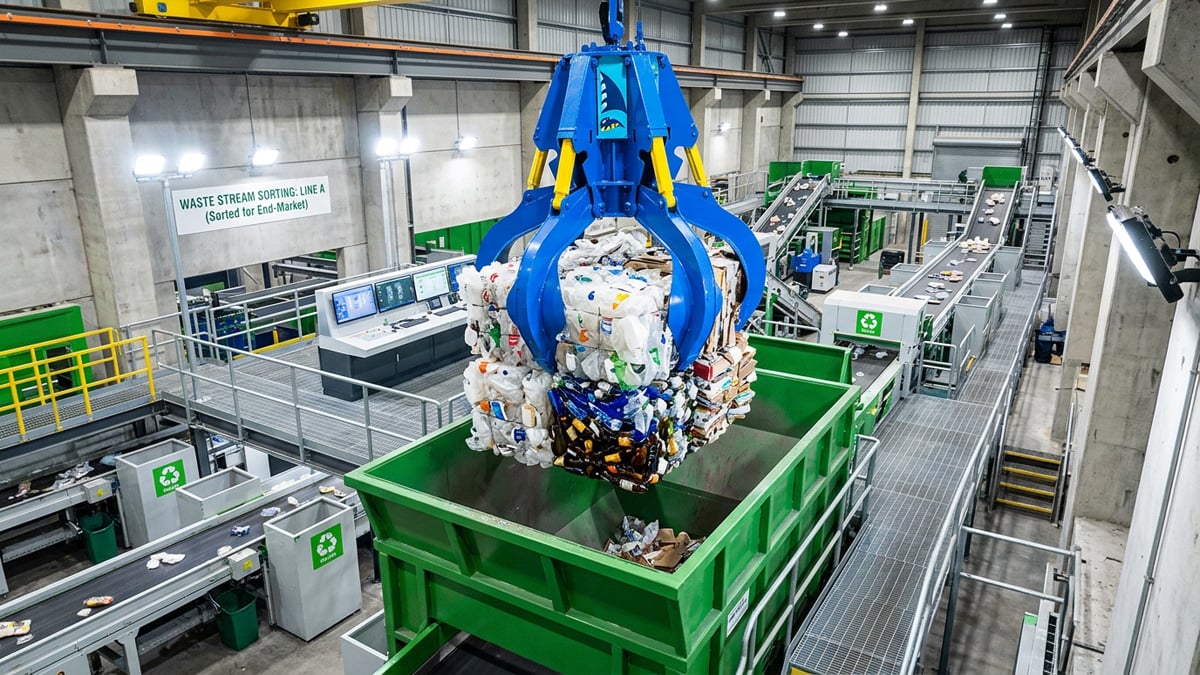
Jaipur Robotics, a Swiss computer vision company founded in 2024, announced on 7 September 2026 that it has closed a €4.3 million seed round co-led by EquityPitcher Ventures and High-Tech Gründerfonds, the German public-private seed fund whose investors include the Federal Ministry for Economic Affairs and Energy and KfW Capital. The company, headquartered at Technopole Ticino in Manno near Lugano, will use the capital to deploy its AI operating system for waste-to-energy bunkers in more plants across Europe and Asia. Jaipur puts the addressable fleet at more than 3,100 waste-to-energy facilities worldwide in a market it values at roughly €40 billion, most of which still run on manual visual inspection.
A Plastics Sorting Startup That Pivoted Into The Bunker
The company was founded by chief executive Ermes Zamboni and chief technology officer Nikhil Prakash, and traces back to an academic programme at ETH Zurich. It entered the market with an automated plastic sorting product before shifting to energy-from-waste applications.
According to Startupticker, the team won the Boldbrain Startup Challenge in 2023 and had roughly ten energy recovery facilities in Switzerland and other European countries using its technology by late 2025. The company now reports a 40-person team and two research and development centres, one in Switzerland and one in Asia.
This is the third disclosed raise in eighteen months. A €725,000 pre-seed led by TiVentures closed in March 2025 and was covered by Kurrant at the time, followed by a €161,000 grant from Venture Kick in July 2025.
What The Cameras Are Actually Watching In The Waste Pit
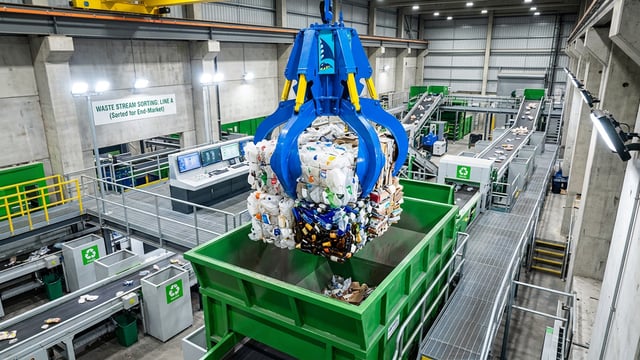
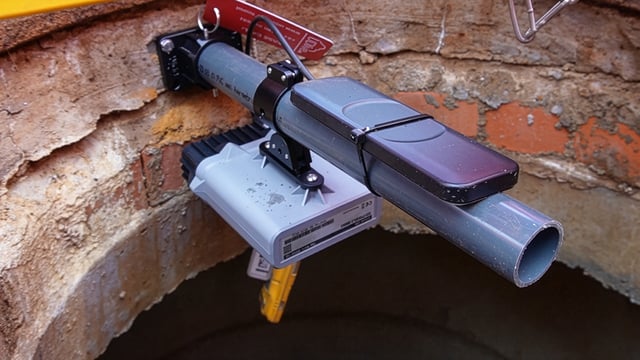
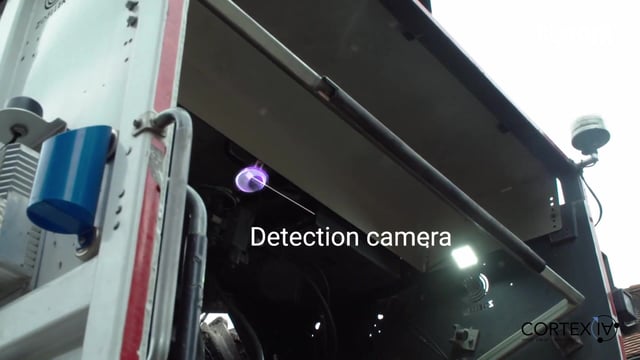
The product is a software layer sitting on industrial cameras and sensors mounted over the tipping hall and refuse bunker. It performs three functions: detection of oversized or hazardous objects such as gas cylinders and lithium batteries, calorific value mapping of the waste pile to guide mixing, and tracking of overhead crane position and status.
Jaipur says its models are trained on more than 50 million labelled images, which it describes as the largest European waste-to-energy dataset, and that the deployed system analyses over 5 million tonnes of waste a year. The company claims 99 percent accuracy on hazardous material detection.
Its stated per-plant, per-year outcomes are more than 80 percent fewer unplanned shutdowns and more than €1 million in added value from better waste mixing. These are vendor figures and have not been independently audited or attributed to named plants.
Why Public Money Sits On Both Sides Of This Round
HTGF is not a conventional private fund. It is a public-private partnership managing over €2 billion, with the German federal government and KfW Capital among its limited partners, which makes this round partly a state-linked bet on waste infrastructure software.
EquityPitcher Ventures invests at seed and Series A in the DACH region and says it has made 40 investments to date with a track record in robotics and infrastructure. Anna Stetter, an investment manager at HTGF, pointed to the dataset and to measurable results at customer sites as the basis for co-leading.
The Canton of Ticino also weighed in publicly. Stefano Rizzi, director of the canton’s Division of Economic Affairs, framed the round as validation of the regional innovation ecosystem and of vehicles such as Fondazione Agire and TiVentures.
The Carbon Pricing Deadline That Changes Plant Economics
The commercial timing is not accidental. Under Article 30(7) of the EU Emissions Trading System Directive, the European Commission was required to report by 31 July 2026 on the feasibility of bringing municipal waste incineration installations into the ETS, potentially from 2028.
Municipal incinerators have been inside the monitoring, reporting and verification regime since January 2024 without a surrender obligation. Analysis cited by Carbon Market Watch estimates inclusion would cut 4 to 7 million tonnes of emissions in 2030, while CEWEP modelling suggests an average EU27 gate fee increase in the region of €52 per tonne at a €100 carbon price.
If fossil carbon in the feedstock becomes a direct cost line, knowing the composition of the pile before it reaches the grate stops being an operational nicety. That is the argument Jaipur is selling to plant operators.
Incumbent Plant Suppliers Already Sell Parts Of This Stack
Jaipur is not entering an empty field. Kanadevia Inova, the Zurich-based supplier formerly known as Hitachi Zosen Inova, already offers bulky waste detection to help crane operators, alongside its own combustion control system for grate and air management.
Other original equipment manufacturers bundle automated crane control and advanced combustion control into new-build contracts. Jaipur’s positioning is retrofit and hardware-agnostic, targeting the installed base of older plants where the control system is fixed but the bunker is still supervised by eye.
The open question is whether a software vendor can hold the customer relationship when the plant supplier controls the distributed control system and the service contract.
Funding Benchmarks In Waste Sector Computer Vision
Compared with the recycling side of the industry, the round is modest. London-based Greyparrot raised a $27 million Series B in early 2026, taking its total to about $60 million, with more than 250 analyser units deployed across over 20 countries at material recovery facilities.
Dealroom values the Jaipur round at roughly $5.1 million and places it in about the 95th percentile by size among all-time seed rounds in Switzerland’s energy sector, putting total funding near $6 million. Dealroom also reports an existing engineering team in Bengaluru and a plan to establish an Indian legal entity by the end of 2026.
The distinction matters commercially. Recycling analytics vendors sell to material recovery facilities and increasingly to packaging producers facing extended producer responsibility rules, while Jaipur sells availability and combustion stability to thermal plant operators, a smaller number of customers with larger individual contract values.
What Comes Next And What Is Still Unproven
The company says it is moving from detection toward closed-loop crane automation, which is a materially harder engineering and certification problem than alerting an operator. Safety case approval for autonomous crane movement in a live bunker will vary by jurisdiction.
Jaipur has not disclosed named plant customers, revenue, contract structure, or how many facilities are live as of this round. “We envision a future where data from waste fully drives safety and automation,” said Ermes Zamboni, co-founder and chief executive of Jaipur Robotics, in the company’s September 2026 funding announcement.
The company is recruiting across AI, engineering and commercial roles, and lists cement and biomass plants as adjacent verticals for the same perception stack.