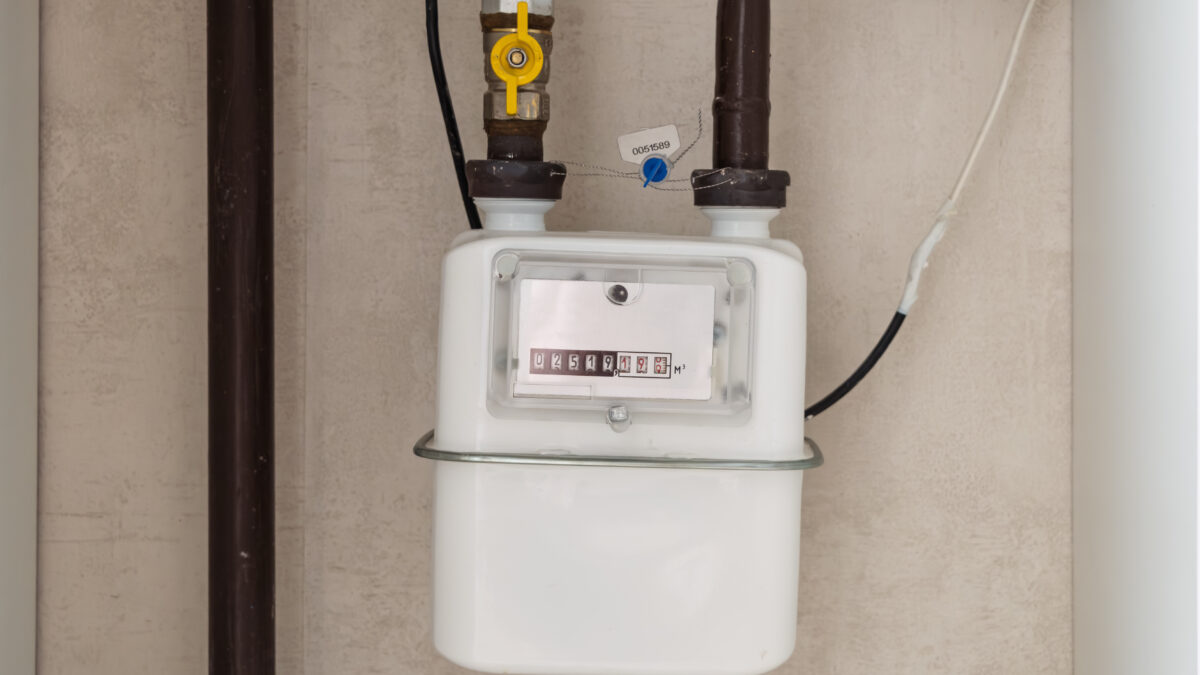
JSC Decarbonization Fund of Ukraine, the Kyiv-based state revolving fund overseen by the State Agency on Energy Efficiency and Energy Saving, has contracted Kyiv manufacturer GridWe to supply 40,000 NB-IoT data modules for household gas meters for UAH 187,200,000. That is about €3.7 million at the National Bank of Ukraine rate of 5 October 2026, for a unit price of UAH 4,680, or roughly €92.62, with delivery due by 15 December 2026, Nashi Groshi reported.
The contract followed an open tender on Prozorro, the national e-procurement system, and procurement records compiled by YouControl date it to 24 September 2026. The modules will go to the Kyiv, Lutsk and Mykolaiv branches of Gas Distribution Networks of Ukraine, the Naftogaz group’s distribution operator, for fitting in households and public-sector buildings.
A Second Batch At A 2.5% Lower Unit Price
The order repeats an April purchase of 40,000 modules at UAH 4,800 each, worth UAH 192,000,000. The fund placed that order through a negotiated procedure after an open tender announced on 2 March drew no bids, Obozrevatel reported. Nashi Groshi reports that an earlier attempt was cancelled after both bidders, GridWe and a joint venture led by Radmirtech, were rejected.
The September price is 2.5% lower, and the two orders together cover 80,000 modules for UAH 379,200,000. Both are paid from the State Fund for Decarbonization and Energy-Efficient Transformation, the budget line named by the Cabinet of Ministers when the first batch was delivered.
Radmirtech, offering GPRS modems, was the only rival bidder this time, according to Nashi Groshi. The outlet also found the GridWe modules listed on the Rozetka marketplace at UAH 5,898, which puts the tender price 20.6% below retail.
The April batch was split between the Kyiv branch with 23,965 modules, the Mykolaiv branch with 12,655 and the Volyn branch in Lutsk with 3,380, according to the State Agency on Energy Efficiency. The agency transferred the equipment to the operator free of charge.
“This solution is a fast and cost-effective way to scale up the implementation of modern gas metering. It enables remote data transmission and integration into digital platforms, ensuring transparency and convenience for consumers,” said Hanna Zamazieieva, Head of the State Agency on Energy Efficiency and Energy Saving of Ukraine, in a Cabinet of Ministers statement of 1 April 2026 on the first batch.
Retrofit Modules Read Analogue Counters Over NB-IoT
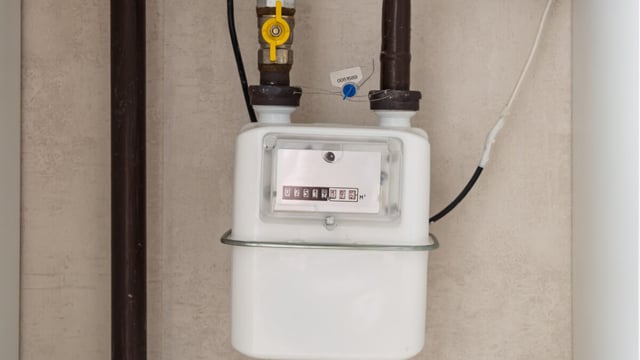
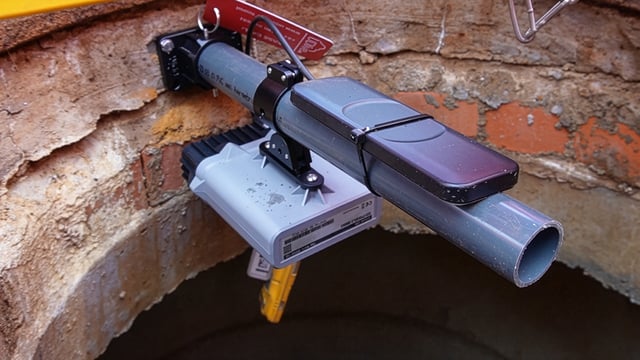
The contract covers three variants at the same price. The G Module S fits Samgas and Pietro Fiorentini meters, the G Module H fits Honeywell and Elster meters, and the G Module M fits Metrix meters.
Each module reads the mechanical counter of an existing diaphragm meter with magnetic sensors, so the meter itself stays in place, according to the product’s Red Dot design award entry.
GridWe, registered in Kyiv in January 2024, claims deep indoor coverage and multi-year battery life on its website but publishes no battery figure. The company told Energy Club that it produced more than 200,000 residential gas meters in 2025, a figure it supplied and which has not been audited.
The network layer depends on mobile operators. Kyivstar began commercial NB-IoT deployment for utilities in Kyiv and Odesa oblasts in February 2019.
Vodafone Ukraine followed in January 2020 on its 1800 MHz band, with coverage available to about 20 million people and power-saving modes rated for up to ten years of battery life.
Programme Rules Require Installation Within Six Months
Recipients under the programme are gas distribution operators and budget institutions. They must install the devices within six months of receipt under Cabinet Resolution No. 761 of 21 June 2024, according to the fund’s programme page.
The fund began operating as a revolving financing instrument on 30 September 2024, financed by the environmental tax on carbon dioxide from stationary installations and by state borrowing. Its first loan, of UAH 18 million, went to street-lighting energy services in Voznesensk, the agency said.
The agency ties the metering scheme to the EU Energy Efficiency Directive 2012/27/EU and says Ukraine is expected to demonstrate progress by 2027. It presents retrofit modules as a way to add remote reading without replacing meters outright.
80,000 Modules Against A Network Of 8.8 Million Customers
Gas Distribution Networks of Ukraine reports about 8.8 million customers across 22 branches. The two batches together therefore reach under 1% of its customer base.
The operator is also buying meters on a much larger scale. It tendered 397,449 diaphragm meters worth UAH 601 million in 24 regional lots in April, Antikor reported.
The network is absorbing war damage at the same time. The operator repaired more than 1,400 war-related failures and restored supply to 58,000 households in 2024, according to Naftogaz figures reported by Ukrinform.
European Retrofit Benchmarks
Europe had 55.9 million smart gas meters installed at the end of 2023, a penetration of 45%, RCR Wireless reported from Berg Insight data. The analyst firm expects NB-IoT to account for 60% of annual shipments by 2028.
In Italy, where the rollout is largely complete, Italgas had 7.7 million smart meters in service at the end of 2023, according to Italgas. In France, the European Investment Bank put the cost of GRDF’s Gazpar programme for about 11 million customers at around €464 million, or roughly €42 per connection for a full programme.
The closest retrofit comparison Kurrantly has tracked is NIPSCO’s upgrade of about 870,000 Indiana gas meters with communication modules. In a neighbouring market, T-Mobile Polska’s contract to connect 24,000 NB-IoT water meters in Katowice uses the same overlay approach.
Both Ukrainian contracts went to the same supplier through procedures that drew at most two bidders. The test of the programme is therefore not the 2.5% price cut but whether the fund can widen competition, and whether the operator reports how many of the 80,000 modules are installed within six months and sending readings.