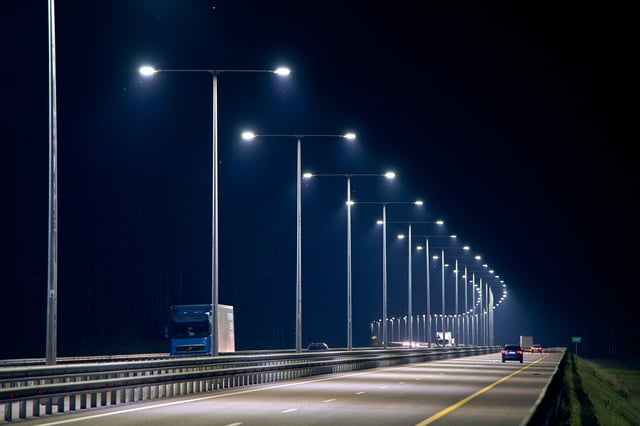
West Sussex County Council has commenced a four-year, £24 million programme to replace approximately 64,000 streetlights with energy-efficient LED luminaires and equip each unit with a smart control node connected to a new Remote Monitoring System (RMS). The initiative, which began in March 2026, is expected to cut annual energy consumption by more than 10.7 million kWh and reduce carbon emissions by an estimated 1,633 tonnes of CO₂ per year once fully operational by 2029.
Eight Phased Rollouts Prioritising Highest Energy Consumption Areas
The programme is divided into eight sequential stages, each spanning roughly six months. Work begins in the areas where existing lights consume the most energy and moves systematically across the county.
Phase One is scheduled for completion by August 2026. The final phase will address the area surrounding Chichester, with a target completion date of February 2030. Individual lamp replacements are expected to take 15 to 20 minutes per unit, though traffic management will be deployed on high-speed roads and more complex locations.
Smart Controls and Remote Monitoring at Every Luminaire
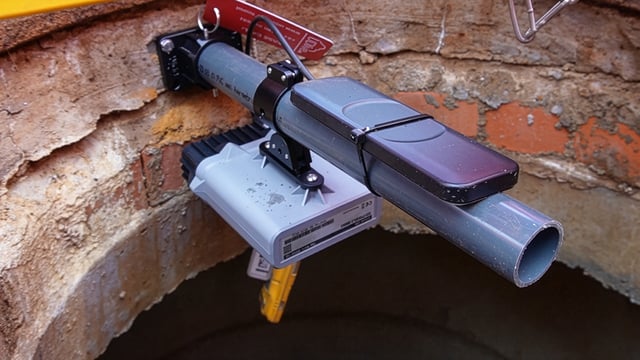
Beyond the LED conversion itself, every new lamp will be fitted with a smart control node linked to a centralised Remote Monitoring System. The RMS will enable remote management of light output, faster fault detection and reduced maintenance callouts. The system also allows the council to dim or brighten individual luminaires based on time-of-day schedules or specific operational needs.
This approach mirrors the broader trend of UK councils integrating connected lighting management into their LED retrofit programmes. Bradford Council, for example, deployed a LoRaWAN-based Central Management System alongside its own LED conversion, and the UK government’s Smart Infrastructure Pilots Programme (SIPP) has funded trials of multi-purpose smart columns in six areas, exploring how streetlight infrastructure can support everything from 5G connectivity to air quality monitoring.
A Long Road to Launch: Delays, PFI Negotiations and Budget Increases
West Sussex’s LED conversion was originally proposed in 2019 but experienced significant delays due to the COVID-19 pandemic and protracted negotiations over changes to the county’s existing Street Lighting Private Finance Initiative (PFI) contract. The PFI, which runs from 2010 to 2035 under service provider Tay Valley Lighting (West Sussex) Limited, is operationally managed by Enerveo, one of the UK’s largest street lighting contractors. Enerveo maintains approximately 85,000 lighting assets in the county under this arrangement.
The project’s initial budget of £20.9 million was increased by £3.28 million in early 2025, bringing the approved capital allocation to approximately £24.2 million. The delivery timeline was also compressed from six years to four to accelerate energy cost recovery. The council has projected total savings exceeding £117 million in maintenance and energy costs over the lifetime of the new lighting infrastructure.