With more vehicles on the road and growing urbanization, road operators, cities and traffic managers are under increasing pressure to improve traffic flow, safety, maintenance and emissions performance. These demands have driven the growth of the smart traffic industry, which is now entering a more mature phase, with projects moving from pilots to full deployments and operators demanding proof of performance. At Intertraffic Amsterdam 2026, Europe’s leading event for traffic and mobility, we explored how the smart traffic industry is evolving, and where it stands today. Like with all verticals in the digitalization of cities and utilities, AI is a hot topic. But, the smart traffic industry still relies heavily on sensors, cameras, LiDAR, radar… Sensors that are becoming smarter thanks to AI and software. There’s a shift, from infrastructure-heavy monitoring to software-enabled orchestration without abandoning hardware, so, rather than AI and software killing ITS, it’s improving it. The hardware and the software goes very much hand-in-hand. We have detection methodologies, which are hardware, we have signaling to road users. So V2X technologies enables the infrastructure to communicate directly with the driver. In my opinion, the hardware isn't going anywhere for the time being, but the software is getting smarter. We're able to do more with the information, relay messages in more intelligent ways. No sensing technology alone is perfect. Each and every sensing technology has pros and cons, and therefore I'm a true believer of data fusion. In that sense, take multiple sensors, if possible, and take the best pieces of them and put the data together wisely. Devices, sensors. They are still needed. Especially if you want to be compliant with GDPR, or needs of cybersecurity. Some of the processing need to happen on the edge. Cameras remain a key part of this hardware layer due to their versatility and already widespread deployment on roads and streets. In many cases, operators can upgrade existing systems simply by deploying software, turning traditional cameras into computer vision tools. Data collection is not the problem, that part now is easy with sensors or even cellular and GPS data. There’s actually a data overload. This overload has led the industry to understand that it’s about how the data can be turned into insights to improve decision making. This is where centralized traffic management platforms continue to be key. Control rooms, like the DGT’s in Madrid, act as coordination hubs, hypervisors, allowing operators to gather, analyse and act on data across entire networks. It goes more and more into the central system. And being controlled by the central system also not anymore controlled locally, rather a network wide system. So that's definitely something we can see. Today, it is a traffic control center that’s actually the boss of the traffic, he or she is navigating through this thing. We believe that in the future it will be self orchestrated vehicles with traffic. So they will communicate with each other. They will control themselves. The situation. Something new in the industry is that they're now talking a lot about digital twins. It's not a new tech, but as systems become smarter with more connected infrastructure, vehicles and integrated control systems, prediction is becoming a key focus of traffic management to avoid congestion for example, and other dangerous situations. The technology is showing real operational use cases, including incident prediction and scenario testing, which is now more real than ever thanks to AI and tech advancements. Digital twins have been around in the market for quite a long time, but I have to say, I think they’re becoming more and more commonplace, particularly in the operational world. We are using, for example, these digital twins, for training, operating in a digital environment and also doing testing scenarios, and that's why we can do testing upfront instead of doing that when we have then implemented the software. So we have a digital twin that allow what if simulation scenarios, just to simulate what is going to happen if you change something in the city. But we can do it for the highways and we can do it also for the extra urban area. What Intertraffic made clear is that the next phase of the smart traffic industry will not be shaped by one technology alone. It will depend on interoperability between systems, stronger cybersecurity as infrastructure becomes more connected, and a growing role for startups bringing specialized tools into a market still led by major integrators. And it won’t be about which is the flashiest tech, the coolest sensor. Innovation is no longer enough, operators want measurable results and improved decision-making.
The State of the Smart Traffic Industry in 2026
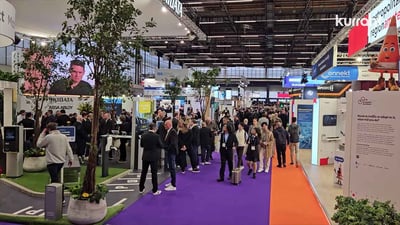
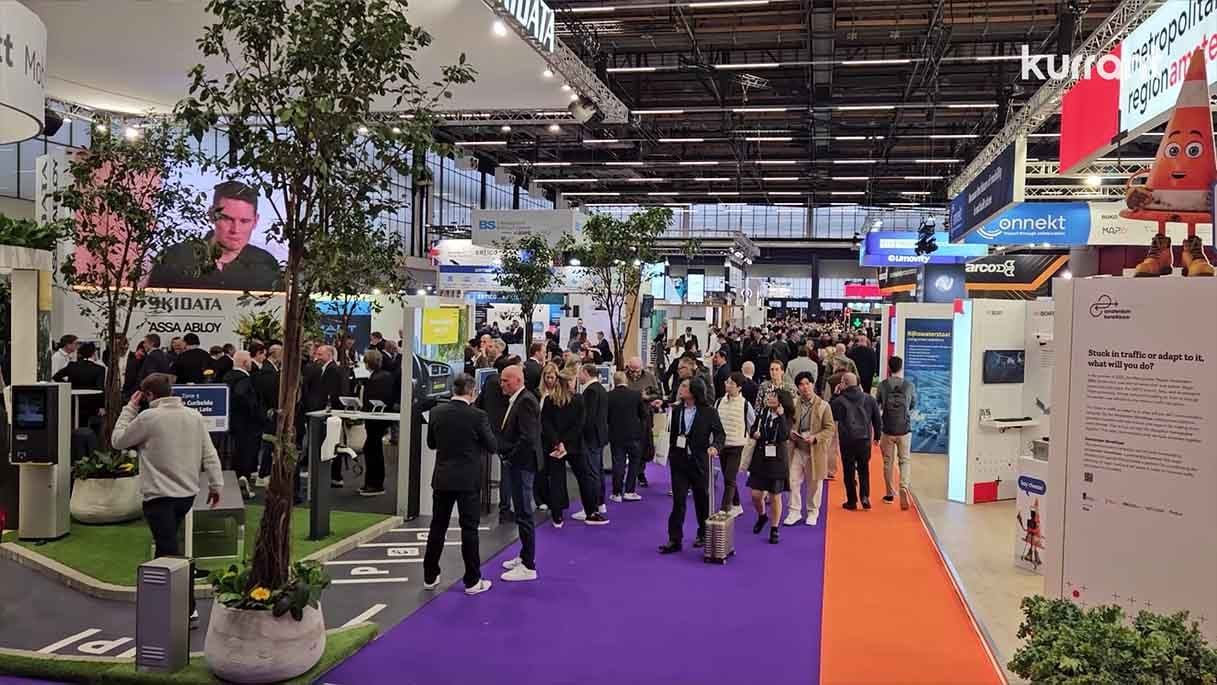
With more vehicles on the road and growing urbanization, road operators, cities and traffic managers are under increasing pressure to improve traffic flow, safety, maintenance and emissions performance. These demands have driven the growth of the smart traffic industry. In this video from the Intertraffic exhibition floor, we interview Rory Abraham, Innovation Manager at SWARCO, Balazs Barnucz, VP of Smart Sensing, AI Platforms at Kapsch TrafficCom, Gianmaria Giaconia, Area Manager Europe, Transportation & Logistics Division at Almaviva, Holger Erhardt, Managing Director Tolling & Infrastructure Solutions at Yunex Traffic, and Joost Vantomme, CEO of ERTICO, to discuss the recent evolution of the smart traffic industry, where we’re at, and what will be key.
View transcript auto-generated








Similar Picks

📰 Latest News

🎬 Kurrant Originals
🎥 Recent Event Coverage

Featured Case Studies
Real client work behind the news. Strategy, M&A and engineering projects we've delivered for cities and utilities.
Stay in the Loop
Get smart cities and utilities insights delivered your way. Choose your channel
Join our WhatsApp Channel