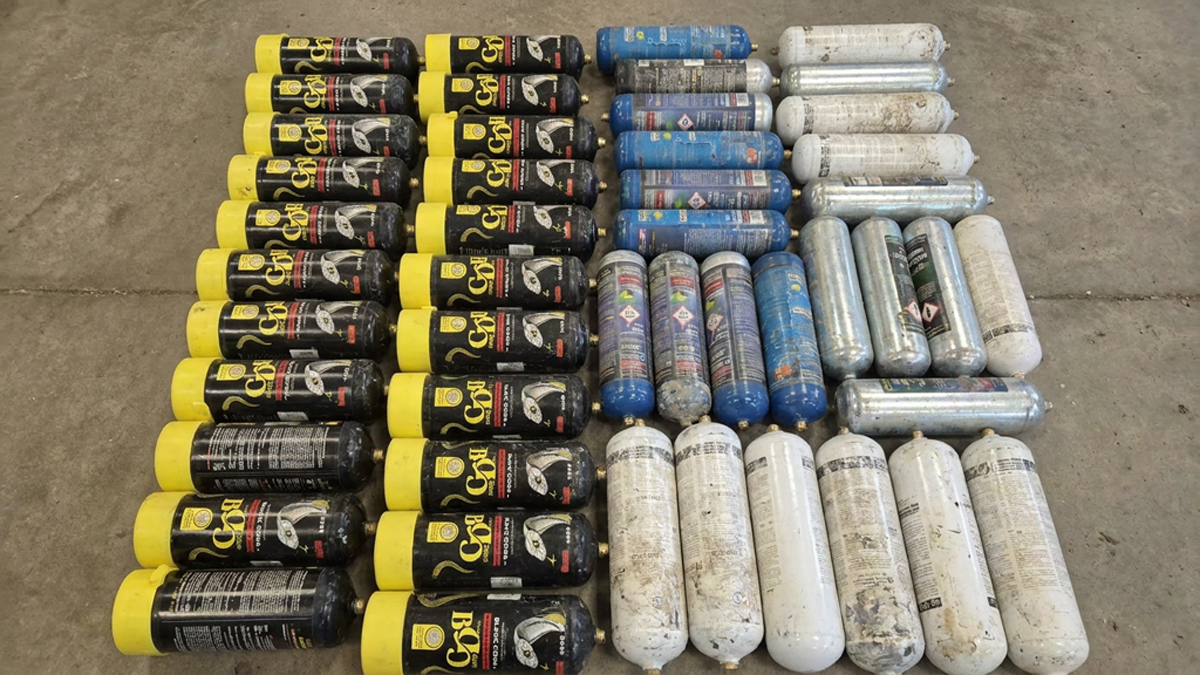
On 1 July 2026, SUEZ and the Préfecture de Vaucluse inaugurated what they describe as the first industrial pilot in France dedicated to neutralising and recycling discarded nitrous oxide cylinders, at the SUEZ Ecopôle in Entraigues-sur-la-Sorgue in the Provence-Alpes-Côte d’Azur region. The unit targets a waste stream that has become a recurring cause of explosions and shutdowns at energy-recovery plants. At Entraigues-sur-la-Sorgue, SUEZ and the Préfecture de Vaucluse are deploying a system that is unprecedented in France to secure the treatment of nitrous oxide cylinders.
The scale of the local problem is concrete. In 2025, 30,000 nitrous oxide cylinders arrived via household waste at the Novalie energy-recovery unit in Vedène. SUEZ has invested roughly 300,000 euros in the prototype, a modest sum that the operator frames as the first step toward a national collection and treatment chain.
Why Discarded Canisters Cripple Energy-From-Waste Plants
Nitrous oxide, sold legally for catering and medical use, has spread as a recreational inhalant, and its used cylinders increasingly end up in kerbside bins and public spaces. In energy-recovery units, these cylinders can cause explosions and operational stoppages. Residual gas trapped inside a container can detonate inside a furnace, damaging equipment and endangering the staff monitoring the process.
The financial toll is now measurable at national level. Across France, these incidents represented an estimated additional cost of between 35 and 40 million euros in 2025 for operators and local authorities. SUEZ also reports that close to two-thirds of France’s energy-recovery units experienced incidents in 2025. At the Vedène plant, the pace has accelerated in 2026, with the first six months already matching the full-year downtime recorded in 2025.
How The Medclair Unit Empties And Recycles Each Cylinder
The treatment step relies on equipment from Swedish company Medclair. The unit extracts the residual gas from the cylinders and decomposes it into nitrogen and oxygen, two gases naturally present in the air, which are then released into the atmosphere in a controlled manner. This avoids venting untreated nitrous oxide, which SUEZ describes as a greenhouse gas nearly 300 times more warming than carbon dioxide.
Once emptied, the containers are dismantled for material recovery. The materials that make up the cylinder, including plastic, brass and metal alloys, are directed toward dedicated recycling channels. A central aim of the pilot is regulatory as much as technical, validating the conditions for wider French deployment in coordination with the DREAL environmental authority.
AI Cameras And Field Sociology Feed A Map Of Hotspot Streets
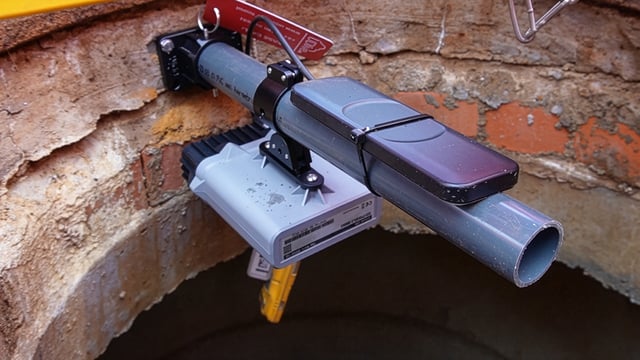
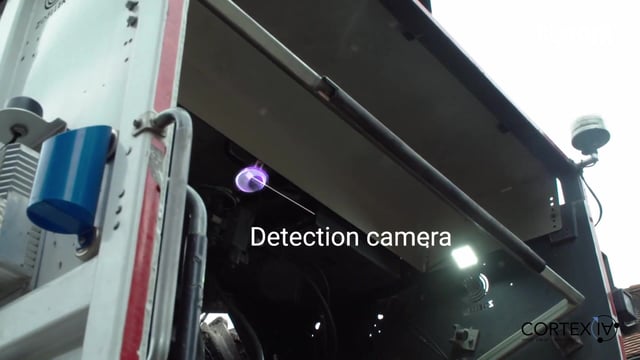
Prevention starts at collection through computer vision. SUEZ’s Qualiwaste system equips refuse trucks with cameras linked to an image-recognition algorithm. During collection, the algorithm automatically detects and geolocates each nitrous oxide cylinder by image recognition, allowing bins containing cylinders to be mapped.
That detection data is paired with qualitative field research. The prevention and awareness actions also draw on a qualitative sociological study by LyRE, SUEZ’s research centre, based on around one hundred field interviews with young consumers and various stakeholders including law enforcement, night grocers and medico-social structures. Together, the two streams build a map of risk zones used to prioritise interventions and sharpen local awareness campaigns.
A Prefectural Ban And Thousands Of Seizures Frame The Enforcement Side
The pilot sits alongside a repressive track led by the state. According to Vaucluse prefect Thierry Suquet, more than 5,500 cylinders have been seized since his prefectural decree of November 2025, which bans their possession, transport, distribution and consumption. Officials note that some seized containers were large-format cylinders with no plausible industrial or medical use.
Local authorities frame the treatment unit as a way to cut disposal costs rather than a substitute for enforcement. Seized cylinders are currently expensive for municipalities because they are handled as hazardous waste, and that the six-month experiment is designed to validate the economic and regulatory terms of a permanent solution.
A 40-Partner Coalition Testing A Model Meant To Scale Nationally
The project is structured as a public-private coalition rather than a single-vendor deployment. Initiated in March 2025 and built with around forty local actors, the territorial project responds to the rise in diverted use of the gas. Participants include social and solidarity economy organisations working on proximity outreach.
The stated ambition is replicability. Results from the prototype are meant to define the conditions for scaling the technology across France and to refine the applicable regulatory framework into a model that other territories can adopt.
UK And Canadian Plants Show A Cross-Border Waste Problem
The Vaucluse pilot mirrors a wider trend across waste networks in Europe and North America, a pattern documented in Kurrant’s waste coverage. In the United Kingdom, Bedford Borough Council warned residents in June 2026 after its contractor recorded repeated explosions at waste facilities. Veolia, the council’s contracted operator, reported more than 745 hours of plant outage from explosion incidents linked to nitrous oxide canisters in its energy-from-waste facilities in 2025, with financial damage exceeding 4.7 million pounds since 2023.
The disposal challenge has pushed operators toward similar chemistry elsewhere. Veolia opened what it called the UK’s first safe treatment line for nitrous oxide canisters at its Birmingham facility, using a comparable process that separates the gas into nitrogen and oxygen before recycling the metal. In Canada, Metro Vancouver has issued its own warnings after detonations at a regional waste-to-energy plant, underlining that the Vaucluse experiment addresses a hazard now shared across multiple national waste systems.