South Korea’s Ministry of Land, Infrastructure and Transport will fund a US$3.5 million (4.46 billion won) program to design and pilot an intelligent transportation systems (ITS) master plan for Medellín, Colombia, running from 2026 to 2028. The agreement, formalized with the Mayor’s Office of Medellín and announced at the end of June 2026, pairs a citywide ITS roadmap with three field pilots focused on cutting road casualties around schools, flood-prone underpasses and steep hillside corridors.
The deal is modest in dollar terms but strategically significant. It extends more than seven years of Korean transport cooperation in Colombia’s second-largest city and reinforces Medellín’s role as a testbed for Korean ITS exports across Latin America.
MOLIT Funding Deepens A Multi-Year Korean ITS Partnership With Medellin
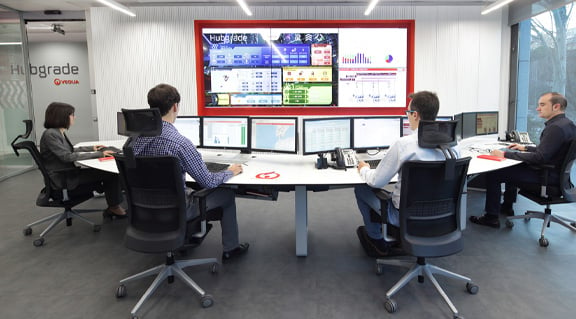
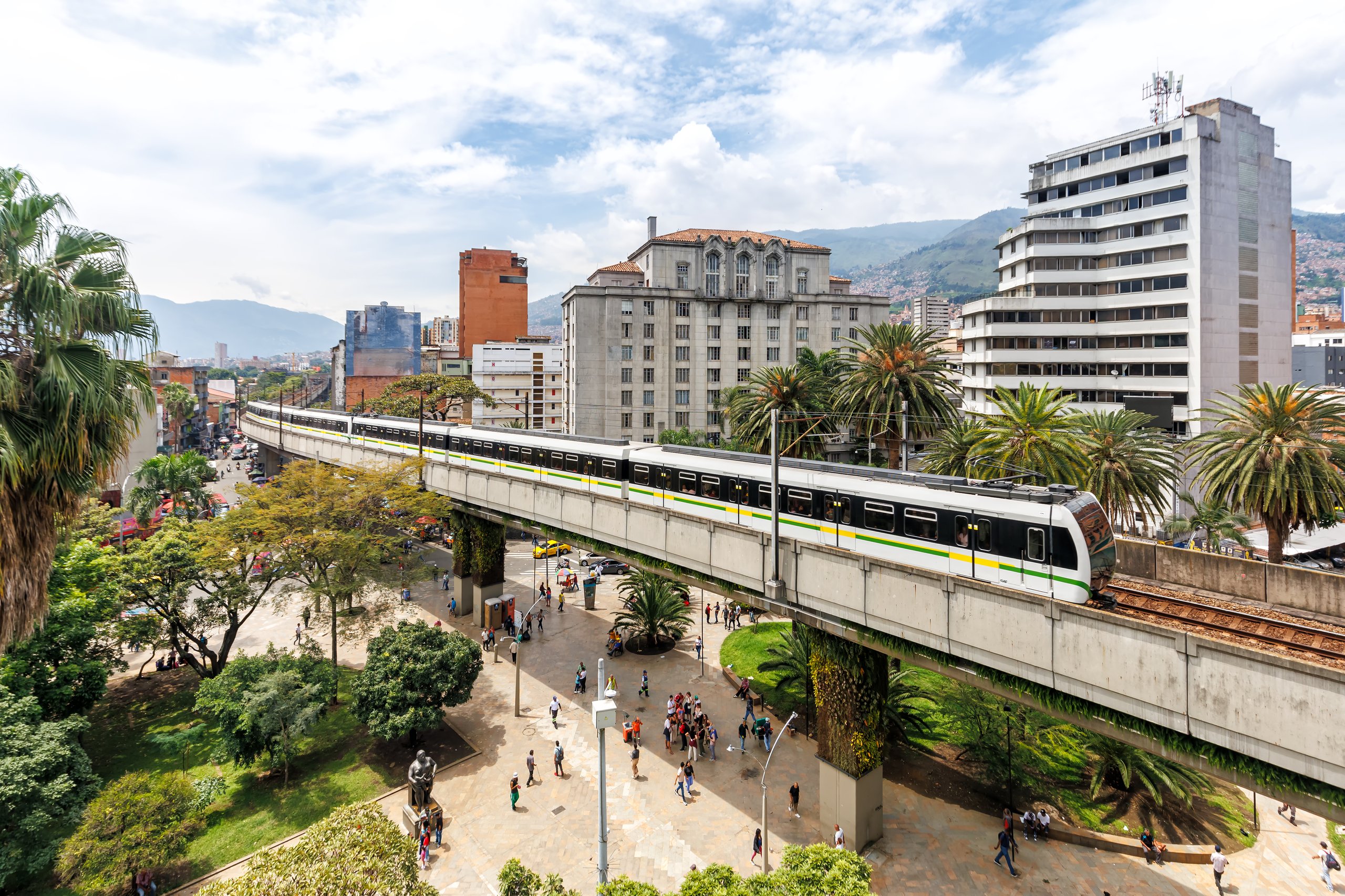
The new agreement builds directly on Medellín’s Integrated Traffic and Transportation Center, known by its Spanish acronym CITRA, which the Korean ministry financed with more than US$12 million and which opened in late 2021. According to ACI Medellín, the city’s foreign-investment and cooperation agency, CITRA integrates seven information systems, including the Medellín Metro, the Aburrá Valley Metropolitan Area, the city’s intelligent mobility system (SIMM) and its traffic-signal control center.
The mobility agreement is the second major Korea-Medellín deal of 2026. In April, the Korea International Cooperation Agency (KOICA) signed a separate US$16.4 million package with the city, Grupo EPM and utility Emvarias to overhaul solid-waste management and cut greenhouse-gas emissions in the Aburrá Valley, per the Mayor’s Office of Medellín.
Three Pilots Target School Zones, Flooded Underpasses And Steep Corridors
The first pilot covers school environments, deploying smart pedestrian crossings and dynamic signaling that flag the presence of students and pedestrians to drivers in real time.
The second addresses road underpasses, where connected sensors are intended to detect flooding and issue early warnings to drivers and traffic agents, a recurring hazard during the region’s heavy rains.
The third focuses on Medellín’s steep corridors, a byproduct of the city’s mountainous terrain, using detection and alert systems designed to prevent crashes in high-risk sectors. All three pilots rest on real-time monitoring, early-warning logic, data analytics and artificial intelligence.
The Master Plan Centers On Integrating CITRA’s Real-Time Data Streams
Beyond the pilots, the master plan is meant to serve as a roadmap for consolidating Medellín’s fragmented monitoring feeds into a single digital layer that can optimize signal timing and support AI-assisted operational decisions. The agreement also funds specialized training for CITRA staff, a knowledge-transfer component intended to keep the systems running after the project closes.
“With this cooperation we will implement a Master Plan for Intelligent Transportation Systems and three technological pilots in school environments, road underpasses and high-slope corridors,” said Luis Echeverry, acting Secretary of Mobility at the Mayor’s Office of Medellín, in the city’s statement on the agreement, translated from Spanish. “These systems will enable real-time monitoring, early warnings, data analytics and artificial intelligence to make better decisions.”
Korea’s Overseas Smart-City Programs Frame The Medellin Deal
The Medellín project sits within the Korean ministry’s wider strategy of exporting Korean-style ITS to Latin America, a push it has run through vehicles such as its K-City Network global cooperation program. Earlier cycles of that program have reached dozens of cities across roughly a dozen countries, including Bogotá.
These programs typically bundle Korean technology vendors into overseas demonstrations. Kurrant reported that a 2024 K-City Network pilot in Verona, Italy, deployed AI-based traffic sensors from Korean firm bitsensing, illustrating how the model links planning grants to hardware trials. No integrator or technology vendor has yet been publicly named for the Medellín pilots.
Benchmarking A Planning-Led Budget Against Hardware-Heavy Deployments
At US$3.5 million spread across a master plan and three pilots, the Medellín program is a planning-and-demonstration effort rather than a mass hardware rollout. For scale, Kurrant has documented a US$350,000 purchase of 10 AI traffic cameras in Houston and a €93.8 million, 1,000-unit AI camera network procured by Greece in 2026.
The contrast underscores the Korean approach, which front-loads strategy, institutional capacity and targeted pilots before any citywide commitment. For Medellín, the payoff hinges less on the headline figure than on whether the master plan produces a bankable pipeline that development banks or future budgets can scale.