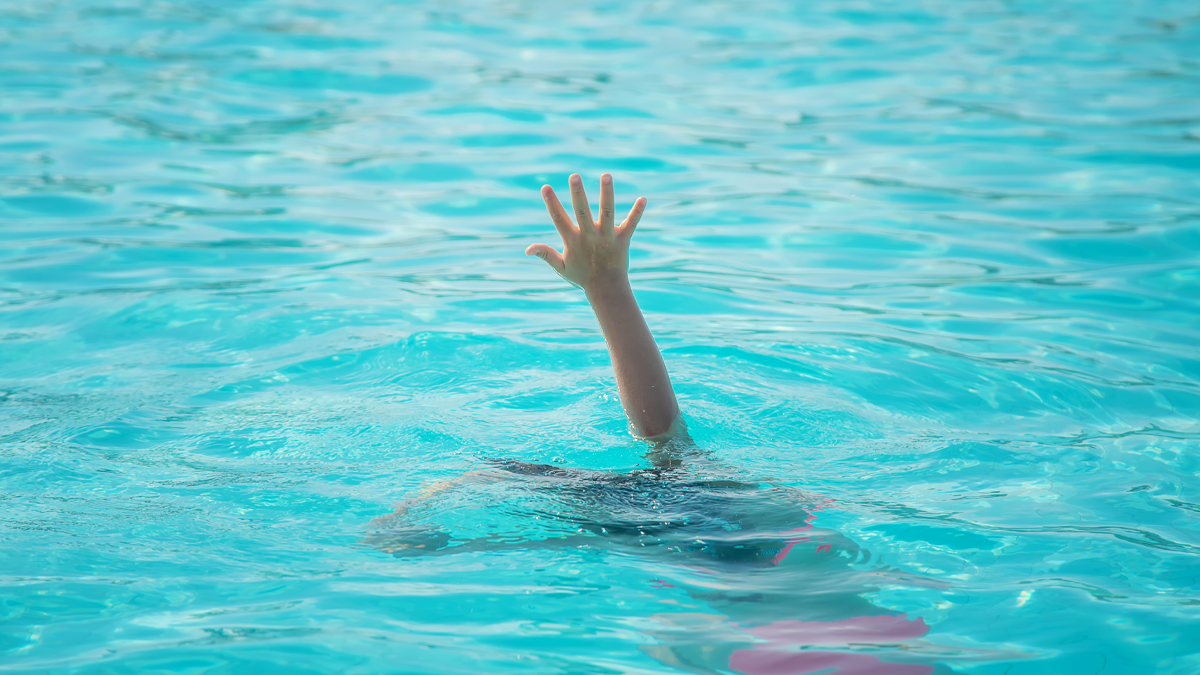
Brisbane City Council will trial AI-enabled drowning detection cameras at two of its busiest public swimming pools, Runcorn Aquatic Centre and Yeronga Memorial Pool, under an initiative made public on 11 August 2026. The system, supplied by Lynxight, monitors swimmer movement through pool cameras and pushes an immediate alert to lifeguards when it identifies possible distress. Installation is expected over the coming months at two sites within a network of 22 council pools that logged more than 758,000 visits during the last summer season of the council’s discounted entry program.
Why A Two-Site Pilot Rather Than A Network-Wide Deployment
Brisbane City Council has framed the deployment explicitly as a trial rather than a rollout, with the stated purpose of assessing detection accuracy and response times before any decision on wider adoption.
That structure mirrors how most Australian councils have approached drowning detection systems, treating the first installation as an evidence-gathering exercise rather than a capital commitment. It also limits exposure if false alarm rates prove operationally disruptive.
According to the report published by Inside Local Government, the council will evaluate how effectively the technology identifies swimmers in distress and whether it could improve safety at more Brisbane pools in future. The council has not published a trial duration, a capital cost, or a camera count for either site.
How Lynxight Turns Standard CCTV Into A Detection Layer
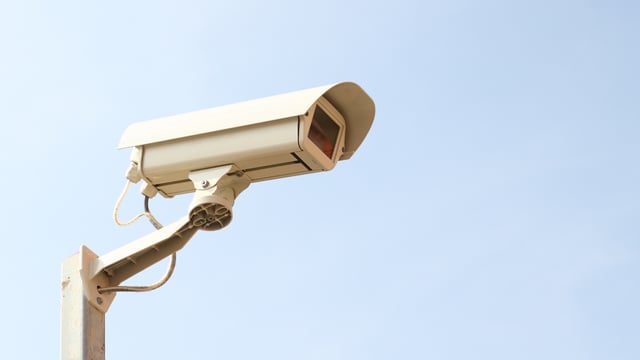
The core architecture is software-first. Lynxight connects to standard onsite security cameras and Wi-Fi rather than requiring purpose-built sensor hardware, which is why the vendor describes its commercial model as safety-as-a-service with minimal capital outlay for operators.
Deep learning models track multiple swimmers simultaneously and classify movement patterns associated with distress, prolonged submersion, or loss of motion. Alerts are colour-coded by severity and delivered to waterproof smartwatches worn by lifeguards on shift, with location data indicating where to look.
Deployments elsewhere have combined above-water and below-water camera angles to reduce blind spots created by glare, crowding, and surface disturbance. Vendor and operator documentation describes the system as monitoring behavioural patterns rather than capturing facial or body identification data.
The Royal Life Saving Relationship Gives The Vendor Institutional Cover
Royal Life Saving Australia has publicly supported the Brisbane initiative, and the two organisations have an existing national arrangement. The peak body and the vendor announced a strategic collaboration in June 2024 focused on using analytics data to strengthen drowning prevention research, policy, and facility practice.
That relationship matters commercially. Endorsement from a national safety authority materially shortens the procurement justification cycle for risk-averse local government buyers, and Royal Life Saving has hosted demonstration days at aquatic centres in Victoria, New South Wales, and Queensland.
Both parties have consistently positioned the technology as supplementary. Royal Life Saving Queensland has also introduced a micro-credential in drowning detection systems covering integration, legal, and compliance considerations for aquatic staff.
Record Drowning Numbers Set The Policy Backdrop
The National Drowning Report 2025, published by Royal Life Saving Australia with Surf Life Saving Australia, recorded 357 drowning deaths in the year to June 2025, 27 percent above the ten-year average and the highest figure since records began.
Swimming pools accounted for 35 of those deaths, or roughly 10 percent, with 68 percent of pool fatalities occurring in backyard pools rather than supervised public facilities. Queensland recorded 90 drowning deaths, a 36 percent increase on its state ten-year average.
Public pool incidents are comparatively rare but not negligible. Royal Life Saving research covering 2023 identified six drowning deaths, 18 non-fatal drowning incidents, and more than 7,800 rescues at publicly accessible swimming pools nationally.
Discounted Entry Programs Are Reshaping Supervision Load
The $2 Summer Dips program has driven attendance increases that outpace the supervision models many facilities were designed around. Brisbane recorded more than 758,000 visits last summer under the scheme.
The same dynamic triggered the comparable trial elsewhere. City of Newcastle installed Lynxight cameras at Wallsend Swimming Centre in November 2025, citing higher attendance expected under its own $2 entry trial and site characteristics that create line-of-sight difficulty for lifeguards.
“When someone is in trouble in the water, every second counts,” said Adrian Schrinner, Lord Mayor of Brisbane, in the council announcement reported on 11 August 2026.
Market Footprint And Vendor Financials Remain Modest
Lynxight is headquartered in Yokne’am Illit, Israel, and has raised a comparatively small amount of venture capital for a company operating across ten-plus countries. Public filings and databases record approximately $6 million raised in a 2022 round led by Champel Capital and Boresight Capital, with CB Insights listing Fluidra Ventures among later investors following a March 2025 investment.
Deployment figures reported around the Brisbane trial cite more than 1,000 pools globally. Australian-specific counts published through late 2025 were considerably lower, at more than 75 public pools, indicating either rapid domestic growth or differing counting bases between the two figures.
The addressable market is larger than the funding suggests. The company has characterised aquatic risk management as a $20 billion sector, with insurers a secondary customer segment for the analytics output.
Privacy Framing Follows A Familiar Municipal AI Camera Pattern
Aquatic operators deploying the system have published standardised privacy positions. Brimbank City Council’s facility documentation states that data is encrypted and that the vendor complies with the Australian Privacy Principles, GDPR, the UK Data Protection Act 2018, and ISO 20380.
Those assurances follow a pattern visible across municipal computer vision procurement, where councils pre-empt surveillance objections by emphasising narrow purpose limitation and technical de-identification. Kurrant has reported on the same tension in Dallas, where AI cameras fitted to waste collection vehicles prompted civil liberties objections despite facial and plate blurring.
Brisbane has not yet published a privacy impact assessment or data retention schedule for the pool trial. For a facility category that includes large numbers of minors and people in swimwear, the governance documentation will likely attract more scrutiny than the detection performance.
The Open Questions Are Operational, Not Technical
Independent commentary has been more cautious than vendor material. Academic analysis published through The Conversation notes that camera-based detection produces false alarms and can fail to detect genuine distress, and that alert value depends entirely on whether operators can interpret, trust, and act on it.
A May 2026 incident at Waterlane Leisure Centre in Lowestoft, England, illustrated the failure mode. Reporting indicated a buoy had been left covering the alert control on a separate drowning detection system when a child submerged, and five lifeguards were subsequently dismissed.
The Brisbane trial will therefore be judged less on model accuracy than on integration discipline. Alert acknowledgement protocols, alarm fatigue management, and lifeguard training standards will determine whether a second layer of detection actually shortens response times or simply adds a screen to watch.