in Barcelona
 3 to 5 Nov 2026
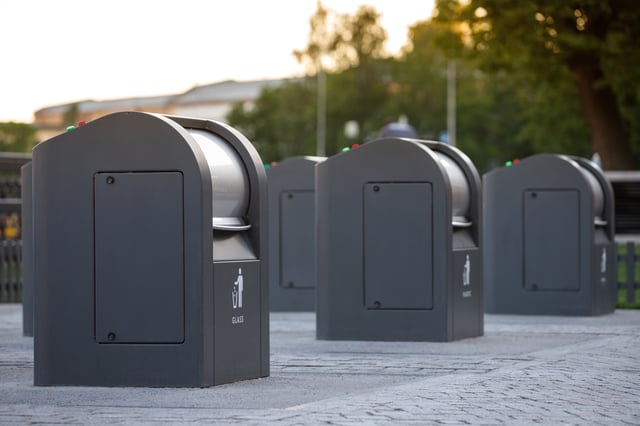
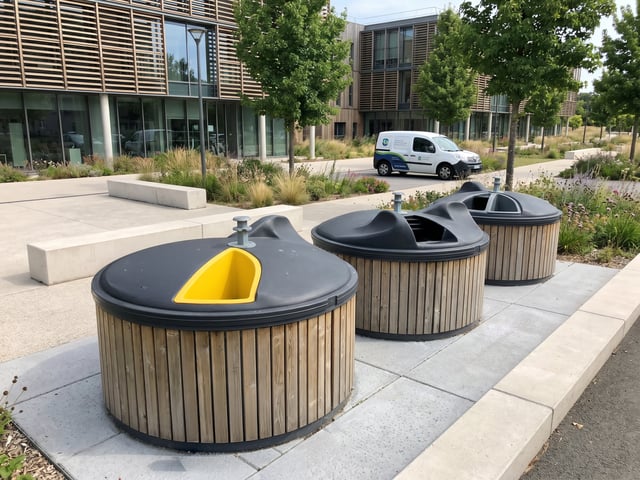
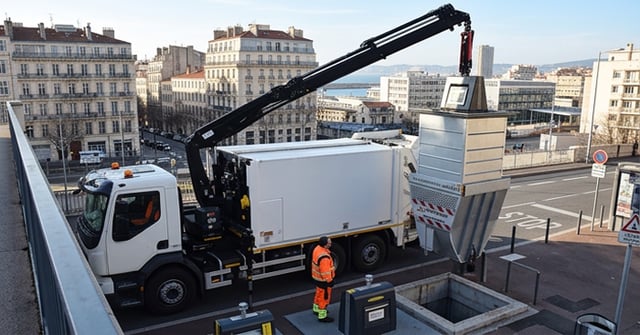
The Municipality of Bari has begun deploying 51 controlled-access waste collection stations in the Madonnella and Umbertino neighbourhoods, marking the opening phase of a larger programme to install 282 smart bin clusters across central residential districts. The initiative, managed by Amiu Puglia, the city’s municipal waste utility, is co-financed through the PNRR and PON Metro Plus funds at a total value of approximately EUR 3.4 million. Installation began on the night of 21 April 2026 at a rate of five stations per day, with the full Madonnella and Umbertino deployment expected to conclude by the end of April.
A Digital Access Layer Over Street-Level Waste Collection
Each new station replaces existing open containers with enclosed, digitally locked units spanning all waste fractions. Residents must register through the Amiu Puglia citizen portal by submitting their name, TARI-linked tax code, email address, and residential address. Upon registration, an activation code is issued by email, which users then enter into the eGATE Digi mobile application to unlock nearby bins via Bluetooth. A physical smart card alternative is available from the municipal URP office on Via Roberto da Bari for residents who cannot complete the digital registration process.
The eGATE Digi platform is a commercial product of emz-Hanauer GmbH & Co. KGaA, a German company headquartered in Nabburg, Bavaria, that has operated in the Italian smart-waste market since 2000. According to the company, it holds a dominant position in Italy with more than 35,000 installed systems. The platform uses RFID and NFC for card-based access, and Bluetooth combined with location services for app-based unlocking. Container usage data, including disposal time, GPS coordinates, device type, and operating system , is transmitted in encrypted form to emz-Hanauer’s servers and retained for up to one year.
Track tenders like this
New smart waste tenders across Europe, flagged daily with an AI summary.
The underlying data architecture involves joint data controllership between Amiu Puglia and emz-Hanauer, as specified in the eGATE Digi privacy policy under GDPR Article 26. This arrangement means that citizens using the app are entering into a data-sharing relationship with a private entity based outside Italy, in addition to their interaction with the municipal waste authority.
PNRR Measure M2C.1.1 and the Path to Pay-As-You-Throw
The Bari deployment falls under PNRR Measure M2C.1.1, Investment I.1.1, Line A, which targets the mechanisation and modernisation of urban separate waste collection networks. Funding has also been drawn from PON Metro Plus, the EU cohesion fund for metropolitan areas. The combined envelope of approximately EUR 3.4 million covers 282 ecological island stations, each equipped with containers for all waste fractions, designed to roughly double available collection volumes in the affected streets while also recovering more than 30 parking spaces displaced by older, bulkier containers.
The programme’s declared regulatory target is 65% separate waste collection, a threshold required under Italian law. The controlled-access system is the foundational layer for a future pay-as-you-throw (PAYT) tariff model, in which each household’s TARI waste tax would be calculated in proportion to actual disposal volumes. This model , known in Italian as tariffazione puntuale , is already operating in municipalities across northern Italy and is increasingly being promoted by CONAI, Italy’s national packaging consortium, as a mechanism for improving recycling rates and distributing costs more equitably. Municipalities with operational PAYT systems have in some cases reported significant increases in recycling rates, though outcomes vary considerably by context.
An Open Phase Before Lock-In
In a deliberate departure from full enforcement, the Municipality and Amiu Puglia have decided to leave the new bins in open-access mode throughout May 2026, allowing residents to use them without any card or app. The rationale, as explained by Amiu Puglia president Antonella Lomoro, is to familiarise the public with the physical infrastructure before activating the authentication requirement. Early take-up has been broadly positive: within days of the official launch on 20 April, more than 900 access credentials had been issued, combining app registrations and physical cards.
Accompanying the hardware rollout is a public communications campaign titled “Giusto un gesto” (Just a Gesture), developed by local creative agency L’Arancia. The campaign spans four video spots and paid social media activity on Meta platforms, framing the act of unlocking a bin as a simple behavioural change requiring minimal effort.
Digital Access and the Question of Inclusion
The deployment raises substantive questions about equitable access that are not addressed in official communications. Madonnella is a working-class neighbourhood with a significant elderly population. According to ISTAT, the Italian national statistics institute, nearly half of Italian senior citizens have never used the internet. For this portion of the population, the registration sequence , citizen portal access, tax code verification, email confirmation, app download, Bluetooth activation , constitutes a multi-step process, each stage of which represents a potential point of abandonment.
The physical smart card provides a meaningful fallback channel, but it requires residents to know the option exists, to be available during URP office hours on weekdays and Saturday mornings, and to navigate a minimal administrative procedure. Community organisations, senior centres, and neighbourhood associations may represent more effective channels for reaching residents who are otherwise excluded from digital onboarding, but no formal mediation programme has been announced to date.
The open-access transitional period mitigates the immediate exclusion risk, but it raises the longer-term question of what happens when the system moves to enforced authentication. If a substantial portion of residents never register, the scenario of waste being deposited outside or near the locked stations, a pattern observed in other Italian cities that have attempted similar deployments, becomes a real operational risk.
Data Governance and GDPR Considerations
Beyond the inclusion dimension, the deployment involves a data governance structure that warrants transparency. The eGATE Digi app requires GPS and Bluetooth to be active during each disposal event and transmits transaction data to emz-Hanauer servers. Under GDPR, the legal basis most commonly invoked for this processing is user consent; however, consent is only legally valid when refusal does not carry meaningful consequences. If controlled-access bins become the sole or primary disposal mechanism for registered households, the voluntary nature of consent becomes difficult to sustain. In such cases, the appropriate legal basis would shift to public interest or legal obligation, requiring explicit disclosure in the information notice provided to citizens.
The Italian Data Protection Authority (Garante per la protezione dei dati personali) has previously indicated that local authorities deploying citizen-facing digital services should adopt proactive transparency rather than reactive compliance. The Bari deployment is not necessarily non-compliant, the registration portal may contain full disclosure that was not summarised in the public launch materials, but it would benefit from explicit public communication distinguishing between what data Amiu Puglia collects, what emz-Hanauer receives, and what citizens can do if they prefer not to share that data.
A Test Case for Southern Italian Smart Waste Infrastructure
Bari’s deployment is one of the more substantial controlled-access waste infrastructure projects in southern Italy. The smart waste sector in Europe is expanding rapidly, driven by PAYT mandates, circular economy targets under the EU Waste Framework Directive, and the availability of PNRR and cohesion funds. emz-Hanauer’s position in the Italian market makes it the most likely vendor in deployments of this type, though formal procurement documentation for the Bari contract has not been made public. Kurrant’s coverage of comparable initiatives includes the Veolia smart bin rollout across France and the sensor-based monitoring programme in Bahrain’s Northern Governorate, both of which illustrate different deployment models for access-controlled and fill-level sensing approaches in urban waste management.
The extension of the programme to the Murat and Libertà neighbourhoods is subject to ongoing service conferences to confirm station locations, with no confirmed timeline as of late April 2026.