in Barcelona
 3 to 5 Nov 2026
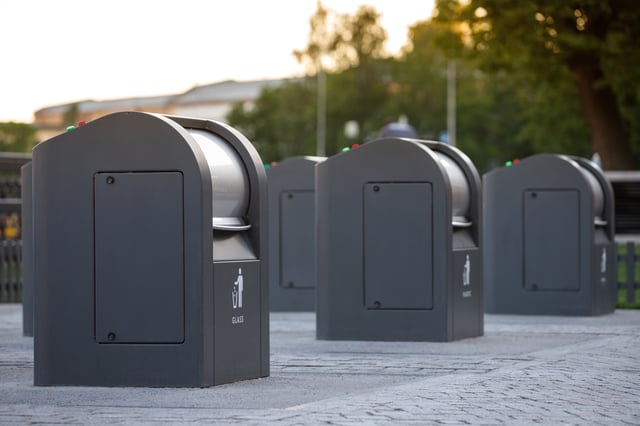
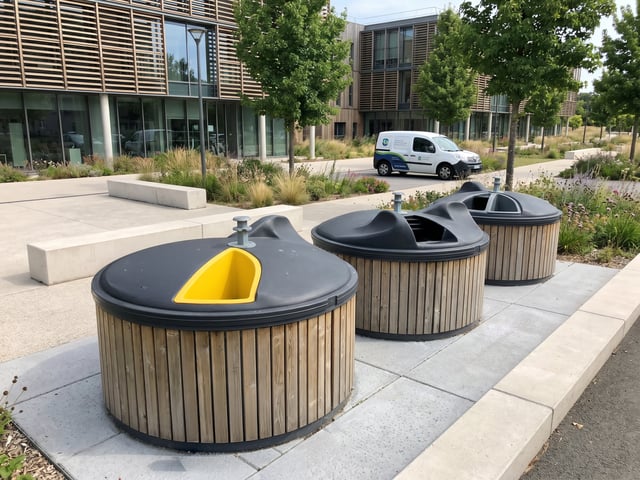
Bedford Borough Council this week told residents to keep nitrous oxide “laughing gas” canisters out of household bins, recycling containers and glass bottle banks, after its contractor recorded a year of repeated explosions at waste plants. The authority said discarded canisters detonate when crushed in collection vehicles or heated inside furnaces, injuring staff and wrecking equipment.
The numbers behind the warning are not local in scale. Veolia, which treats the borough’s waste, logged more than 745 hours of plant outage tied to canister explosions across its energy-from-waste facilities in 2025, and put the cost of damage to those plants since 2023 at over £4.7 million.
“Nitrous oxide canisters should never go in household bins or bottle banks. If they are crushed in a refuse vehicle or at a waste facility, they can explode and put our crews and local services at serious risk. We are asking residents to take them to the Household Waste Recycling Centre, or report them as litter if they are found in public places, so they can be dealt with safely,” said Councillor Nicola Gribble, Portfolio Holder for Environment at Bedford Borough Council, in the council’s press release.
A Local Warning With A Nationwide Price Tag
Bedford’s notice is the council-level edge of a problem the waste industry now frames as systemic. The Environmental Services Association, which represents operators running most of the roughly 60 energy-from-waste plants in the UK, says individual sites can suffer up to six significant canister explosions a day, with damage at a single plant exceeding £1.5 million a year.
Operator disclosures point the same way. SUEZ, which runs ten UK energy-from-waste plants, reported about 7,000 canister explosions across its fleet in a single year at a combined repair-and-disruption cost near £7 million.
Veolia has separately reported 2,300 explosions at its south-east London facility and 200 at its Newhaven plant in 2025. At Cory, plant managers said around 670,000 canisters were identified in processed waste last year, of which roughly 4,000 detonated.
Why An “Empty” Canister Still Detonates In A Furnace
The hazard is physical, not chemical residue alone. The canisters are sealed, pressurised steel shells, and even units treated as empty can hold enough nitrous oxide to expand violently when mechanically crushed on a sorting line or exposed to incinerator heat.
A second factor is product drift. After possession of nitrous oxide for recreational use became a criminal offence in England and Wales in November 2023, and smaller cartridges were restricted, demand shifted toward far larger “catering-style” cylinders that carry more gas and do proportionally more damage when they fail.
The result is a waste stream that mirrors the lithium-ion battery and disposable vape fire problem already straining the sector: a small, hard-to-spot item that turns routine compaction into an ignition event.
The Detection Arms Race On Collection Vehicles And Sorting Lines
Operators have responded by pushing detection upstream, toward the point of collection. AMCS markets a computer-vision system, AMCS Vision AI, that analyses a live video feed of a collection vehicle’s hopper, flags large gas cylinders in real time and lets crews divert the load before it reaches a furnace.
The same logic is being trialled on the truck itself. Kurrant’s reporting on Miami-Dade County’s shift to camera-and-sensor-equipped collection vehicles shows how vehicle-mounted AI is being used to read waste loads at the kerbside rather than at the plant, part of a broader move toward computer vision in waste management that Kurrant tracks across cities and utilities.
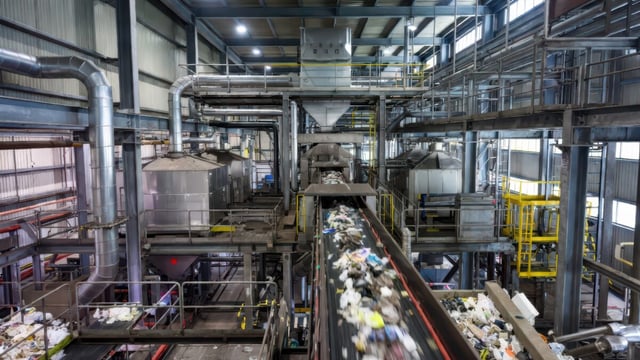
At the sorting stage, vendors are combining metal sensing with AI. Norwegian firm Litech is piloting a magnetic-induction system with Norsk Gjenvinning and Envac to pull large metallic objects, including nitrous oxide cylinders, out of paper and cardboard fractions, and a second pilot with Oslo Municipality aims to remove the cylinders before incineration. Electromagnetic-induction ejection, AI object detection and trained manual pickers are now layered together at many facilities, but each layer is partial.
Where The Technology Still Falls Short
The gap is one of recall, not ambition. The ESA’s own framing is that the industry has invested in AI detection and added safeguards, yet screening mixed waste for canisters is like searching for a needle in a haystack, and a share of cylinders inevitably gets through to the furnace.
Three structural limits explain why. Volume and speed mean a plant may handle hundreds of thousands of canisters a year, so even a high detection rate leaves thousands of misses; small “whippit” cartridges are especially hard for vision systems and human sorters to catch; and a canister can pass initial screening intact and only fail later under compaction or heat.
In other words, detection technology reduces the explosion rate but does not close it, and the residual misses still translate into multimillion-pound damage and worker-safety risk. That economics is what is now driving operators from a purely technical fix toward a policy one.
From Reclassification To Retail Ban: The Policy Lever
The ESA is calling on the government to ban open retail sales of large pressurised nitrous oxide cylinders, restrict supply to legitimate commercial users, and pair this with a deposit-return scheme and stronger enforcement so demand does not migrate to an illicit market. The association argues the 2023 reclassification curbed neither abuse nor the flow of cylinders into bins.
The problem is not confined to the UK, which strengthens the case that detection alone is insufficient. Waste facilities in the Netherlands reported around €65 million in canister damage as early as 2023, French operators have cited annual costs up to €20 million, Brussels incinerators have shut for up to 48 hours after larger cylinders exploded, and Metro Vancouver has flagged downtime at its waste-to-energy facility from the same cause.
For councils such as Bedford, the immediate lever remains behavioural: route canisters to a Household Waste Recycling Centre rather than the kerbside bin, and avoid confusing them with empty aerosols, which can still go in orange-lidded recycling. Until upstream sales controls catch up with downstream detection, that handoff between resident behaviour and plant-floor AI is where the £4.7 million risk is decided.