in Barcelona
 3 to 5 Nov 2026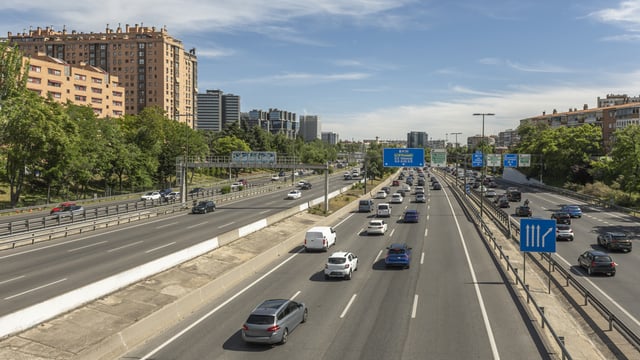
The Community of Madrid‘s regional government authorized a 5.3 million euro investment on Wednesday, July 22, 2026, to build a big data and artificial intelligence platform for its regional highway network. The centerpiece of the plan is a deployment of 40 AI-enabled cameras that will automatically detect, count, and classify vehicles across the region’s roads. The Consejo de Gobierno, Madrid’s regional cabinet, says the system is meant to anticipate traffic incidents, optimize circulation management, and improve planning for road maintenance work.
What The Cameras Add To Existing Traffic Monitoring
The 40 cameras are designed to operate without manual intervention, automatically detecting and classifying vehicle types as they pass along the regional network. They will feed into a new platform that combines existing traffic control data with information from connected vehicles and other digital sources, all processed through artificial intelligence. The regional network already relies on 466 traffic count stations that register vehicle volumes on each road, and the new cameras are intended to complement rather than replace that infrastructure.
Scale Of The Regional Road Network Under Coverage
Madrid’s autonomous road network spans roughly 2,573 kilometers, split across main, secondary, and local categories. The region has close to 5.5 million registered vehicles, a 28 percent increase over the past decade, a growth rate that has intensified pressure on both maintenance schedules and incident prevention systems. Officials frame the camera rollout as one response to that sustained rise in traffic volume.
This project is heading to tender
New smart mobility tenders across Europe, flagged daily with an AI summary.
A Broader Road Safety Strategy Already In Motion
The camera investment builds on an agreement signed earlier this year between the Community of Madrid and the Asociación Española de la Carretera, which mobilized more than 3 million euros to introduce AI, sensors, and connected systems across the regional network. That agreement sits within a forthcoming Road Safety Strategy for 2024 to 2030, which contemplates more than a hundred measures aimed at reducing accidents. Fatal accidents on Madrid’s regional roads fell to 28 in 2024 from 46 in 2023, a decline regional officials have pointed to as political support for the broader digitalization push.
What The Platform Does Not Change
Independent coverage of the announcement has noted an important distinction between the platform’s stated goals and its actual mechanics. the system does not reduce the number of vehicles in circulation or expand road capacity, and it does not eliminate congestion, it detects it earlier. Similarly, more precise travel-time estimates do not shorten those times, and assessing the impact of roadworks does not prevent the traffic those works generate.
Vendor And Procurement Status
Public reporting on the July 22 authorization does not name a contractor for the camera deployment or the data platform itself, and the announcement describes only the budget approval by the Consejo de Gobierno. Madrid’s regional government has previously procured similar big data mobility analysis work through its public contracting portal, including a contract awarded to Tema Ingeniería and Nommon Solutions and Technologies for regional mobility characterization. Whether either firm, or another vendor, will be involved in this specific camera and AI platform project has not been confirmed in available sources.
Market Context: A Wider Digitalization Push
The camera rollout arrives as Madrid pursues a considerably larger digital infrastructure agenda. Kurrant has reported that the city is building a city-scale digital twin platform under a broader digitalization strategy valued at roughly 1 billion euros, with parallel workstreams covering geomatics capture, AI-generated structured data, and consolidation of municipal datasets. The regional roads platform announced this week is a narrower, transport-specific initiative, but it fits a pattern of Madrid layering AI and data infrastructure across multiple public functions in the same period.