 in Barcelona
 3 to 5 Nov 2026
This is kind of the first place where we have extensively tested and implemented smart solutions for residential people. Welcome to Valatorg, an apartment complex built in the 1960s that recently became a testing ground for Stockholm's award -winning Grow Smarter project. An EU-funded initiative that transformed these buildings. with smart city solutions that touched on everything from infrastructure, energy, to transport. Whatever solution we decided to apply or to implement, we looked from these aspects and, okay, does it reduce the energy, create a better quality of life, and is it efficient in terms of economy and create new jobs? Stockholm has envisioned to become fossil fuel free, and projects like this are crucial in making that happen. The question is... can you transform existing infrastructure with new technologies where residents are already used to this status quo well the results are in and Mika says the answer is yes so we have for instance the windows are very low 0 .7 u value that's very very low for glazed windows and we have put additional insulation on the walls and and also mean put heat pumps in the buildings and and we are recovering heat from from the drainage so some wastewater and so forth actually these buildings use less energy than new built buildings that have the toughest energy regulations in sweden so it's quite quite an accomplishment now part of what made this project successful lies in stockholm's extensive fiber network that the city launched in 1990s so our approach has been much more i mean everybody talks about the cloud we're talking about ground cloud. I mean, we do the things underground and like our optical fiber method is underground. This waste handling system is underground. Mika is referring to NVAX waste smart system that uses optical sorting technology. High pressure tubes underground and transport the waste to a single collection center. This is unique in the sense that this is introduced in existing neighborhood. Normally it's introduced in new built areas. So you have this in other areas in Stockholm. But but the is unique also is that that you use only one inlet instead of having separate inlets for the waste fractions. So for that reason you have to have an optical sensor that is detecting the color of the bag. So we have four fractions, four different colors and okay this waste fraction, for instance green, is bio-waste so it's detected it's green and it's scaled in the inlet and then it's transferred underground in the tube. So all the waste from the inlets are vacuumed then, like sucked with a vacuum cleaner, into this terminal. And there's a container inside the terminal. So all these different colored bags goes into that one container. And then once a week there's a truck collecting that and driving to the optical sorting facility. So that's only one truck coming once per week and only here. All the rest of the area, there's no waste trucks. we have more biowaste than the risk fraction is. So that's also something that we want to find. And the biowaste fraction is very pure, so it's very little and other mixed waste in the fraction so it can be used for instance to produce biogas. Which is another ambition that the city of Stockholm has is to create or produce more biogas. Biogas is then used by public transport for instance buses and so forth. But despite the benefits the solution will not be expanded throughout Stockholm after city officials chose another option. They thought that people are not good in separating waste into pure fractions based on earlier experience and so that's why they selected a solution that just put everything in the same bag and then it's like bio -waste and then it's going to to this kind of sorting facility where it's sorted out there. but other solutions will be replicated elsewhere including the mobility solutions seen here the community houses electric cars and a bike sharing system book book the vehicle when you want to use it and then you uh there is you have a mobile application and then you can open the door of the car another thing that we realized is that that most of the solutions that we had we have one mobile application for for the electrical cargo pool another one for electrical bicycling pool so that that we need to to make easier so mainly have a general platform and from one general password you could access these services in the meantime it's back to normal here at Bella Torg the project was completed in 2019 and that same year the city won the top award for grow smarter at the smart city expo in Barcelona and now as other cities put forward solutions like this, the question is, will they be as successful as Stockholm? I think that we have a very, very broad political commitment, so independent of what party. So for instance, when we started planning this project, we had a right -wing coalition in power in Stockholm, and they supported this initiative. And then, when the project had just started, we got a left -wing, and they... they also supported that. And then when we developed a strategy, a smart connected city strategy, and I was listening to the discussion in the city council, all parties was behind it. Every party said that great strategy, we are behind it. So having this kind of broad political support is really, really important, because otherwise you would be bouncing from one, like, focus on the other. to another one.
Stockholm Decade-Old Apartment Complex Gets Tech Upgrade
In this video
-
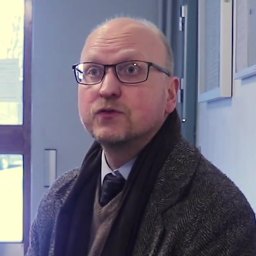 Mika Hakosalo
Project Manager, City of Stockholm
About this video
Valla Torg, an apartment complex constructed in the 1960s, holds significant historical and modern relevance. It became the focal point of Stockholm's GrowSmarter Project, an initiative that propelled Stockholm to the forefront of urban innovation, earning it the prestigious title of the "Smartest City in the World" at the Smart City Expo held in Barcelona. This recognition isn't merely honorary; it's rooted in tangible advancements observed at Valla Torg. The complex, a testament to the city's commitment to smart urban living, provides a living example of these futuristic concepts in daily life. We speak with Mika Hakosalo, the Project Manager at the City of Stockholm who plays a pivotal role in overseeing these developments.
This site and its story would be particularly interesting for urban planners, technologists, environmentalists, city manager and anyone intrigued by the integration of modern technology with urban development, as well as for those interested in the transformation and preservation of historical sites in the context of smart cities and contemporary urban challenges.
Read the transcript machine-generated
Latest Originals
See all 5:20
How Oxfordshire Is Using Low-Cost Sensors to Measure Safer, Greener Streets
 5:17
The Smart Tech Monitoring, Preventing Flooding
 4:24
Miami-Dade County Turns to Smart Solutions, AI to Improve Recycling
 4:45
AI Agents in Digital Twins: Bringing Promises to Life?
 5:57
Nature as a Sensor: Rethinking Smart Cities, Utilities
 2:57
Audio, the Forbidden Fruit of Smart Cities in France
Latest news in building efficiency
All news- Huelva Awards €71.4 Million Energy Efficiency Contract to Overhaul Public Lighting6 Aug 2026
- Liguria Region Allocates €20 Million For Public Building Energy Upgrades Under ERDF Program2 Jan 2026
- Nrlyze Raises € 900K to Expand AI Platform for Building Energy Efficiency25 Aug 2025
- Dublin Launches Digital Twin of 3,000 City-Centre Buildings to Support Net Zero Goals6 Aug 2025
Kurrant advisory
Planning a building efficiency project? Talk to Kurrant.
Behind these interviews is Kurrant's advisory team, working with utilities, cities and the companies that serve them.
- Strategy AdvisoryKurrant is actively involved in resolving the challenges that cities, utilities and industry players are facing.
- M&A AdvisorySmart city and utility expertise for successful deals, turning insights into strategic gains.
- Engineering & ProcurementBetter engineering and procurement decisions, by identifying and developing digital and IoT solutions across use cases.
Or write to us: contact@kurrant.com
Send us a message