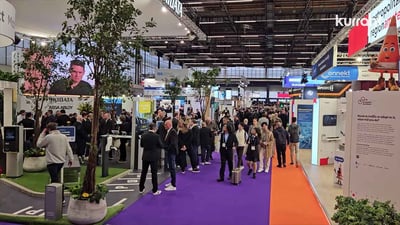
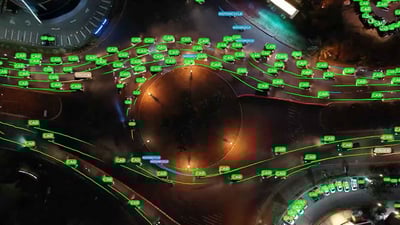
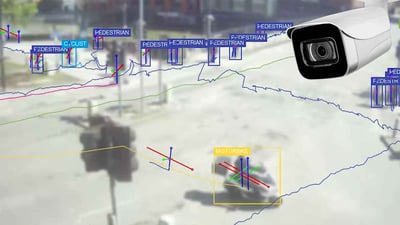
What do the Cannes Film Festival, Taylor Swift's concerts in Paris and the 2024 Olympics have in common? That these events are in France and that many celebs attend them, yes, but also, and more importantly, it's that authorities are using or have used a smart solution to keep people safe during the gatherings. The French Ministry of Interior has turned to visionAI, or computer vision, to ensure that 2024’s grand occasions, which attract many people, are secure. As a response to security concerns, the authority decided to test artificial intelligence to monitor and analyze video in real time to detect possible threats and issues. To do just that, the Parliament passed what is known as the 2024 Olympic and Paralympic Games Law, which led to the release of a tender and testing phase of these solutions. And it opens, an experiment period of time until March 2025. And during that period the French Ministry of Interior can test under certain context this technology. And indeed, by the end of this experiment period, there will be an evaluation to decide whether this technology is useful or not and whether it should be a permanent law about it. The goal of the project is to understand whether authorities can rely on this kind of solution during major events. If testing is successful, these solutions will become a standard when it comes to safety. The tender was awarded to Videtics, Wintics and Chapsvision, each winning an area to cover in France. It's like in fact a full deployment, but for a short time because, it's something that there's a beginning and an end. For example, in our case, we deployed our solution for the International Festival of Cannes. And so it's a 2 to 3 week of events. And so we deploy our solution for this period. For these big events, the companies must monitor safety in eight use cases: crowd surges, heavy crowds, abandoned objects, presence or use of weapons, a person on the ground, fire, wrong-way driving and intrusion detection. The solutions use already deployed CCTV cameras, and the companies only have to connect their servers to the video management systems, or VMS to retrieve the stream and add the computing capabilities and AI to start analyzing the images. It can be deployed in a day because you're leveraging already deployed infrastructure, meaning there is no need for new on-field deployments, which, as we all know, can be quite difficult. The price for these types of solutions ranges between €300 to €600 per camera per year. We do intelligent video analytics solutions. So in fact we gather stream from CCTV infrastructure. So CCTV cameras. And based on that we can make object detection. So we can detect vehicles, persons even boats to understand the use of the city. So in the security purposes, but also for the mobility. In fact, yes, we use computer vision, but also deep learning algorithms. So we use AI techniques to make the person detection, vehicle detection to classify also the vehicles, if it's a light vehicle, intermediate vehicle, heavy vehicle, this kind of thing and we use AI for that and we use in fact deep learning algorithm. We developed an AI real time video analytics platform, it can connect to any existing camera to provide data in real time. Of course, data can be security and safety alerts because cameras have been installed in the first place for those topics. But thanks to AI, we can go much beyond. We can provide a lot of other types of data. Users can set thresholds and even draw trigger lines, which will either send an alert when someone passes the line or count how many people go through that area, as well as identify dangerous situations. Depending on what was set and the use case, the platforms either send an alert and allow users to review the footage and then react accordingly to the situation in real time, or just add it to the total count, sending and adding the data in real time. Even though the Olympic Games of Paris were the main concerns when deploying vision AI solutions, the idea is to use it for other major events. For example, Videtics deployed their solution for the Cannes Film Festival, where they set up their servers on the premises along with the police. In fact, we had 15 cameras deployed for the festival And in fact, we had some alerts about some intrusion detection, some also on some vehicles going in the wrong way. And after we didn't have an alert, for example, for the crowd management because there was not any kind of movement in the crowd, all went quite well. So it's a good thing. For the Paris Olympics, for safety reasons, we can't know exactly the number and position of cameras boosted by visionAI, but Matthias assured me that the number was in the hundreds. This year's Olympic Games were marked by AI, which is also being used to curb cyberbullying, create videos, capture data, or even manage energy. So security was not going to be any different. Although only three companies are testing their solutions at the moment, this testing phase, if successful, could mean a great step forward for AI and smart city companies, as it would open the door to many regions and cities in France looking to deploy the technology thanks to the Olympics Law. It is also proof of the success and interest AI is generating when it comes to smart cities, as it has limitless possibilities and can use already deployed infrastructure, bringing down costs for cities and increasing scalability.
VisionAI Helps Boost Security During 2024 Olympic Games
The French Ministry of Interior has turned to VisionAI, or computer vision, to ensure that 2024’s grand events are secure. As a response to security concerns, the authority decided to test artificial intelligence to monitor and analyze video in real time to detect possible threats and issues. To do just that, Parliament passed in 2023 what is known as the 2024 Olympic and Paralympic Games Law, which led to the release of a tender and a testing phase of visionAI solutions during events like Taylor Swift’s concerts in Paris, the Cannes Film Festival or the Olympics.
In this video we discuss with Matthias Houllier, Head of International Sales at Wintics, and Alan Ferbach, CEO of Videtics, their VisionAI solutions, how they work and are being used, what use cases the Ministry of Interior is focusing on and what this testing period will mean for smart solutions.
View transcript auto-generated








📰 Latest News

🎬 Kurrant Originals
🎥 Recent Event Coverage

Featured Case Studies
Real client work behind the news. Strategy, M&A and engineering projects we've delivered for cities and utilities.

Stay in the Loop
Get smart cities and utilities insights delivered your way. Choose your channel
Join our WhatsApp Channel