in Barcelona
 3 to 5 Nov 2026
Loveland Water and Power (LWP), the city-owned utility serving Loveland, Colorado, is set to begin converting approximately 30,000 water service connections to Advanced Metering Infrastructure (AMI) technology this summer, in a phased programme budgeted at $12.4 million and scheduled to run through 2030.
A Logical Extension of a Completed Electric Overhaul
The water AMI rollout follows directly from the utility’s electric metering programme, which concluded in April 2025 after a faster-than-anticipated deployment. That electric project converted 42,190 connections and came in roughly $5 million under its original $14 million budget, freeing funds for a new customer engagement web portal. The water initiative effectively picks up where the electric programme left off, applying the same AMI approach to a separate but related asset class.
The City of Loveland announced the water AMI programme formally in a May 4, 2026 press release, noting that the utility had been installing AMI-compatible water meters for more than 15 years in preparation for this phase. That long-running preparatory work means a portion of the existing fleet already has compatible hardware and will need only communications retrofitting rather than full meter replacement.
This project is heading to tender
New smart water tenders worldwide, flagged daily with an AI summary.
Summer 2026 Pilot, then a Multi-Year Phased Deployment
Rather than moving immediately to mass deployment, LWP has chosen a deliberate ramp-up strategy. An initial cohort of 250 meters will be converted this summer, prioritising large irrigation systems and high-consumption accounts. That pilot is intended to stress-test infrastructure integration and fine-tune operational workflows before the programme scales. Broader citywide conversion is then planned to proceed at a target rate of around 6,000 meters per year beginning in 2027, subject to weather conditions, system performance, and budgetary alignment with the Water Division’s operating plan.
The full scope covers residential, commercial, multifamily, and irrigation customers across the utility’s entire water service area. A customer-facing online portal through which residents can view their own usage data is not expected to be available until 2027, reflecting the sequenced nature of the build-out.
What the Technology Delivers
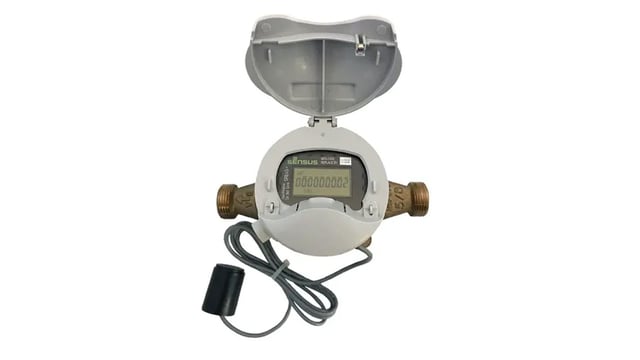
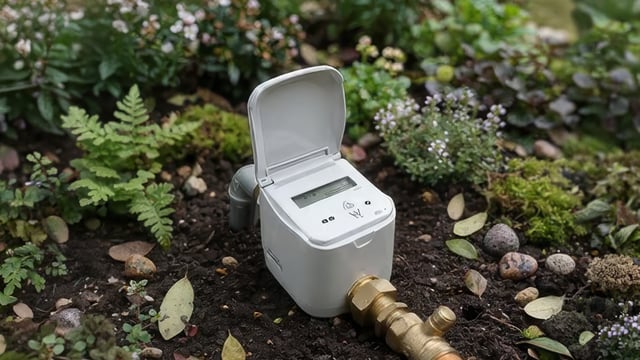
The AMI system enables remote, real-time meter reads transmitted via radio communications over the city’s existing fibre backhaul network, the same infrastructure that supports the electric AMI already in operation. Current manual reading cycles mean that leaks on a customer’s system may go undetected for up to 30 days. Under AMI, the utility expects to identify abnormal water use within 24 to 48 hours. The system also supports measurement resolution down to the single gallon, compared to the 1,000-gallon increments that characterise existing meters.
An additional capability cited by the utility is temperature monitoring: if water temperature drops below the mid-30s Fahrenheit, the system automatically alerts operations staff, enabling proactive response before freeze-related pipe failures occur.
“A citywide conversion to AMI brings a rare opportunity for the City to conduct a comprehensive inspection of every meter valve and water service and replace aging infrastructure where needed,” the City of Loveland stated in its May 2026 press release. “This especially matters for older homes, where proactive upgrades could prevent equipment failure.”
The efficiency gains are not purely operational. According to grant application documents submitted to the Colorado Water Conservation Board (CWCB), the city has lost an estimated 93 million gallons of water annually over the past five years due to metering inaccuracies alone, with a further 272 million gallons attributed to real-water losses. The AMI system is projected to recover approximately 450 million gallons per year once fully deployed.
Funding: Bonds, a State Grant, and Utility Rate Revenue
The $12.4 million programme draws on three sources. The largest share, $7 million, comes from water bonds approved in 2025. A $2.2 million Water Plan Grant from the CWCB, approved in the July 2025 grant cycle, covers conservation and land-use planning components. The remainder is funded through the Utilities Enterprise Fund, which is sustained by customer rates, charges, and fees rather than general-fund revenue. The project is formally listed in the water utility’s 10-year Capital Improvement Plan with implementation spanning 2026 through 2030.
The CWCB grant was awarded through Colorado’s Water Plan Grant programme, which supports projects aligned with the state’s 2023 Colorado Water Plan and its goal of addressing a projected gap between supply and demand by 2050.
Colorado’s Renewable Energy Mandate as a Policy Driver
Colorado state legislation passed in 2019 mandates an 80% reduction in carbon emissions from 2005 levels and sets a 100% renewable energy target for electricity generation by 2040. Platte River Power Authority, Loveland’s regional energy supplier, has set an earlier internal target of 100% renewable generation by 2030. Managing a grid powered entirely by variable renewable sources demands more granular consumption and demand data than conventional metering can supply, which formed part of the rationale for the electric AMI investment. The water programme, while not directly driven by that same mandate, reinforces the city’s broader resource-management and sustainability posture as it works toward those energy targets.
The Loveland water AMI deployment fits into a wider pattern of US municipal utilities investing in metering modernisation. As previously covered on Kurrant, utilities including NIPSCO in Indiana are undertaking large-scale AMI transitions across both electric and gas assets, while international deployments such as those by Northumbrian Water in the UK are demonstrating the value of AMI-backed leak detection at scale. Loveland’s phased, self-funded model offers a useful reference point for similarly sized municipal utilities weighing the capital case for water metering modernisation.