The Alabama Department of Transportation (ALDOT) is rolling out cloud-based traffic signal performance analytics across its entire road network, expanding a tool previously deployed at just 50 intersections in a single region to cover 1,149 signalized intersections across all five ALDOT regions. The statewide deployment, announced on March 18, 2026, leverages Iteris‘ ClearGuide Signal Trends platform, underpinned by real-time probe data from HERE Technologies.
From Pilot to Statewide: A Data-Driven Scale-Up
ALDOT’s move from a limited regional pilot to full statewide coverage marks one of the more substantial public-sector expansions of probe-based signal analytics in the United States. The previous deployment covered 50 signals in one of the five ALDOT regions; the new scope represents a roughly 23-fold increase in coverage without requiring any new physical infrastructure at intersections.
The project builds on a multi-year collaboration between ALDOT, Iteris, and HERE, and is structured to use combined data insights to proactively adjust signal timings and measure the operational impact of those changes in near real-time.
How ClearGuide Signal Trends Works
ClearGuide Signal Trends is a cloud-hosted performance analytics module within Iteris’ broader ClearMobility platform. Rather than relying on embedded loop detectors or roadside sensors, the tool draws on anonymized GPS trajectory data aggregated from connected vehicles, fleet telematics, and navigation systems.
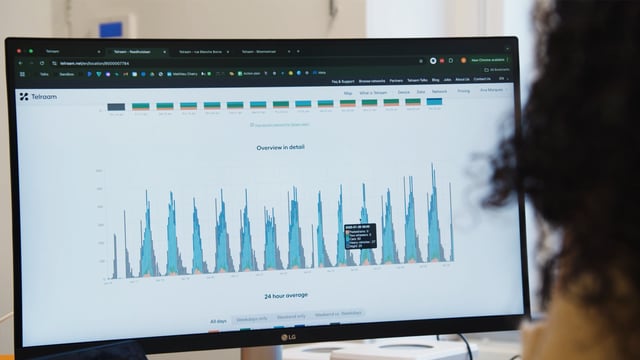
The platform refreshes intersection-level performance data every 10 to 15 minutes, giving traffic operations staff a continuously updated view of conditions across the network. Key metrics tracked include Arrivals on Green, the share of vehicles reaching a signalized intersection during a green phase, alongside delay patterns, congestion onset, and anomalous signal behavior.
For ALDOT, this means engineers can identify underperforming intersections remotely, prioritize retiming efforts based on live data rather than scheduled calendar cycles, and track the before-and-after impact of timing adjustments without deploying field staff to each location.
Statewide Operational Gains
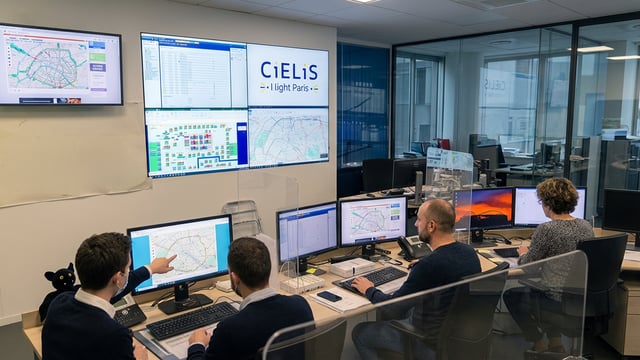
With visibility now extended across all five ALDOT regions, the agency gains a consistent operational picture spanning both urban corridors and rural highway networks. Traffic management centers will be able to detect and diagnose congestion, abnormal timing patterns, and maintenance-related degradation from a single interface, reducing the time and cost associated with field-based troubleshooting.
The system integrates with other ClearGuide modules, including ClearGuide Roadways and ClearGuide SPM, allowing ALDOT to manage signal performance alongside broader arterial analytics within one unified platform.
Anticipated benefits for road users include reduced stop-and-go travel, shorter idle times, and improved journey reliability, particularly in areas such as school zones, business districts, and pedestrian-heavy corridors.
The Role of HERE Technologies’ Probe Data
The analytics layer is powered by probe data supplied by HERE Technologies, a Netherlands-based location technology platform majority-owned by a consortium that includes Audi, BMW, and Mercedes-Benz. HERE aggregates anonymized GPS observations from more than 160 data providers globally, covering connected vehicles, OEM navigation systems, and fleet telematics.
For the ALDOT deployment, HERE’s data feeds into ClearGuide Signal Trends to provide the underlying speed and trajectory observations that enable intersection-level performance monitoring without physical detection infrastructure. This approach is particularly valuable for rural and lower-volume corridors where installing and maintaining roadside sensors would be cost-prohibitive.
Context: The Shift Toward Infrastructure-Free Signal Analytics
The Alabama deployment reflects a broader pattern in U.S. transportation operations, where agencies are increasingly adopting cloud-based, probe-driven analytics to stretch limited capital and operations budgets. Traditional signal performance monitoring using Automated Traffic Signal Performance Measures (ATSPMs) requires physical detection hardware at each intersection; probe-based approaches remove that constraint entirely.
ALDOT’s expansion is notable in that it covers the full spectrum of the state’s road network, not just high-volume urban corridors, which is a practical test of how well probe density translates into actionable analytics in lower-traffic rural settings. The contract value for the statewide expansion has not been publicly disclosed.