The Torrevieja City Council has completed a public lighting modernization and expansion project covering seven locations across the Alicante coastal municipality, awarding the contract to Sociedad Ibérica de Construcciones Eléctricas S.A. (SICE) for a final price of €177,739.53 including VAT. Announced on June 18, 2026, the works introduce pedestrian proximity sensors, 46 point-to-point telemanagement modules, and new control infrastructure along the CV-905 corridor, positioning the project as a step toward adaptive, connected public lighting in a city of approximately 100,000 permanent residents on Spain’s Costa Blanca.
A Tender That Delivered 20% Below the Base Budget
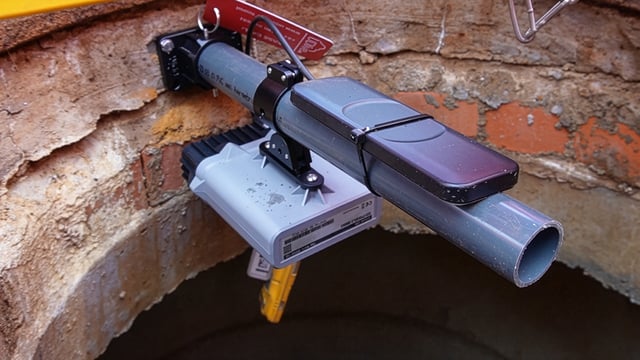
The contract was procured through a simplified open procedure and awarded at a 20.12% reduction from the base tender budget of €222,508, generating direct savings for the municipal treasury. SICE supplemented its winning bid with two voluntary improvements: an extended warranty period of six years and the installation of 46 point-to-point remote management modules with software interoperable with Torrevieja’s existing municipal lighting control system. The combination of competitive pricing and embedded technical upgrades is consistent with the procurement dynamics increasingly seen in Spanish municipal lighting tenders, where bidders differentiate through added-value offers rather than price alone.
Seven Sites, One Intervention: Where the Works Took Place
Construction covered Calle Eugenio Segarra Torregrosa, Calle Gardenias, the green zone of Calle Patricio Pérez, Travesía Frasquito, the roundabout at Avenida Rosa Mazón Valero, Plaza Islas Canarias, and the stretch of the CV-905 regional road toward Calle Orihuela. Several of these locations previously had no lighting coverage at all, including Travesía Frasquito, where new light points were installed from the ground up. In high-pedestrian-traffic areas such as the Rosa Mazón Valero roundabout and Plaza Islas Canarias, the council installed new poles and luminaires specifically to improve nighttime visibility and safety.
Pedestrian Proximity Sensors and Point-to-Point Remote Management
The most technically layered element of the project is the intervention along the CV-905 and Calle Orihuela. A new control cabinet was installed to manage the lighting circuit, and luminaires equipped with pedestrian proximity sensors were deployed, allowing light intensity to be adjusted dynamically based on real-time occupancy. Projectors across several roundabouts in the area were also replaced. This segment introduces behavioral dimming logic to Torrevieja’s infrastructure, enabling energy output to track actual pedestrian activity rather than operating on fixed schedules.
Point-to-point remote management, in which each luminaire or fixture communicates individually with a central control platform rather than through shared circuit-level switches, has become a standard procurement requirement in Spanish municipal lighting contracts. The approach enables granular fault detection, per-fixture scheduling, and individual dimming, and it supports future integration with broader smart city applications including environmental sensors and traffic monitoring.
Torrevieja’s Broader Infrastructure Push in 2026
This lighting contract is one component of a significantly expanded municipal investment envelope. The Torrevieja City Council approved a record budget of €187.7 million for 2026, an 11.38% increase over 2025, with infrastructure spending reaching €46.2 million — a 44% year-on-year rise. Public lighting and security upgrades were explicitly named as priority investment areas within that budget. The council also approved a separate public lighting maintenance contract in June 2025 valued at approximately €4.36 million over five years, covering remote management of all municipal electrical panels and energy efficiency objectives. The June 2026 completion reinforces a pattern of layered, sequential investment in the network rather than a single large-scale overhaul.
Market Backdrop: Spanish Municipalities as Active Buyers of Smart Lighting
Spain’s municipal street lighting market remains one of the most active in Europe for sensor-equipped and remotely managed deployments. As Kurrant has documented in its coverage of Valencia’s smart lighting transformation, Spanish cities have moved well beyond basic LED retrofits toward layered sensing capabilities including pedestrian presence detection, photocell controllers, and EV charging integration within the same lamppost infrastructure. The December 2025 tender for Caravaca de la Cruz’s 8,950-point public lighting network, ultimately awarded to a Ferrovial-Iberdrola joint venture for €18.2 million, illustrates the scale at which ESE-model contracts are being structured at the regional level. Torrevieja’s project operates at a different scale but applies the same core logic: interoperable telemanagement, adaptive intensity, and procurement structures that incentivize bidders to add technical value rather than simply compete on price.