Seven local authorities in South Essex have brought a region-wide low-power wide area network (LoRaWAN) for Internet of Things (IoT) connectivity online, covering 98 percent of the area through 44 gateway sites and arriving £40,000 under the original budget. The Association of South Essex Local Authorities (ASELA), comprising Basildon, Brentwood, Castle Point, Rochford, Southend-on-Sea, Thurrock, and Essex County Council, commissioned the infrastructure to give all seven bodies a shared platform for rolling out smart services without building dedicated networks for each new use case.
A Decade of Shared Infrastructure Sets the Stage
The LoRaWAN deployment is the latest layer in a multi-year digital buildout that ASELA has pursued since its formation in 2018. South Essex Councils secured approximately £7.5 million from the Department for Digital, Culture, Media and Sport, the Ministry of Housing, Communities and Local Government, and the South East Local Enterprise Partnership to construct a 280-kilometre dark fibre network connecting more than 200 public sector sites, including council offices, schools, GP surgeries, libraries, and care homes. That fibre backbone, delivered in three phases by infrastructure provider ITS, completed in 2021 and was subsequently extended with a further £2.5 million in government funding to bring total coverage from 130km to over 200km. The LoRaWAN project uses that existing fibre as its backhaul, meaning the wireless sensor network did not require new trenching or civil works to connect gateways to the internet.
Highways England Grant Triggers IoT Procurement
National Highways (formerly Highways England) granted £900,000 to South Essex Councils to design, build, and deliver the LoRaWAN network. The procurement was conducted by Southend-on-Sea City Council on behalf of ASELA under the Crown Commercial Service RM6116 Network Services 3 framework, Lot 3a: IoT and Smart Cities. Abzorb Systems, a Brighouse-based managed services provider with over 30 years of public and private sector networking experience, was awarded the contract. Public procurement records show the contract value with Abzorb at £314,689.75, with the wider Highways England grant covering programme management and related costs across the partnership.
RF Planning Cuts Gateway Count by 27 Percent
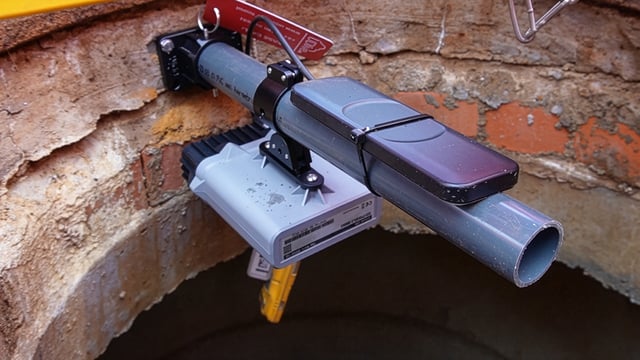
Abzorb’s approach to the rollout centred on radio frequency planning before a single gateway was ordered. Through detailed RF modelling and site-by-site propagation analysis, the team reduced the number of required gateways from an initial estimate of 60 to 44, trimming both capital cost and ongoing maintenance obligations while maintaining the 98 percent coverage target. The end-to-end delivery scope covered site surveys, installation, testing, risk assessment and method statement (RAMS) documentation, health and safety compliance, and direct coordination with each council’s estate teams. The network was designed as an open, multi-vendor platform, allowing any of the seven councils to procure sensors from any manufacturer and connect them without proprietary constraints.
Live Use Cases Span Buildings, Transport, and Environment
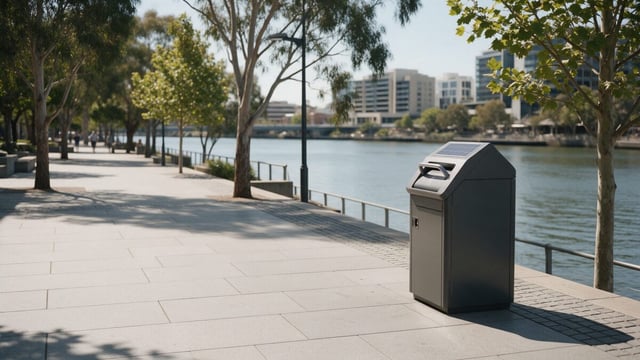
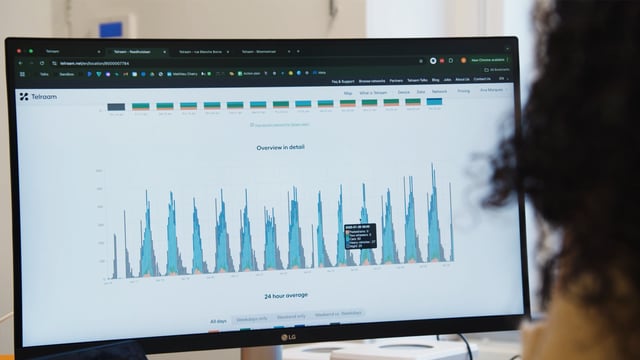
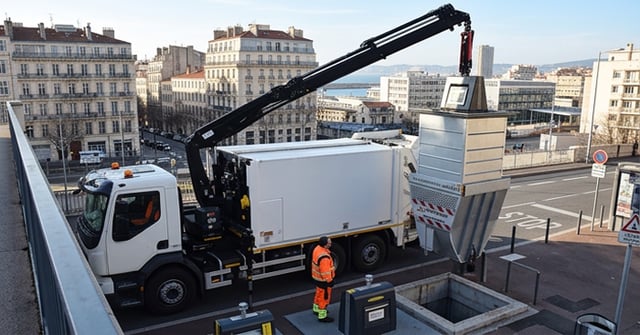
With the network live, councils are deploying sensors across multiple service domains. Current applications include footfall counters in libraries and public spaces, occupancy and damp sensors in council buildings, flood and temperature monitoring, bin-fill detection, carbon monoxide detection, Legionella compliance monitoring, and vehicle and pedestrian counting at road junctions. The open architecture of LoRaWAN, which transmits small packets of data over distances of several kilometres on sub-gigahertz frequencies using battery-powered end-nodes, makes it well suited to these low-throughput, always-on monitoring tasks where cellular connectivity would be disproportionately expensive.
Dual-Network Model Creates a Route to Revenue
Alongside the public sector network, Abzorb built a second LoRaWAN tier that the councils can open to local businesses, community organisations, and other public sector partners. This mirrors a commercial carrier-class model alongside the free-to-use public layer, giving ASELA the option to offset infrastructure costs through licencing revenue over time. The model already has a regional precedent: Southend-on-Sea City Council has separately licensed access to the same LoRaWAN infrastructure to Connexin, which is using it as part of a programme with Essex and Suffolk Water to roll out up to one million smart water meters across Essex and Suffolk by 2035. Kurrantly previously reported on the Connexin and Essex and Suffolk Water metering initiative, which relies on the same underlying 280km fibre and LoRaWAN gateway layer now serving all seven councils.
South Essex Joins a Growing Pattern of UK Council LoRaWAN Deployments
The shared-infrastructure model differentiates South Essex from earlier UK public sector IoT approaches in which individual councils built siloed networks. Suffolk County Council’s earlier LoRaWAN initiative, for instance, delivered coverage across a single county but was primarily aimed at stimulating experimentation rather than anchoring operational services across multiple administrative bodies. The South Essex model pools seven councils’ commissioning power under a single framework procurement, shares capital expenditure across a wider base, and removes the per-council infrastructure barrier to every future IoT service. Abzorb’s previous public sector work, including a £1.2 million SD-WAN transformation for Norfolk County Council across 221 sites, follows a similar pattern of shared-cost design and open architecture.
Councils Signal Appetite to Expand Service Count
“What impressed us most about Abzorb was the way they approached this as a genuine partnership. They took the time to understand what we were trying to achieve across six different councils, each with their own priorities and pressures, and came back with a solution that is smart and future-proof,” said Carol Thomas, Director of Digital and ICT at Southend-on-Sea City Council, in a June 2026 statement reported by Computer Weekly. “We now have a platform that every department across the region can build on, and the fact that it came in under budget only reinforces how much value Abzorb brought to this project.” With the gateway layer now complete, all seven councils are in the process of expanding the sensor count across libraries, public buildings, roads, and environmental monitoring sites, adding new use cases incrementally without the cost of separate infrastructure per deployment.