The City of Brampton, Ontario said on June 26, 2026 that it is advancing the next phase of its Vision Zero road safety strategy, proposing to expand its red light camera network to as many as 35 cameras by 2028, pilot noise-detection cameras starting this fall, and explore transferring idled speed cameras to Peel Regional Police for licence plate recognition. The announcement follows the Ontario government’s province-wide ban on municipal automated speed enforcement (ASE), which took effect in November 2025 and forced Brampton to retire one of the largest single-municipality speed camera deployments in the province. City officials frame the measures as a shift toward enforcement and infrastructure tools that do not rely on speed cameras, supported in part by a provincial road safety grant program created specifically to fill the gap.
Red Light Camera Network To Nearly Triple By 2028
Brampton currently operates 15 red light cameras and is developing a city-led Red Light Camera program that would add 20 more through a phased rollout, reaching up to 35 cameras by 2028. Two new cameras are scheduled for installation this summer, with operations expected to begin in 2027. The city says future locations will be chosen based on collision history, traffic volumes and other safety risk factors rather than a fixed schedule.
For context, Peel Region’s own published count puts the current regional total at 35 red light cameras across Brampton, Mississauga and Caledon, a reminder that Brampton’s expansion plan would shift a meaningful share of red light enforcement from a regional program to a city-run one.
City To Take Over Ticket Processing At Idled Speed Camera Facility
Brampton is also working toward processing red light camera tickets on behalf of Peel Region at its Sandalwood Operations Centre at 175 Sandalwood Parkway West, with that transition targeted for 2027. The roughly 15.74-acre facility was purchased for close to $78 million (CAD) and opened as the city’s automated speed enforcement processing hub, only to be sidelined when the province’s camera ban took effect weeks later, as previously reported by insauga. Repurposing the centre for red light ticket processing would expand the city’s Administrative Penalty System and, the city says, position Brampton to offer processing services to other municipalities.
Noise Camera Pilot Aims To Quantify A Persistent Complaint
A separate one-year pilot, expected to launch in fall 2026, will use microphones paired with cameras to detect vehicles producing noise above a set decibel threshold and capture an image and licence plate of the offending vehicle. No tickets will be issued during the pilot. Instead, the city says the data will help evaluate the technology’s accuracy and inform a push for provincial legislative changes that would allow automated noise enforcement in Ontario, where no such legal framework currently exists. A Privacy Impact Assessment is planned before the pilot moves forward.
Retired Speed Cameras May Get A Second Life With Police
The city is also exploring transferring some of its now-idle ASE units to Peel Regional Police for redeployment as automated licence plate recognition (ALPR) systems. That effort builds on a separate 2025 rollout of community safety technology, including 360-degree cameras and ALPR, at 50 Brampton intersections. As Kurrant reported at the time, that project paired 200 Genetec AutoVu SharpV plate recognition cameras with 360-degree footage from Axis Communications, managed through Genetec’s Security Center and Clearance evidence platforms. According to Global News, Mayor Patrick Brown said in May 2026 that the intersection cameras had already assisted Peel police in more than 200 investigations.
Detection Methods Differ Sharply Across The Camera Types
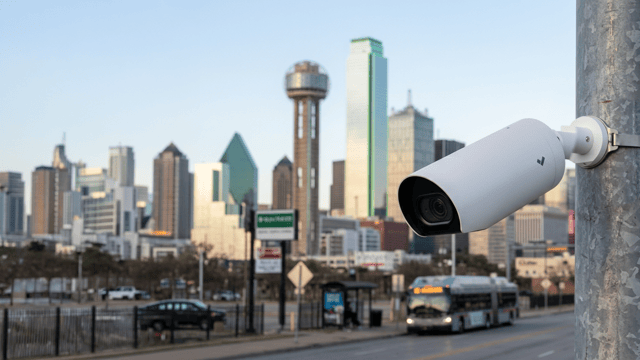
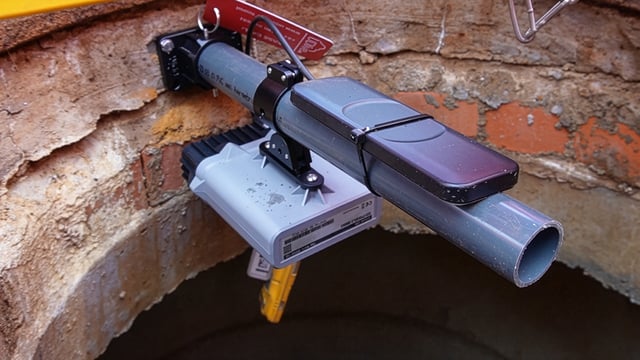
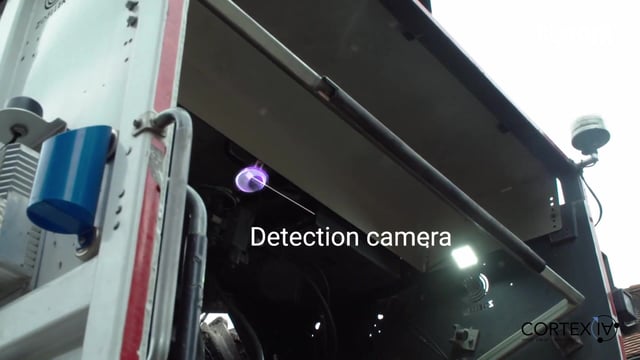
The expanded red light cameras and the police-facing plate recognition cameras rely on different detection approaches, even though both ultimately produce a licence plate read. Jenoptik’s VECTOR SR and TraffiStar platforms, the supplier most likely to extend its existing footprint into Brampton’s new red light program, detect violations using non-invasive radar to track when a vehicle crosses the stop line after a signal turns red, then trigger an automatic number plate recognition (ANPR) camera to capture and log the plate. That is a rules-based detection pipeline built around a physical sensor trigger, not a deep learning system, though the plate-reading step itself uses computer vision.
The 200 Genetec AutoVu SharpV cameras already deployed for Peel Regional Police work differently. Genetec markets SharpV around an onboard machine learning ALPR engine and dedicated vision processing units that classify vehicle make, color and behavior in addition to reading plates, making it the more AI-driven system of the two and the one more likely to expand if Brampton follows through on transferring retired speed cameras to police. The city has not disclosed a vendor or detection method for the noise camera pilot, so whether that system will use any form of AI-based sound classification remains unconfirmed.
Funding Flows From Ontario’s $210-Million Road Safety Fund
Brampton has secured $6.9 million (CAD) from the province’s Road Safety Initiatives Fund and is applying for up to an additional $27.9 million to support traffic calming, signage and pedestrian infrastructure. The fund itself is a $210 million provincial program the Ministry of Transportation launched in November 2025 after Ontario’s ban on municipal speed cameras took effect, an early $42 million tranche followed by a second intake of up to $168 million that opened to applicants in February 2026. More than 40 Ontario municipalities had operated automated speed enforcement before the ban, according to the Ontario government.
“Road safety becomes even more important,” said Patrick Brown, Mayor of the City of Brampton, in the city’s June 26, 2026 news release detailing the strategy.
Existing Traffic-Calming Infrastructure Remains The Backbone
Alongside the new technology pilots, Brampton points to a broader inventory of physical measures already in place: 210 Community Safety Zones with enhanced speeding penalties, 15 Neighbourhood Speed Safety Zones with reduced limits, more than 150 streets fitted with speed cushions, 42 pedestrian crossovers and 116 accessible pedestrian signals. City officials describe these as the foundation the new camera programs are meant to supplement rather than replace.
Vendor Picture Still Forming As Program Takes Shape
The city’s release does not name a supplier for the expanded red light camera network or the noise camera pilot. Jenoptik supplied and operated Brampton’s 185 retired ASE cameras under a five-year contract and has separately provided red light camera equipment across Peel Region for more than a decade, according to Peel Region, though it is not confirmed whether that relationship extends to the new city-led program. The noise camera pilot’s technology supplier has likewise not been disclosed.