Türkiye activated its nationwide Deposit Return System (DOA) on July 1, 2026, introducing a one-Turkish-Lira refund per eligible plastic, glass, and aluminium beverage container across all 81 provinces and 973 districts of the country. The system, managed by the Turkish Environment Agency (TÜÇA) under the Ministry of Environment, Urbanization and Climate Change, is projected to recover approximately 25 billion single-use beverage containers annually and generate around TL 30 billion (approximately $643 million) in economic value each year. The initiative targets a collection rate of 90 percent, more than doubling Türkiye’s current rate of approximately 35 percent.
From Pilot to National Scale: The DOA Program’s Development Path
The program originated as a pilot in Sakarya province before expanding to 72 provinces, during which more than 38 million beverage containers were recovered. Results from the early stages were material: Ankara’s Kızılcahamam district recycled around 472 tons of waste in one year, while Sakarya collected 100 tons of glass within the first month and a half. As Kurrantly News reported in January 2025, the system had been structured around TÜÇA with backing from the Union of Chambers and Commodity Exchanges of Türkiye (TOBB) and the Confederation of Turkish Tradesmen and Craftsmen (TESK) to coordinate field-level operations across thousands of collection points.
The July 1 rollout raised the per-container refund from the TL 0.25 incentive used in pilot provinces to TL 1, a fourfold increase designed to meaningfully shift consumer behavior at national scale. Minister of Environment, Urbanization and Climate Change Murat Kurum has stated the refund is financed through fees paid by producers, with no additional cost passed on to consumers.
System Architecture: Reverse Vending Machines, Digital Wallets, and End-to-End Tracking
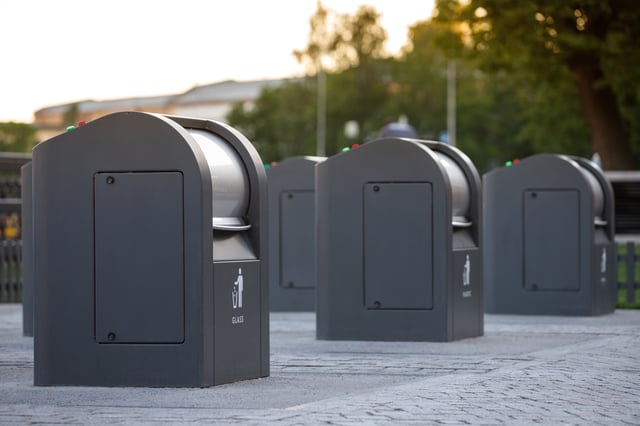
According to TÜÇA President Nurullah Öztürk, 1,148 reverse vending machines have been installed across the country, with six domestic manufacturers supplying the equipment. Twenty-three operators have been authorized to manage collection, transportation, and verification processes. The program currently includes 853 hospitality and food-service businesses and 304 manual return points operating nationwide.
“From producers to consumers, from return points to recycling facilities, the entire process is tracked digitally. In this way, we are creating both a transparent and reliable structure,” said Nurullah Öztürk, President of the Turkish Environment Agency (TÜÇA), speaking to Anadolu Agency ahead of the July 1 launch.
The DOA mobile application, available on Android and iOS, allows consumers to scan QR codes to operate return machines and receive refunds directly into a digital wallet. Funds can be transferred to personal bank accounts through Türkiye Emlak Katılım Bankası‘s infrastructure, used at participating retailers, or withdrawn from ATMs. Return point locations are also searchable through the DOA app and the system’s website, giving users across all districts the ability to locate the nearest machine
Eligible Materials and Mandatory Labeling Requirements
The system covers PET bottles, glass bottles, and aluminium cans marked with the official DOA logo. Packaging producers, beverage brands, retailers, and recyclers must align on pack identification, return compatibility, collection infrastructure, and material recovery, with the DOA logo serving as the eligibility marker. Eligible containers range from 0.1 liters to 3 liters in glass, plastic, and aluminium formats, covering product categories including soft drinks, water, juices, energy drinks, alcoholic and non-alcoholic beers, and wines.
Manufacturers must register products via the national portal at dbys.gov.tr, obtain approval from the Packaging Approval Center, and ensure eligible containers carry a special barcode alongside the DRS logo. Non-compliance carries regulatory penalties. Minister Kurum noted that barcode application on every bottle has been made mandatory as a foundational element of the chain-of-custody verification model.
Projected Environmental and Raw Material Impact
TÜÇA estimates the system will reduce greenhouse gas emissions by approximately 37,000 tons annually, save 1.3 billion kilowatt-hours of energy, and prevent the use of 3.6 million barrels of oil each year. Öztürk also said increased recycling rates are expected to reduce imports of raw materials used in beverage packaging by between 35 and 40 percent.
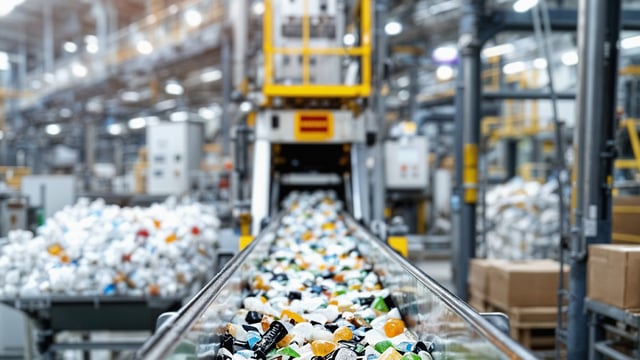
The reverse vending machines allow for clean material separation at the source, ensuring high-quality feedstock for the recycling stream. Recovered materials are then fed back into domestic production cycles, reducing dependence on primary raw material imports. Aluminium in particular offers substantial energy savings when recycled rather than smelted from bauxite, a factor that amplifies the system’s aggregate energy benefit at the scale of billions of containers.
Benchmarking Against European Deposit Return Systems
Among established European deposit return programs, collection rates exceed 90 percent in Finland, Germany, Denmark, and Norway, with a median rate of 90 percent across European systems according to analysis from the Reloop Platform. Lithuania’s experience is particularly instructive: before its deposit system launched in 2016, fewer than one-third of all beverage containers were recycled; within two years, that figure rose to 92 percent.
Türkiye’s 90 percent collection target would place it alongside the best-performing deposit return countries in Europe, a significant shift from a baseline that currently sits well below the EU average. The trajectory from pilot to national implementation, combined with the fourfold increase in the deposit incentive, tracks the design parameters that have driven rapid adoption in comparable markets.
Governance Structure and COP31 Context
TÜÇA manages the program with support from TOBB and TESK, with the Zero Waste Foundation providing strategic backing under the broader Zero Waste initiative championed by First Lady Emine Erdoğan. Minister Kurum has framed the deposit system as a flagship action ahead of COP31, which Türkiye is hosting in Antalya in November 2026, where it plans to demonstrate practical, scalable circular economy solutions. The ministry has also indicated that regulations targeting single-use plastics are expected to follow in September 2026. Türkiye TodayTürkiye Today
Kurum has stated a long-term recycling rate target of 80 percent for Türkiye’s circular economy by 2053, in alignment with the country’s net-zero emissions goal for that year. The DOA system represents the most operationally significant step in that roadmap to date, shifting Türkiye from a relatively fragmented collection infrastructure to a nationally integrated, digitally tracked deposit scheme covering 86 million people.