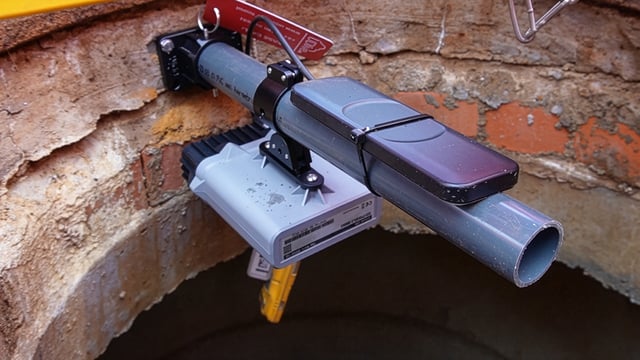
Murcia City Council is rolling out an artificial-intelligence occupancy-monitoring system to track real-time capacity in municipal buildings, public spaces, tourist sites and market halls across the southeastern Spanish city, in a €252,066 deployment announced in early July 2026. The project installs 33 optical sensors, 25 distributed around the city and eight inside the municipality’s market halls, feeding anonymized headcounts into the council’s Smart City Platform. Officials present the system as a tool to strengthen public safety, sharpen event planning and improve how municipal resources are allocated.
A €252,066 Budget Split Between Counting Software And Market-Hall Sensors
The council has committed €252,066 to the two linked systems, financed entirely through the European Union’s Next Generation EU recovery funds under Spain’s Recovery, Transformation and Resilience Plan. Of that total, €140,495.87 covers the visitor-counting and capacity-control system, while €111,570.25 pays for the videosensors going into the city’s eight municipal market halls. The work forms part of a wider program branded “Digital Transformation of Tourism in Murcia: Intelligent Management and Sustainability Platform.”
On-Device AI That Sends Counts, Not Images
The deployment uses optical sensors with built-in artificial intelligence that process footage directly on the device. According to the council, the equipment transmits only numerical counting data to the platform, leaving the information fully anonymized and limited to aggregate analysis, an approach it says complies with Spain’s data-protection rules. Privacy-by-design and edge processing of this kind have become the default for public-space people-counting, since keeping raw imagery off the network reduces regulatory exposure.
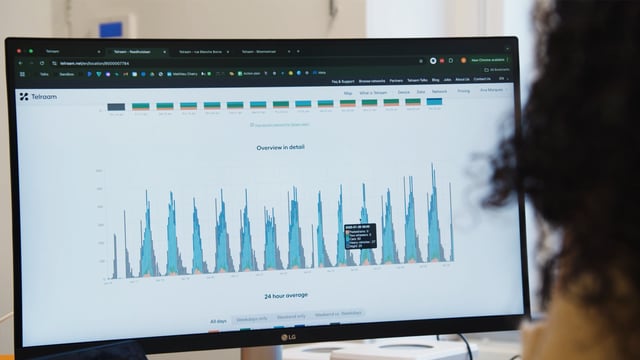
The sensors register entry and exit flows, detect high-occupancy situations and trigger alerts once defined thresholds are reached. That data flows into dashboards and indicators inside the platform, giving municipal services a real-time view for decisions on staffing, security and scheduling.
From Three Pilot Plazas To A City-Wide Occupancy Layer
The current rollout builds on an earlier pilot. In late 2025 the council installed its first pedestrian-counting devices in three central squares, Plaza Circular, Cardenal Belluga and Glorieta de España, measuring footfall by zone and time band. The new phase extends coverage to municipal buildings, tourist enclaves and the market halls, with the first market-hall units going into Plaza del Cardenal Belluga.
Where The Sensors Fit In Murcia’s €1.9 Million Platform Overhaul
The occupancy work sits alongside a much larger contract. In March 2026 the city’s government board awarded the design and development of Murcia’s new smart-city platform to INNOVASUR (Innovaciones Tecnológicas del Sur) for €1,905,049.99, the only bid submitted against a €1.92 million tender. That contract explicitly covers video analytics for visitor counting and capacity control, along with waste-management sensors, public-lighting control and carbon-footprint tools, though the July announcement did not name the supplier of the 25 videosensors themselves.
The platform also connects Murcia’s MiMurcia system to the regional Smart Región network and to the national node run by SEGITTUR, the state tourism-technology agency. MiMurcia, the city’s street-lighting modernization effort, spans more than 100,000 light points and began with a pilot covering 1,000 luminaires and 13 control cabinets.
Next Generation EU And The Contest Among Spain’s Smart Tourism Destinations
Murcia’s spending flows from the Smart Tourism Destination platform (PID), a Next Generation EU line administered through SEGITTUR. The city scored highest nationally in that call, 94.9 out of 100, unlocking a subsidy of more than €5 million for its digitalization strategy. The result places Murcia among the more aggressive mid-sized Spanish cities converting pandemic-era recovery money into permanent urban-data infrastructure.
Officials expect the counts to strengthen crowd safety, flag under-used or congested spaces and inform services from cleaning to lighting to policing. The council frames the sensors as one layer in a broader effort to fold urban services into a single operational picture of how the city is used.