The Ayuntamiento de El Poble Nou de Benitatxell, a coastal municipality of roughly 5,200 residents in Spain’s Alicante province, has begun installing connected environmental sensors, weather stations and a municipal LoRaWAN network to monitor wildfire risk in real time. The rollout, confirmed in early August 2026, expands on a surveillance system of two 360-degree cameras the town activated in November 2025, and both initiatives are financed through the European Union’s post-pandemic recovery funding channeled via Spain’s tourism sustainability grant program. The council says the goal is earlier detection of fire-prone conditions and faster emergency response across a municipality that borders the fire-scarred Granadella coastal park.
A Municipality Still Shaped by a Major 2016 Wildfire
Benitatxell and neighboring Xàbia sit adjacent to La Granadella, a rugged coastal area that burned in a 812-hectare wildfire in September 2016 that forced the evacuation of roughly 1,400 residents and destroyed homes across 16 developments. That event remains the reference point for local fire planning nearly a decade later. Since then, the town has built out a network of 84 geolocated hydrants mapped with GPS and accessible to firefighters via smartphone, part of a broader effort by Protección Civil to speed water access during active fires.
Sensors and Weather Stations Feed a Real-Time Risk Picture
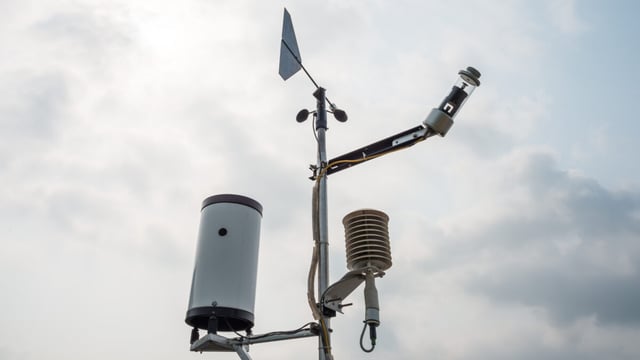
The newly announced system pairs connected environmental sensors with weather stations capable of tracking temperature, humidity, wind and other variables tied to fire risk, according to the municipal announcement. The stated aim is to sharpen early detection and give Protección Civil and environmental managers more precise, localized data than standard regional forecasts provide. A separate wave of weather stations installed alongside the town’s earlier camera deployment already extends the coverage of official forecasting sources such as the Generalitat Valenciana and Spain’s national meteorological agency AEMET down to specific zones within the municipality.
A LoRaWAN Backbone Built for More Than Fire Detection
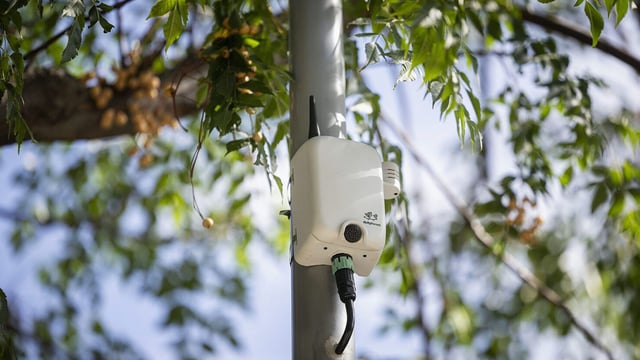
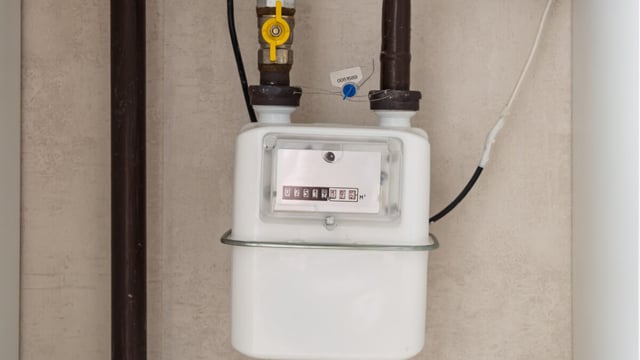
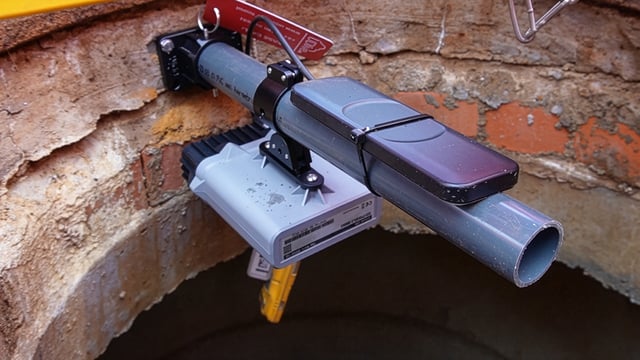
Underpinning the sensor deployment is a new municipal LoRaWAN network, a long-range, low-power wireless standard widely used for distributed environmental and utility monitoring. Town officials describe the network as infrastructure that will also support future smart-water telemetry, public-service monitoring and broader environmental management, not fire detection alone. That dual purpose is already visible: the same municipality is separately rolling out 990 LoRaWAN-enabled smart water meters to replace manual meter readings and improve leak detection and consumption tracking. Neither the sensor project nor the meter rollout names an external technology vendor or systems integrator in public materials reviewed for this article.
Cameras Add a Visual Layer Managed by Civil Protection
The sensor and weather-station network builds on two 360-degree surveillance cameras the town’s Concejalía de Seguridad Ciudadana installed at strategic points in November 2025, exclusively operated by Protección Civil personnel. Officials say the cameras are designed primarily to spot wildfires but also assist with locating missing persons, detecting power outages and tracking severe weather. “The combination of cameras and weather stations allows us to anticipate and better prepare our response to any emergency,” said Arturo Esteve, head of Civil Protection in El Poble Nou de Benitatxell, in comments reported by TV Denia in November 2025.
Funding Runs Through the EU’s Tourism Sustainability Channel
Both the camera system and the newer sensor and LoRaWAN deployment are financed under the town’s Plan de Sostenibilidad Turística en Destino (PSTD), a Spanish government grant line funded by the European Union’s Next Generation EU program within the broader Plan de Recuperación, Transformación y Resiliencia. The council has not disclosed a specific budget figure for the sensor and LoRaWAN project in materials reviewed for this article. A related forest management program the town completed in early 2025, covering firebreak clearing, dead-pine removal and the planting of 200 native trees, carried a disclosed cost of 66,338.40 euros, funded through separate regional and provincial fire-prevention programs.
How the Deployment Compares to Other PSTD-Funded Systems
Benitatxell’s approach mirrors projects underway elsewhere in Spain under the same PSTD funding mechanism. The Mancomunidad Espadán-Mijares, in the neighboring Valencian Community, completed an 80,000-euro early wildfire detection system combining 24 wireless environmental sensors and three 360-degree cameras, also financed entirely through Next Generation EU funds. The comparison offers a rough benchmark for the scale of investment municipalities in the region are making in similar sensor-and-camera combinations, though Benitatxell has not published equivalent sensor counts or per-unit costs.