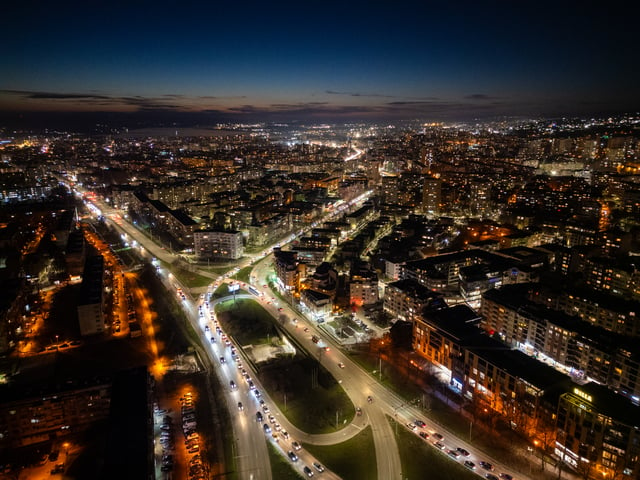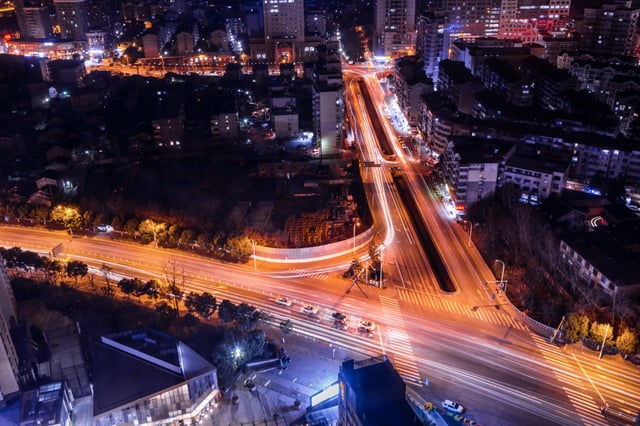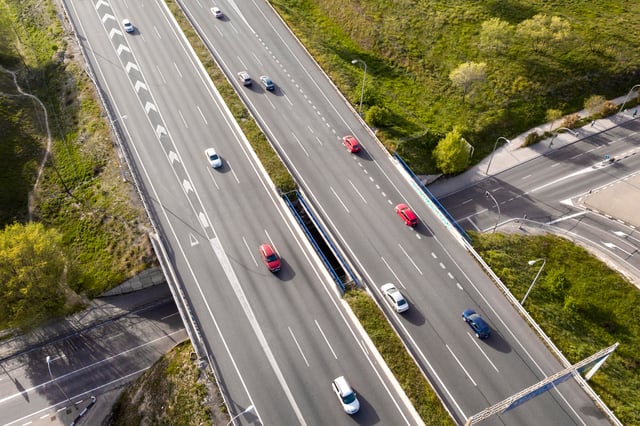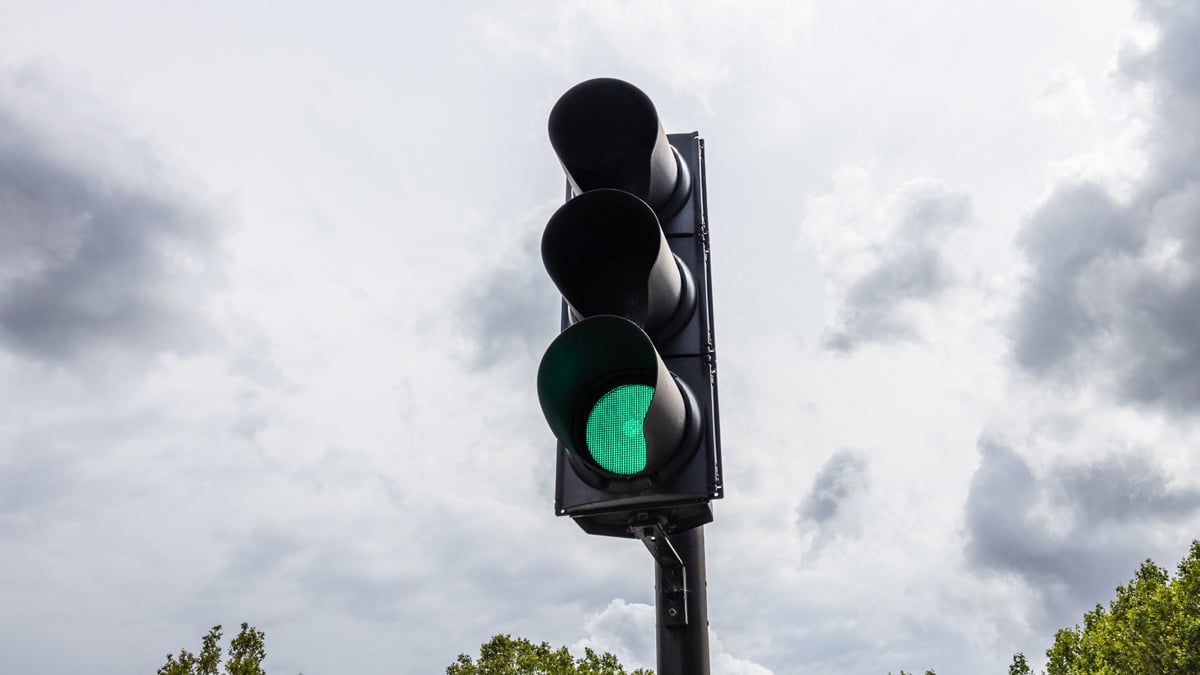
The City of Manchester, New Hampshire, and the U.S. Department of Transportation marked the completion of a $2 million smart traffic signal deployment at a press event in Pulaski Park on August 13, 2026, confirming that adaptive detection and connected vehicle equipment is now live at 22 downtown intersections. The work was funded by a Strengthening Mobility and Revolutionizing Transportation (SMART) Stage 1 grant awarded in December 2024, and covers corridors on Maple, Beech, Bridge and Hanover streets in New Hampshire’s largest city. The stated goals are lower delay, fewer red-light-running crashes and better pedestrian and cyclist detection in a downtown area USDOT classified as a disadvantaged neighborhood.
What The Federal Grant Actually Obligated Manchester To Deliver
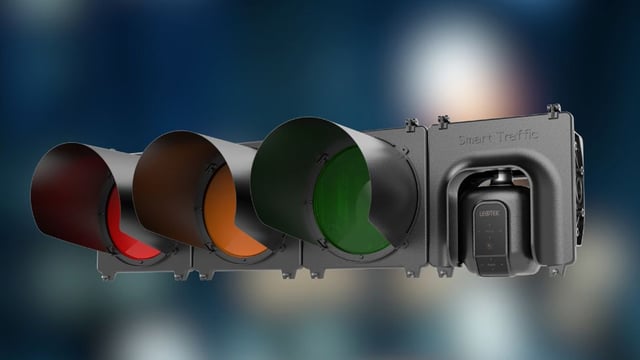
The award is formally listed by USDOT as the City of Manchester Smart Traffic Signal Corridors Project, funded at the $2 million Stage 1 ceiling and categorised under the program’s Smart Traffic Signals project type. According to the FY24 Stage 1 project list, the scope commits the city to installing advanced signal equipment, optimising corridor timing, improving vehicle, pedestrian and bicycle detection, integrating connected vehicle technology, and deploying automated traffic signal performance measures. Eight of the 34 FY24 Stage 1 awards fell into the smart signals category, making it the second-largest cohort after sensors.
Cameras And Edge Detection Replace Buried Loops
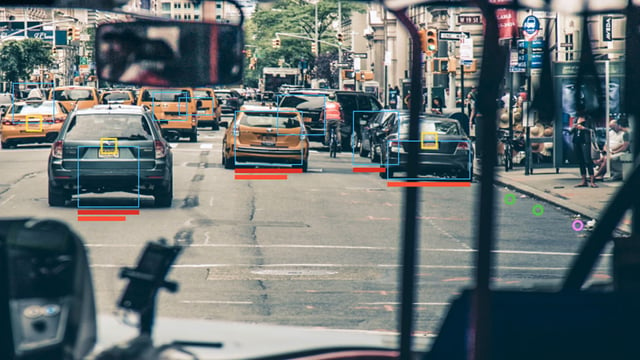
The new intersections use camera and monitoring hardware that classifies road users and measures approach volume and speed, rather than simply registering presence. That is the functional gap with inductive loop detectors, which cannot distinguish a cyclist from a truck and must be re-cut every time a road is reconstructed.
Signal timing can now be adjusted automatically in real time instead of running fixed time-of-day plans. The city has also pointed residents to the Travel Safely app, a connected vehicle smartphone product from Applied Information, which broadcasts signal phase and timing data and red-light-running alerts to drivers, cyclists and pedestrians.
VHB Ran The Baseline Before Switching The System On
The Manchester Department of Public Works delivered the project with VHB, the Watertown-headquartered engineering firm whose Bedford, New Hampshire office handles most of its municipal transportation work in the state. Baseline data was collected in July 2026, with the cameras activated on July 25, giving the city a pre-and-post comparison set rather than a purely anecdotal claim of improvement.
VHB screened 31 candidate intersections before the final 22 were selected using observed data and 2025 community input. Across those 31 locations the firm recorded an average of six crashes per year each, roughly four of which involved drivers running red lights.
Manchester Draws A Line At Identification
City officials stated explicitly that the system performs object detection only, with no facial recognition and no automated licence plate reading. That framing is increasingly standard in North American procurements, and it is a response to a real pattern of post-award scrutiny.
Kurrant has documented how Houston’s purchase of AI traffic cameras drew privacy objections after the council vote rather than during procurement, and how Amsterdam suspended an AI-adaptive signal programme following intervention by the Dutch data protection regulator. Declaring the detection boundary at launch is cheaper than retrofitting it after a council fight.
The Benefit Case Manchester Now Has To Evidence
VHB has publicly estimated a $20 million annual benefit to residents from avoided crashes and reduced idling, a figure that has not yet been published in a supporting methodology. Federal benchmarks are more conservative: the Federal Highway Administration’s Every Day Counts assessment puts average adaptive signal control gains in travel time, delay, emissions and fuel consumption at more than 10 percent, rising above 50 percent only where existing timing plans were severely outdated.
That gap matters because Stage 1 grants are prototyping awards with a reporting obligation attached. Mayor Jay Ruais framed the deployment at the event as a demonstration the city will report back on, which is the correct characterisation of what USDOT bought.
A Funding Route That No Longer Exists For The Next City
The SMART program will not produce another cohort. Congress passed H.R.7148, the Consolidated Appropriations Act, 2026, reallocating $204,912,000 in unobligated SMART balances, and USDOT has confirmed that no new notices of funding opportunity will be issued while the existing 122 Stage 1 and seven Stage 2 agreements are honoured.
For vendors and municipal engineers, that removes the natural Stage 2 scaling path that the two-stage structure was designed around. Manchester traffic engineer Kristin Clarke has said the city will pursue Congestion Mitigation and Air Quality Improvement Program funding and other channels to extend the approach across its 162 signalised intersections.
Where 22 Intersections Sits In The Current Deployment Curve
The pilot is small by national standards. Nashville has activated adaptive signals at 36 intersections along the Lebanon Pike corridor as the first phase of a 115-intersection near-term program targeting nearly 600 connected signals, backed by a voter-approved local funding stream rather than a competitive federal grant.
That contrast is the real lesson for mid-sized cities. FHWA has long noted that adaptive control runs on well under one percent of US signalised intersections, and the binding constraint is rarely the hardware. It is sustained operating budget, in-house signal engineering capacity and a funding source that survives the end of a federal program.