in Barcelona
 3 to 5 Nov 2026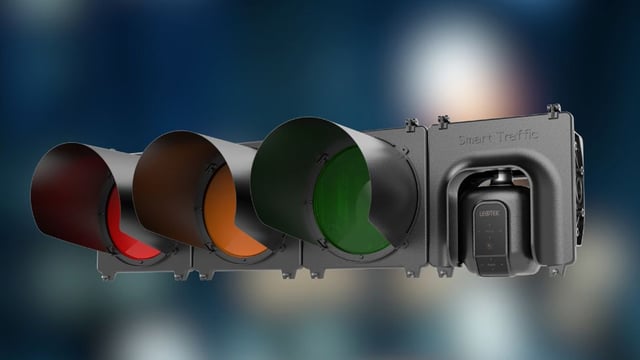
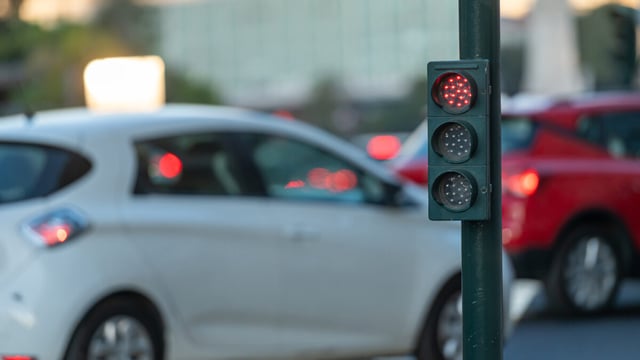
The City of Peachtree Corners, a Gwinnett County, Georgia, municipality of 42,243 residents at the 2020 census, has begun evaluating an AI-based traffic signal system under live traffic at Curiosity Lab, its city-owned smart city test environment, after San Jose and Taipei-based manufacturer LEOTEK announced on September 14, 2026 that it had completed installation of its Interlux AI Traffic Signal System at the site.
The system, which combines radar and camera detection on NVIDIA Jetson Orin edge computers with C-V2X communications, is being tested on public roads that Curiosity Lab says carry more than 14,000 vehicles a day, although neither the city nor the vendor has disclosed how many intersections are equipped, what the deployment cost or which performance metrics the evaluation will track.
A No-Cost Municipal Testbed With A Growing Roster Of Intersection Vendors
Curiosity Lab describes itself as a 5G-enabled living laboratory built around a three-mile autonomous and connected vehicle corridor with C-V2X coverage, supported by intelligent signals, traffic cameras, sensors and an IoT control room, and the city offers the infrastructure to technology companies free of charge.
That model has attracted several competing approaches to the same problem of intersection perception and control, which makes the Interlux installation one layer in an increasingly crowded stack rather than a first deployment of its kind in the city.
In April 2025, Peachtree Corners announced an integration of NVIDIA L4 GPUs with NxGo’s traffic management software, running on Dell servers in the Curiosity Lab Innovation Center with three GPUs paired to each server to process data from sensors across the city.
The lab has separately expanded a Seyond LiDAR perception deployment to two adjacent intersections and worked with Bosch on traffic video sensing, so LEOTEK’s stated plan to explore connecting Interlux with existing Curiosity Lab infrastructure indicates that integration with those systems has not yet been completed.
What Interlux Adds At The Signal Head
According to the LEOTEK press release, Interlux fuses radar and camera inputs to detect vehicles, pedestrians and cyclists in real time, and the company positions it for intersection safety monitoring, emergency vehicle priority and signal timing optimisation.
LEOTEK’s product documentation goes further, describing the roadside unit as an NVIDIA Orin or Thor class edge server that receives over-the-air model updates, publishes SAE J3224 sensor data sharing messages to connected vehicles and reports to the company’s RenAI cloud management platform.
The same documentation states that the system interprets intersection activity within one second and operates between minus 40 and plus 70 degrees Celsius with an IP66 rating, all of which are vendor-supplied specifications that have not been independently tested in any published report.
David Tzou, Intelligent Transportation AI Solution Architect at LEOTEK, said in the company’s September 2026 press release that Interlux moves signals beyond fixed timing by giving intersections “the ability to detect and respond to what is happening on the road.”
The release does not say whether Interlux is issuing phase changes directly to the signal controller at Curiosity Lab or running as a perception and advisory layer alongside existing timing plans, a distinction that determines both the safety case and the liability exposure for the city.
LEOTEK’s Installed Base And The Dialight Signal Acquisition
LEOTEK states that it has served the US market for nearly three decades and that its signal products are installed in more than 70% of major US metropolitan areas, a vendor-supplied and unaudited figure that refers to conventional LED signal hardware rather than Interlux.
The company expanded that hardware base in July 2024 when UK-listed Dialight plc sold its North American traffic, pedestrian and railroad signal business to Leotek Electronics USA LLC for $5.8 million in gross cash proceeds, or $5.5 million net of transaction costs, with Dialight continuing to manufacture under licence for up to 15 months.
Those product lines now sit under LEOTEK’s Frontier brand, which gives the company an existing footprint of signal heads in US cities that could in principle serve as an upgrade path for Interlux hardware, although no agency has announced a procurement of the system.
LEOTEK says it intends to publish case studies and demonstrations from the Peachtree Corners site as it pursues deployments at corridor and citywide scale, positioning the Georgia installation as a reference site for future municipal sales.
How A Single Testbed Compares With Funded Adaptive Signal Programmes
The Federal Highway Administration reports that adaptive signal control improves travel time by more than 10% on average and by 50% or more where existing timing plans are badly outdated, while noting that such systems run on less than 1% of US signals, a figure from guidance last updated in 2017.
Recent municipal deployments show what a verifiable evaluation looks like: Kurrant’s coverage of Manchester, New Hampshire’s smart traffic signal project documented a $2 million federal grant covering 22 downtown intersections, with baseline data collected by consultant VHB before cameras were activated in July 2026.
Manchester’s arrangement carries a federal reporting obligation and a defined pre-and-post comparison, whereas the Curiosity Lab installation operates under a no-cost testing model in which the vendor, rather than the city or a funding agency, controls what results are released.
The Evaluation Criteria Nobody Has Published
The announcement names no evaluation period, no baseline dataset, no independent reviewer and no target for delay, conflict or emergency response improvement, which leaves the field results open to selective presentation in LEOTEK’s planned case studies.
The value of the vehicle-facing C-V2X outputs also depends on how many vehicles passing the Peachtree Corners site can receive sensor data sharing messages, a figure neither the city nor the company addressed.
LEOTEK’s product page asserts end-to-end encryption and alignment with ISO 27001 and GDPR, but it cites no certification body or audit, and the release does not describe who owns the detection data generated on city-owned right of way.
Whether Interlux becomes more than a demonstration will depend on whether Peachtree Corners, rather than LEOTEK, publishes before-and-after measurements from the equipped intersection, because until that happens the only performance evidence on record is the vendor’s description of what the system is designed to do.