The Municipality of Heraklion, Crete’s largest city, said on 24 August 2026 that its “Smart City and Sustainability Actions” sub-project is approaching completion, with structural seismic monitoring, municipal energy metering, a pay-as-you-throw waste pilot and a citywide LoRaWAN network now installed. The works sit inside a Recovery and Resilience Facility investment with a total budget of €4,949,901, of which €3,991,856 comes from the RRF contribution, and they land roughly one week before the EU deadline that closes the funding instrument.
Four Delivered Systems, Not One Platform
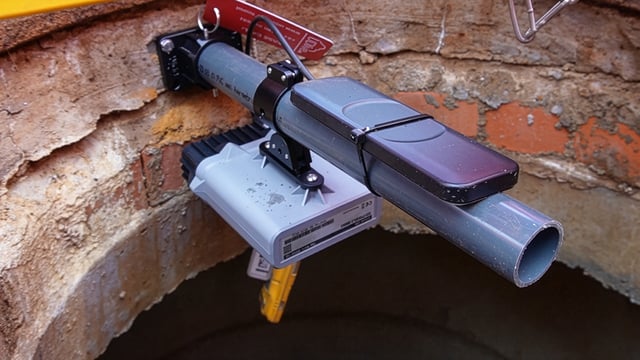
The announcement from the Municipality of Heraklion describes four distinct capabilities rather than a single command centre. Seismic impact recording has been installed in municipal buildings at Vasilies, Machis Kritis Street and Androgeo Street, feeding real-time structural data to technical services.
Alongside it sit energy consumption monitoring in municipal buildings, water consumption monitoring, traffic sensing and the PAYT waste pilot. The municipality says the collected data is stored in system applications and used by its scientific staff under the instructions of the Hellenic Data Protection Authority.
That framing matters for procurement peers. Heraklion is presenting the deployment as an operational data layer for asset management and intervention planning, not as a citizen-facing dashboard product.
Seismic Sensing Is A Local Necessity, Not A Showcase
Structural health monitoring is an unusual line item in a mid-sized European smart city package, and Heraklion’s geology explains it. A Mw 6.0 earthquake struck near Arkalochori in central Crete on 27 September 2021, around 25 km south-southeast of Heraklion city, causing a fatality, injuries and severe infrastructure damage.
Post-event field assessment found that older load-bearing masonry buildings suffered the worst structural damage, while reinforced-concrete frame buildings built to seismic codes performed satisfactorily with mainly non-structural cracking and infill wall detachment. That distinction is precisely what continuous instrumentation is designed to quantify after a shock, rather than leaving it to rapid visual inspection.
Continuous monitoring also shortens the window between an event and a reoccupation decision for public buildings, which is where municipalities typically carry the most liability.
PAYT Targets Commercial Producers Ahead Of National Rules
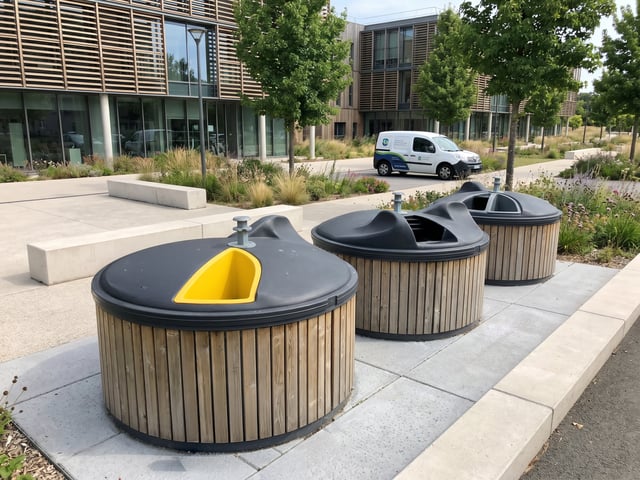
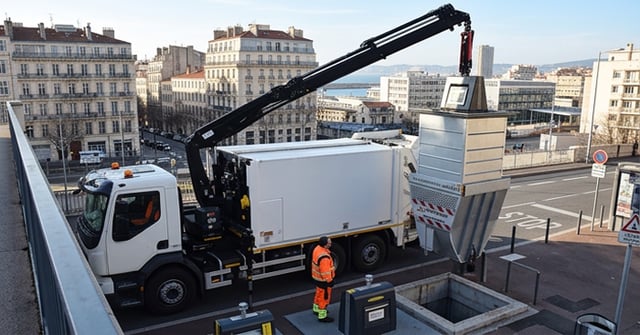
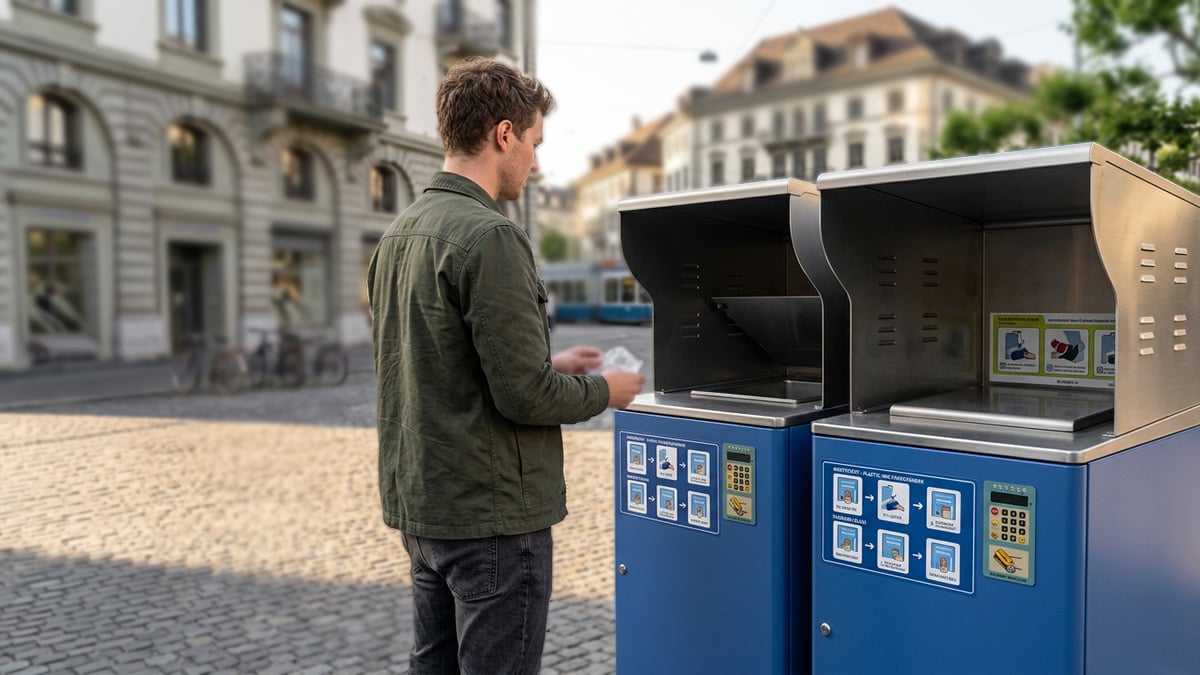
The waste component applies the polluter pays principle through an electronic labelling and pricing system combined with collection monitoring. The pilot is aimed at businesses classified as large waste producers operating inside the municipal boundary, which keeps the political exposure of variable charging away from households in a first phase.
The timing tracks national regulatory movement. The Regulatory Authority for Energy, Waste and Water is preparing a practical framework to turn the existing legal PAYT requirement into an operating system for municipalities and major producers including hotels.
RAAEY vice-chair Konstantinos Aravossis told Voria.gr that around 80% of Greek municipal waste still goes to landfill while recycling remains below 20%, and that the municipality of Hersonissos in Crete had already tested the model with local hotels, reducing landfilled volumes and lifting recycling. Heraklion’s pilot therefore feeds a national evidence base that regulators are actively assembling.
LoRaWAN Was Chosen As A Shared Backbone
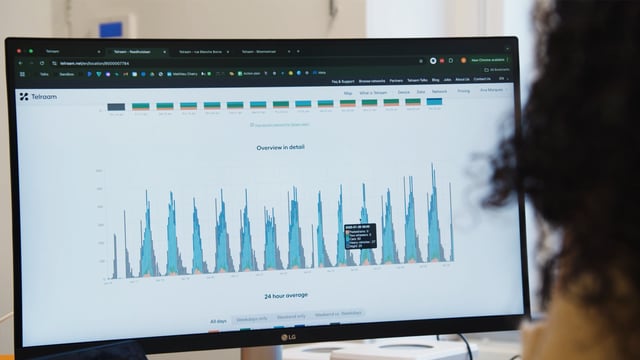
The municipality describes the LoRaWAN network as the connectivity layer supporting interconnection and access for varied IoT devices at low power consumption. In practice, a single low-power wide-area network lets seismic accelerometers, water meters, energy meters and waste sensors share the same gateway estate rather than each vertical procuring its own connectivity.
That is the standard economic case for LPWAN in municipal estates, and it is the same logic visible in comparable European deployments. It also matters for the post-funding period, because gateway infrastructure paid for once can absorb new use cases without a new capital round.
The trade-off is bandwidth. LoRaWAN suits low-rate telemetry and event reporting, which fits meters and status monitoring, but heavier applications such as video analytics sit outside its envelope and require separate backhaul.
The Tender Ran For Six Weeks In Late 2023
The municipality published the tender on 25 October 2023 as an open international electronic procedure through Greece’s national e-procurement system, ESIDIS, under system number 216154. The notice was sent to the Official Journal of the European Union the same day under reference 2023/S 209-659435.
Bids closed on Thursday 7 December 2023 at 15:00, with electronic unsealing of technical offers on 13 December. The tender documentation set an estimated value of €3,951,936.56 excluding VAT, or €4,900,401.33 including VAT, with award on best price-quality ratio.
Heraklion deliberately declined to split the contract into lots, arguing in the notice that a single contractor was necessary to hold the twelve-month schedule and that lotting risked leaving parts of the work unawarded. The awarded price of €3,939,960 represents a discount of roughly 0.3% against the estimate.
Where The Money Actually Went
The tender’s per-action budget table shows that the four systems highlighted in the completion announcement account for a modest share of the contract. LoRaWAN was budgeted at €80,645 excluding VAT and the seismic recording system at the same figure, while PAYT was set at €540,323 and energy and water monitoring in municipal buildings at €403,226.
The largest line by far was the upgrade of urban parking at €1,128,953, followed by multifunctional columns at €645,161. Smart pedestrian crossings, traffic radar and variable message signs, solar bus shelters, smart benches, digital service adaptation and a telemedicine and assisted living package made up the remainder.
Qualification thresholds were set high enough to narrow the field. Bidders needed average turnover over 2020 to 2022 equal to at least 200% of the contract value, a reference IoT platform managing more than 4,000 connected devices, an in-house IoT or M2M platform handling over 20,000 SIM cards, and ISO 9001, 27001, 14001 and 22301 certification.
A €3.94 Million Contract Whose Vendors Have Since Changed Hands
The build was awarded to a consortium of Nova ICT and Thalis, with the contract signed by Mayor Alexis Kalokairinos. Local outlet Neakriti reported the signature took place in the presence of deputy mayors Giorgos Sisamakis, responsible for technical works, and Ioanna Kalonaki, responsible for administration and planning.
Trade title netweek reported the contract value at €4,885,550 including VAT for the supply and installation of SSC infrastructure and systems. The programme was structured in four phases over twelve months and covered twelve work packages, including smart parking, smart pedestrian crossings, traffic sensors, solar bus shelters, PAYT, LoRaWAN, seismic recording, water and energy monitoring and multifunctional columns.
Both suppliers have since moved inside the same corporate orbit. United Group agreed in July 2026 to sell Nova’s 50% stake in Nova ICT to IREON Technologies, a Motor Oil Group member, in a deal valuing the systems integrator at €121 million three years after it was founded with €1 million in share capital. Thalis E.S. is also a Motor Oil subsidiary, and Motor Oil has since signed a binding agreement to sell 75% of the holding company owning Helector and Thalis to Aktor at a €300 million enterprise value.
Heraklion Sits Mid-Table In A €90 Million National Programme
The sub-project belongs to the Greek Smart Cities action under Greece 2.0, run with the Ministry of Digital Governance. The Information Society S.A. issued the call with a total budget of €90 million covering 16 municipalities above 100,000 inhabitants plus Trikala as a model smart municipality.
Comparable allocations published by the European Commission put Athens at €19.8 million, Thessaloniki at €9.87 million, Trikala at €6.93 million, Larissa at €4.63 million and Piraeus at €4.95 million. Heraklion’s €4.95 million therefore reflects population weighting rather than ambition, and it constrains what any single municipality can attempt.
A second phase for the remaining municipalities was budgeted at roughly €230 million from structural funds, bringing the combined national envelope to about €320 million. Vendors have read that pipeline as a consolidation trigger, a dynamic Kurrant reported in June 2026 when Greek private equity moved into the municipal IoT sector.
The 31 August Deadline Turns Delivery Into A Financial Question
Completion language in late August is not incidental. Under the RRF regulation, milestones and targets must be completed by 31 August 2026, with final payment requests submitted by 30 September 2026, and all Commission payments executed by 31 December 2026, with unhonoured commitments subject to automatic decommitment.
For Greece the stakes are national as well as municipal. The country’s €36 billion programme expires on 31 August 2026, with a final payment request worth €4.8 billion due in September covering 134 distinct commitments and projects.
The Greece 2.0 record for the Heraklion project lists a completion date of 30 April 2026, so the August announcement suggests final commissioning ran past the published schedule. Municipalities across the programme face the same compression, which is why operational proof rather than installation counts will determine what survives into 2027 budgets.
What Heraklion Has Not Yet Published
The municipality has not disclosed device counts, gateway numbers, the number of buildings instrumented beyond the three named sites, or the platform stack handling ingestion and analytics. Nor has it published baseline metrics for the PAYT pilot, such as participating business numbers or tonnage recorded.
That gap is common at handover and consequential afterwards. Without published baselines, the case for renewing operating budgets after RRF money stops rests on assertion rather than measurement.
Heraklion’s wider positioning does provide a policy anchor. Speaking about the city’s twinning with Angers Loire Metropole under the NetZeroCities Ambition programme, Mayor Alexis Kalokairinos said in a January 2025 statement: “With this partnership, Heraklion is moving steadily towards the future of smart, resilient and climate neutral cities.” The statement, originally in Greek, was published by regional outlet Maleviziotis.