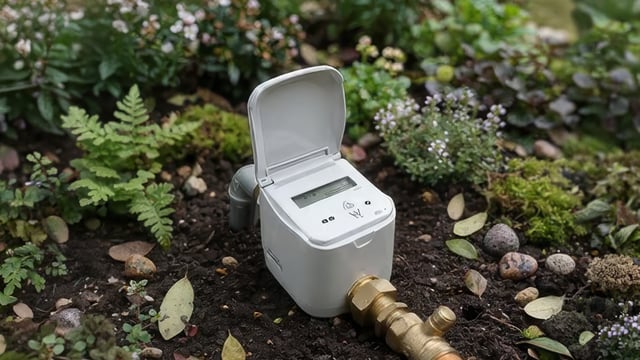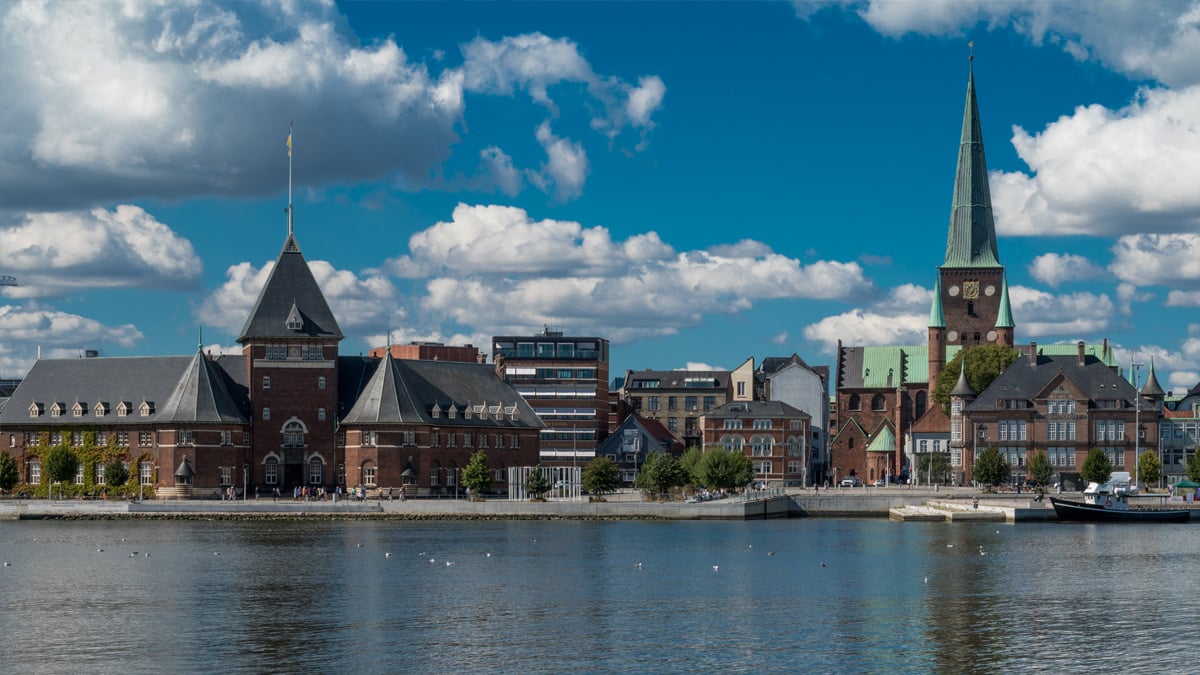
Aarhus Vand, the municipal water and wastewater utility serving Denmark’s second-largest city, has begun replacing mechanical water meters with approximately 69,000 remotely read digital units across Aarhus Municipality, in a programme that started in the southern suburb of Tranbjerg and runs through 2030. The utility is using meters from Danish manufacturer Kamstrup, contractor Eltel for installation, and a LoRaWAN network operated by Netmore Group, a connectivity arrangement the operator confirmed publicly on 25 August 2026.
The Programme Ends Annual Self-Reporting for 270,000 Consumers
Aarhus Vand customers currently read their own meters once a year and submit a single consumption figure, a method that gives the utility no visibility between readings and gives households no way to spot a fault until the annual bill arrives. Remote reading replaces that with continuous data collection and an online consumption view for customers.
The utility’s stated operational aim is earlier detection of abnormal consumption, covering running toilets, failed heat exchangers, and hidden pipe damage on customer premises. Aarhus Vand has told customers the meter itself remains utility property and is installed at no charge.
A 1,000-Household Pilot Tested the Radio Path, Not the Meter
Before scaling, the utility validated communication between the Kamstrup meters and its back-end systems across roughly 1,000 households. That test targeted the usual failure point in advanced metering infrastructure, which is not measurement accuracy but the radio link out of a basement, pit, or shielded utility cupboard.
“Delivering reliable meter reading demands a network that meets high-performance requirements consistently, not just in ideal conditions, but across every meter, every day,” said Helle Pernille Hansen, Specialist Manager at Aarhus Vand, in the August 2026 announcement of the connectivity partnership.
Meters Go In First, Coverage Is Completed Afterwards
The deployment sequence is worth noting for utilities benchmarking similar work. Meters are fitted area by area, and gateway coverage is only densified afterwards until uplinks are consistent, meaning individual households may wait months between installation and their first successful remote read.
Aarhus Vand has warned customers they may need to submit one or two more manual readings during that gap and will be notified when their meter goes live. The approach avoids over-building radio infrastructure ahead of demand, but defers billing and analytics benefits into later programme years.
The Schedule Has Already Slipped by Roughly Six Months
Aarhus Vand launched the underlying work in 2023 as an innovation project with Kamstrup and software house Systematic, aiming to develop meters and data handling rather than buy an off-the-shelf system. That 2023 announcement pointed to first installations in the Viby area in late 2025, covering 17,000 customers.
Actual installation began in Tranbjerg at the end of June 2026, as reported by Danish regional media. Neither the utility nor its suppliers has publicly explained the delay.
Low Network Losses Push the Business Case Behind the Meter
Aarhus Vand reported distribution loss of 3.6 percent in 2025, according to sector association DANVA, well inside the threshold at which Danish tax rules stop relieving losses from the state levy on piped water, which applies above 10 percent. That leaves limited headroom for savings on the network side.
The value therefore concentrates on customer-side waste and on operational planning. At a 2026 combined price of DKK 58.55 per cubic metre including VAT for water and wastewater, published by the utility, an undetected household leak escalates quickly into a disputed bill.
EU Leakage Reporting Rules Raise the Value of Granular Data
Under the recast Drinking Water Directive, member states had to submit national leakage assessments to the European Commission by 12 January 2026, with a threshold triggering mandatory action plans due by January 2028. Suppliers delivering at least 10,000 cubic metres a day fall in scope, which covers Aarhus Vand at roughly 15 million cubic metres produced annually.
Frequent reads across 69,000 connections sharpen the district-level water balances behind those figures, a compliance benefit separate from the customer-facing case.
LoRaWAN Has Become the Default Choice for European Water AMI
Aarhus sits within a wider European pattern in which low-power wide-area networks, and LoRaWAN in particular, have displaced drive-by wireless M-Bus reading for large water metering programmes. The LoRa Alliance lists deployments including 3.3 million meters for Veolia and Birdz in France and more than a million each for Yorkshire Water and Severn Trent in the United Kingdom.
Network build economics increasingly rely on shared infrastructure rather than dedicated utility towers, an approach visible in agreements such as the Cellnex UK monopole deal covered by Kurrant. At 69,000 points, Aarhus is a mid-sized deployment by that standard, and a notable Nordic reference in a market where drive-by reading remains common.