Wint, a water management company headquartered in Rosh Ha’ayin, Israel, with operations in the United States and the United Kingdom, announced on 9 September 2026 that it has raised $36 million in Series D funding co-led by LIP Ventures and Inven Capital, the EUR 500 million European climate technology fund backed by CEZ Group and the European Investment Bank. The company said the capital will fund product development and international expansion for a platform that served roughly 600 enterprise customers and more than 1,500 facilities during 2025.
The round was disclosed through a PR Newswire announcement issued from New York, which did not include a valuation. It arrives at a point when water damage has become one of the largest non-catastrophic loss categories in commercial property insurance, and when building owners are under parallel pressure to report water and carbon performance.
Inven Capital Returns Three Years After Co-Leading The Series C
Inven Capital previously co-led Wint’s $35 million Series C in 2023 alongside Insight Partners, with Asia-Pacific real estate investor Taronga Ventures participating, a round covered at the time by Kurrant. Insight Partners had led a $15 million Series B the previous year.
Wint reported total funding of $60 million after the Series C, which places disclosed equity at approximately $96 million following this round. That figure excludes the undisclosed strategic investment from Grosvenor announced in December 2025.
“Water risk is one of the most underestimated threats to the built environment. Wint exists to change that, and this funding gives us the resources to bring proactive water intelligence to every building, everywhere,” said Alon Geva, CEO at Wint, in the company’s September 2026 press release.
LIP Ventures is a Latin America-based firm managing three funds with more than $220 million under management across over 50 portfolio companies, and it positions itself as a bridge between international capital and technology teams in Israel, the United States and Europe. Its arrival as co-lead is the first commercial-stage signal that Wint intends to push beyond its current North American, European and Middle Eastern footprint.
Inline Metering And Automatic Shutoff Sit Beneath The Analytics Layer
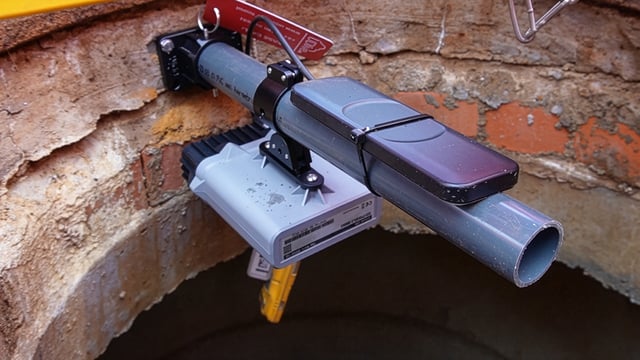
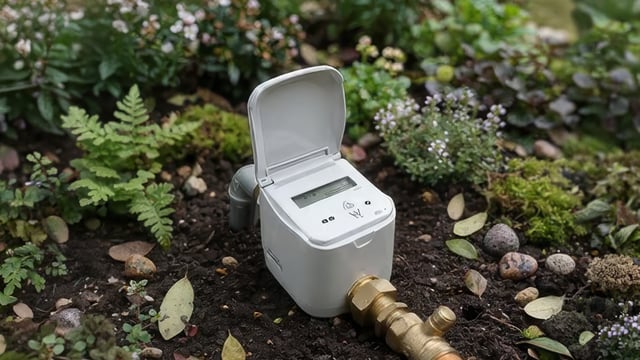
The product is not a software overlay on existing meters. Wint installs connected flow devices, control units and motorised valves directly into a building’s pipework, with cellular communication to the cloud rather than dependence on building IT networks.
The system establishes a baseline of normal consumption per fixture group and flags deviations, then can close the valve automatically when a burst or continuous-flow event is confirmed. That combination of measurement and actuation is what distinguishes the category from spot leak sensors and puck-style detectors, which alert but do not intervene.
During 2025 the company added AI-based Water Insights, which aggregates granular flow data into benchmarking and anomaly guidance, and AI-driven water temperature and boiler health analysis, which correlates temperature and flow patterns to surface equipment faults. The temperature work moves the platform adjacent to energy management, since boiler inefficiency shows up as both thermal and hydraulic waste.
Waste Rather Than Catastrophic Damage Accounts For Most Detected Events
Wint’s own breakdown of incident types across its enterprise base is more revealing than the headline savings figures. In its 2025 performance summary, the company attributed 70 percent of incidents to water waste from toilets, taps, showers, pools and irrigation, 16 percent to facility damage from internal leaks, and 14 percent to equipment failures including cooling towers and boilers.
That distribution matters for procurement. The insurance case rests on the 16 percent, while the operating expenditure and sustainability case rests on the 70 percent, and the two are usually held by different budget owners inside the same organisation.
Insurers Act As Both Underwriter And Distribution Channel
Wint has worked with insurers including Munich Re, HSB and AXA XL, with several carriers either mandating the technology on covered properties or offering premium discounts and deductible reductions to encourage adoption. The company describes its warranty arrangement as the only global insurer-backed warranty in the sector, a claim that has not been independently verified.
The underlying loss data supports carrier interest. Nationwide reports that non-weather water claims cost the commercial insurance industry an estimated $16 billion per year, that non-weather large losses above $500,000 have doubled since 2015, and that losses above $1 million have tripled.
Where carriers apply separate water damage deductibles of $50,000 or more, the economics of a monitored building shift materially in favour of installed detection. That is the mechanism by which a hardware purchase becomes an underwriting variable rather than a discretionary facilities upgrade.
The Grosvenor Deal Points Toward Portfolio Standards Instead Of Single Buildings
The strategic investment from Grosvenor in December 2025 came with a commitment to expand the technology across the property group’s global real estate portfolio. Neither party disclosed the investment amount.
For a company that has sold more than 30,000 systems cumulatively and grew its customer base by over 40 percent in 2025, portfolio-level standardisation is the more consequential variable than individual site wins. It also creates a reference model that competing owners and their brokers can point to during renewals.
Building-Side Intelligence Runs Parallel To Utility Metering Programmes
Wint operates behind the meter, which places it alongside rather than in competition with utility-side digitalisation. Utilities are measuring at the connection point, as with Watercare Services in Auckland, which contracted Itron to replace 100,000 mechanical meters with NB-IoT devices as part of a programme targeting nearly 500,000 connections.
Itron estimates that more than a third of water pumped globally is lost to leaks, most of it in distribution networks. The losses Wint addresses sit downstream of that boundary, inside private buildings where utilities have no visibility and no remediation authority.
The commercial question for the sector is whether the two layers converge. Utility-grade consumption data and building-grade fixture-level analytics remain separate procurement tracks in almost every market, with different buyers, contract lengths and regulatory drivers.
Performance Figures Remain Company-Reported
The savings claims cited in the funding announcement, 1.15 billion gallons of water, an estimated $100 million in prevented damage across more than 1,300 incidents, and over 39,000 metric tons of avoided carbon emissions, are internal figures published by Wint and have not been subject to any disclosed third-party audit.
Prevented-loss estimates are inherently counterfactual, since they model damage that did not occur. Buyers evaluating the category should expect to negotiate their own measurement and verification terms rather than rely on vendor-aggregated totals.