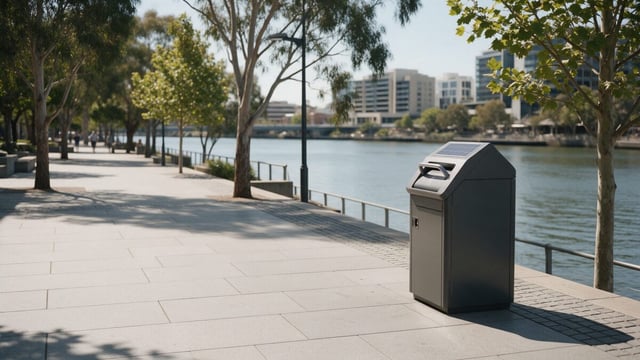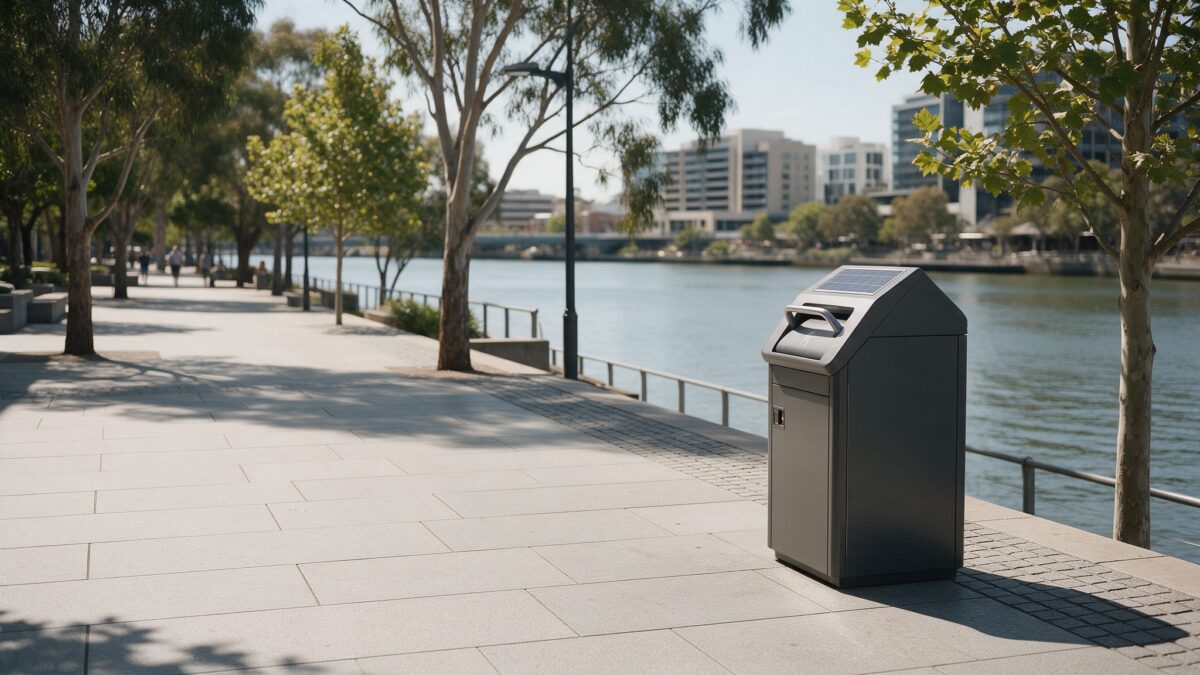
The City of Melbourne, the local government covering the central business district of Victoria’s capital, has begun installing 500 solar-powered compacting litter bins under a five-year contract with Dublin-based smart waste company Superfy. The council announced the deployment on September 30, 2026 and describes it as Australia’s largest smart bin rollout. The S200 BriteBin units, built by Irish manufacturer PEL, are going into the CBD, Southbank and the parks along the Yarra River between September and November 2026, following a pilot completed in 2025. Neither party has disclosed the contract value.
Fill-Level Sensors Replace Fixed Collection Rounds
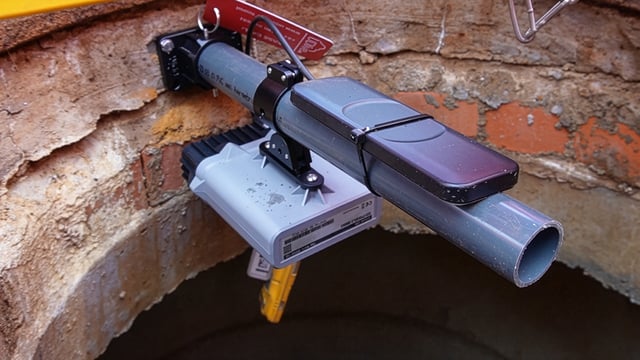
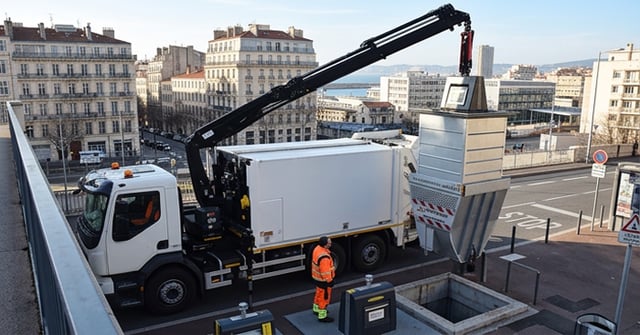
Each bin compacts its contents to hold four times the volume of a standard street litter bin and carries a fill-level sensor that flags it for collection at 85% capacity, with priority dispatch once it is full. The aim is to replace fixed collection routes with on-demand pickups scheduled through Superfy’s software platform.
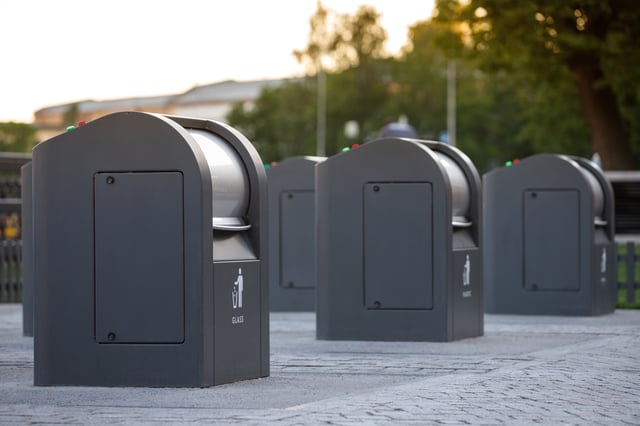
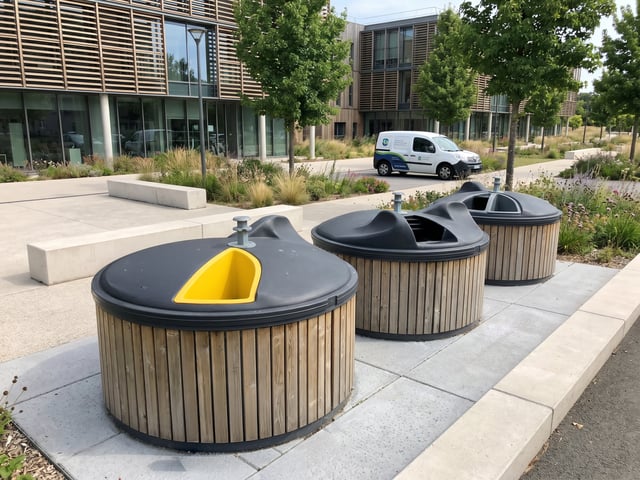
The units are sealed, with a contactless opening flap and an integrated foot pedal, and are designed to be wheelchair accessible. The sealed design is meant to stop overflowing waste, pests and windblown litter around bin sites in busy pedestrian areas.
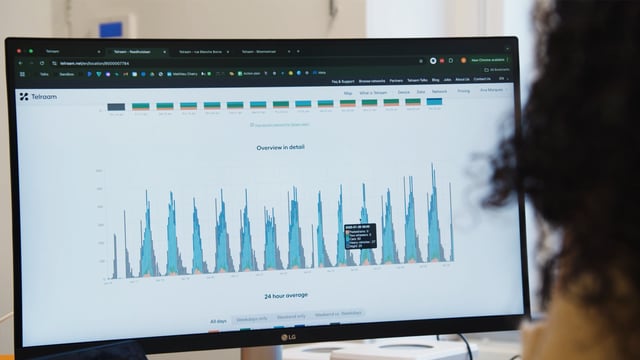
The City of Melbourne manages more than 3,000 bin locations across its whole estate, so the 500 new units cover roughly one in six. Superfy’s dashboard will also report on collection frequency, bin placement and recycling diversion rates across the wider network, including conventional bins that remain without sensors.
“These bins mean less wasted time, fewer unnecessary collections and more efficient cleaning, using smart technology to keep Melbourne looking its best,” said Lord Mayor Nick Reece in the council’s September 2026 announcement.
The announcement does not name the connectivity used to transmit fill-level data or the per-unit cost. Fill-level sensors in street bins commonly report over low-power cellular or LoRaWAN networks, and the choice affects both running costs and whether data can be shared with other city sensor systems.
Melbourne’s Second Generation Of Solar Bins
Melbourne has run solar compacting bins for almost a decade. In February 2018, the city began replacing 772 conventional litter bins in the CBD with 397 CleanCUBE solar compactors supplied by South Korea’s Ecube Labs, cutting the public litter bin footprint by 49%.
The council later reported that its solar bins had reduced public bin collections from about 90,000 to 12,000 a month, according to Green Magazine’s coverage of the 2020-21 draft budget. That earlier result, a cut of roughly 87% in collection runs, is the benchmark against which the Superfy contract will be judged.
The 2018 fleet also exposed the technology’s limits. Some units suffered solar battery failures in heavily shaded streets, and the city moved affected bins to sunnier spots, according to the 1001 Smart Cities project database, a constraint that applies equally to the new Superfy units in the CBD’s narrow, high-rise streets.
The new rollout therefore replaces and extends an existing smart fleet rather than introducing the technology. Its distinguishing features are the contract structure, which bundles hardware with a software platform and performance reporting, and the move from a Korean to an Irish supplier.
Contracted Environmental Targets
The contract sets annual reporting targets that go beyond collection efficiency. They include a 10% reduction in carbon emissions, 20% of collection transport by low-emission vehicles, a 20% year-on-year reduction in waste sent to landfill and material recovery rates of 30% to 50%, according to the announcement.
Those targets are company and council commitments, and the baselines against which they will be measured have not been published. Reece said the city removed more than 6,000 tonnes of rubbish from its streets last year, almost 20% more than the year before, which gives an indication of the volume the new system must handle.
Superfy And Its Supply Chain
Superfy is headquartered at the DCU Innovate hub in Dublin, with offices in Adelaide and Wilmington in the United States. It says it manages more than 50,000 smart locations worldwide and has deployed more than 12,000 bins in Australia, figures that are company-supplied and have not been independently verified.
The hardware comes from PEL, based in Ballindine, County Mayo, which describes itself as the sole Irish manufacturer of solar compacting street litter bins. The pairing gives Superfy a European-made product to compete with Bigbelly, the Massachusetts-based supplier that dominates many municipal deployments.
Superfy chief executive Darren O’Donohoe said in the announcement that smart waste management lets councils collect only when bins need emptying and prove where every kilogram of waste went, which puts the traceability of recycling, rather than the bin hardware, at the centre of the company’s offer to municipal clients.
Kurrant’s recent coverage shows the scale of comparable programmes. In January 2026, St. Paul invested nearly $475,000 in 162 Bigbelly units, or roughly $2,900 per bin. In August 2026, Dublin City Council was preparing a proposal to replace parts of its 3,500-strong public bin fleet with Bigbelly compactors.
What The Contract Will Have To Prove
Melbourne already captured the large first-generation saving when it cut monthly collections from about 90,000 to 12,000. The remaining gains from the Superfy fleet are likely to come from software-driven scheduling, recycling diversion and low-emission collection vehicles rather than from compaction alone.
The council has not said what it is paying over the five years, what share of the targets is tied to penalties, or how the 2025 pilot performed. Those three figures will determine whether the contract buys measurable improvements on the 2018 fleet or simply renews it with a different supplier.
Sources
- City of Melbourne Launches Australia’s Largest Smart Bin Rollout with Superfy, Medianet, September 30, 2026
- Melbourne Launches Australia’s Largest Smart Bin Rollout, Mirage News
- Melbourne Combats Littering with Ecube’s Smart Bins, Ecube Labs, September 2018
- City of Melbourne invests in waste and recycling solutions, Green Magazine
- Melbourne’s Solar-Powered Smart Litter Bin Network, 1001 Smart Cities
- PEL: Towns and cities
- St. Paul Deploys $475,000 Solar-Powered Smart Waste System Across Downtown, Kurrant
- Dublin City Council Eyes Bigbelly Smart Bin Expansion To Curb Bottle Scavenging, Kurrant