in Barcelona
 3 to 5 Nov 2026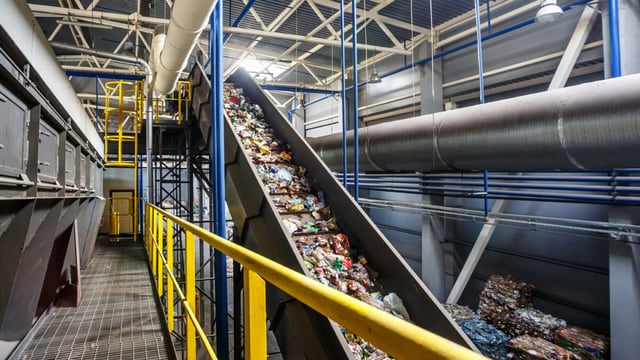
AMP Robotics Corporation, the Louisville, Colorado-based company that builds and operates automated waste sortation plants, said on September 30, 2026 that it had closed $70,000,000 in project debt financing led by Galvanize. The money will build a second sortation facility and an organics processing system in Portsmouth, Virginia, under a 20-year contract with the Southeastern Public Service Authority (SPSA), which handles waste for 1.2 million residents across eight South Hampton Roads communities. At full scale, the system is designed to process more than 500,000 tons of municipal solid waste a year and divert at least half of it from landfill.
From A 150-Ton Pilot To A 1,400-Ton-Per-Day Regional Contract
SPSA was established in 1976 and manages solid waste for Chesapeake, Franklin, Isle of Wight County, Norfolk, Portsmouth, Southampton County, Suffolk and Virginia Beach. On November 21, 2025, it signed the 20-year processing contract with Commonwealth Sortation LLC, an AMP affiliate.
That contract followed a pilot of nearly two years at AMP’s existing Portsmouth plant, where a single AMP ONE line was rated at up to 150 tons of locally sourced municipal solid waste per day. The full regional system, designed for more than 1,400 tons per day, would exceed that throughput by a factor of more than nine.
Building in this space?
Kurrant Ventures backs start-ups digitalising cities and utilities, and opens doors to the operators that buy from them.
- Latitudo 40
- GoodVision
- Meersens
- Cortexia
The authority’s motive is landfill life. SPSA’s Suffolk regional landfill has limited room to expand and had been projected to reach capacity around 2060, according to Innovate Hampton Roads, and the parties now say the processing system should carry its operating life into the next century.
Sorting Bagged Trash Instead Of Relying On Curbside Separation
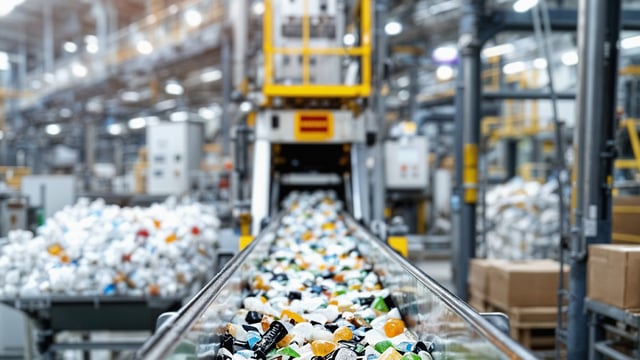
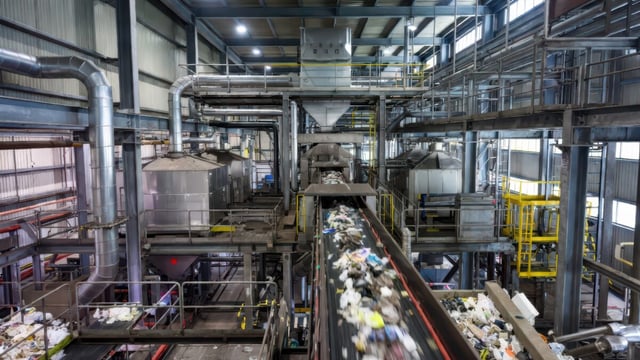
Conventional material recovery facilities depend on households and businesses separating recyclables before collection. AMP’s lines instead accept raw municipal solid waste, including sealed trash bags, and use camera-based material identification, robotics and pneumatic air jets to pull plastics, metals, fiber and organics out of the stream.
The second Portsmouth sortation facility is now being equipped and is expected to begin operations in early 2028. An adjacent plant will heat recovered organics indirectly to produce biochar, and Innovate Hampton Roads has reported that the larger operation is planned for the former Wheelabrator property on Victory Boulevard.
SPSA’s own 2023 waste characterization study found high rates of recyclable plastics and metals in the region’s trash, even in communities with curbside recycling. That finding is the premise on which the entire mixed-waste processing model rests.
AMP’s First Project Debt Changes How The Build-Out Is Funded
The loan is AMP’s first project debt, Axios Pro reported. It follows a $91 million Series D round led by Congruent Ventures in December 2024, which Kurrant covered as the company moved from selling sorting robots toward operating entire facilities and charging per ton processed.
Galvanize, the San Francisco-based asset manager co-founded in 2021 by Katie Hall and Tom Steyer, led the transaction through its Credit and Capital Solutions team. Clean Energy Counsel LLP advised AMP and Sidley Austin LLP advised the lender. Neither party disclosed the interest rate, the tenor, any co-lenders or the total capital cost of the new facilities.
“We’ve shown that this model works at commercial scale, and this financing demonstrates that we can pair our technology with long-term project capital to accelerate deployment,” said Mary Macpherson, Senior Vice President of Finance at AMP, in the company’s September 2026 press release.
The structure suits a lender because a public authority has contracted the feedstock for two decades while AMP operates and maintains the equipment. That is the risk profile infrastructure credit funds generally look for before substituting debt for more expensive venture equity.
AMP reports three full-scale facilities and more than 400 deployed sortation systems across North America, Asia and Europe. Those figures are company-supplied and have not been independently audited.
Biochar Credits Add A Second Revenue Line To The Project
Biochar from the organics plant will initially serve as daily landfill cover, where AMP says it can filter leachate and limit methane. Its production is intended to generate carbon removal credits under a March 17, 2026 agreement with Google to remove 200,000 metric tonnes of CO2e by 2030. AMP said at the time that the purchase would fund biochar capacity able to convert five million tons of organic waste over the next 20 years.
AMP has separately claimed that each diverted ton reduces or sequesters more than 0.7 tons of CO2e, equal to more than 378,000 tons a year across SPSA’s processable waste. That estimate is vendor-supplied and has not been independently verified, and it combines avoided landfill methane and durable carbon removal in a single figure.