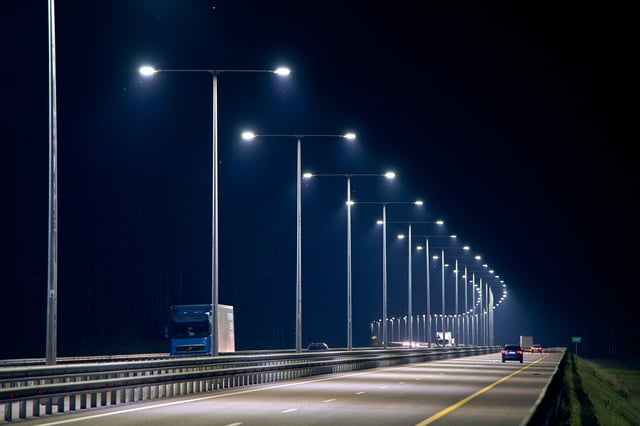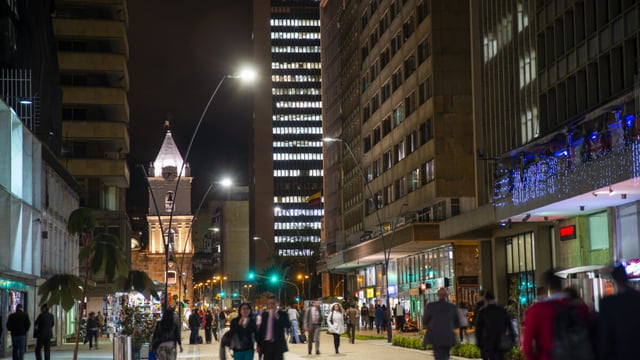
The Ville du Taillan-Médoc, a commune of 11,073 residents in Bordeaux Métropole north-west of Bordeaux, keeps its street lighting on all night from September 15, 2026, ending a shutdown that had left streets dark between midnight and 6 a.m. The change relies on a network that is now entirely LED and, since early 2026, fitted with a telemanagement node on every lighting pole. Lights run at full intensity in the early evening and are dimmed progressively through the late night instead of being switched off. The commune’s 2026 budget allocates €341,000 to public lighting works.
The First Commune In The Metropole To Switch Off
The reversal is notable because Le Taillan-Médoc pioneered night-time shutoffs locally. In September 2015 it became the first commune in Bordeaux Métropole to switch off street lighting at night, initially between 1 a.m. and 5 a.m., saving about €30,000 a year, Rue89 Bordeaux reported in 2018. Mérignac, Blanquefort, Eysines, Le Haillan and Bègles followed between 2017 and 2018.
By 2026 the shutdown had widened to six hours, from midnight to 6 a.m. Restoring those hours adds about 2,190 hours of lighting per pole each year, which the town intends to offset through LED efficiency and deep dimming in the small hours.
A Hailstorm Forced The LED Conversion
The modernisation was accelerated by damage rather than planning. After a hailstorm in June 2022, Le Taillan-Médoc replaced all of its street luminaires with LED fittings, the town said in a May 18, 2026 update.
The commune then installed remote management nodes on every pole, completing the work at the beginning of 2026. Unlike cabinet-level systems that switch whole circuits, node-per-pole control lets the town set the intensity of each individual light point and adjust schedules street by street.
Le Taillan-Médoc is also one of the contracting authorities in a shared framework through which Bordeaux Métropole, the city of Bordeaux and seven member communes buy public lighting equipment and spare parts. That framework, published in December 2022, was valued at €16,600,000 across 21 lots, with Signify, Eclatec, Valmont and Petitjean among the suppliers awarded. The town has not said which luminaires or which telemanagement system it installed.
Light Better, Not More
The commune frames the change around a principle it summarises as “éclairer mieux, plutôt qu’éclairer davantage”, or to light better rather than more. Its stated aim is to keep energy consumption under control while improving night-time safety and protecting biodiversity.
The town also explained why it rejected two alternatives that other French communes have tried. It dismissed on-demand lighting triggered by residents through a smartphone app as unreliable and exclusionary for people without digital access. It also ruled out motion detection, citing false triggers, higher maintenance costs and wear on equipment from repeated switching.
The first of those rejected options is the model chosen in Pas-de-Calais by Loos-en-Gohelle, which in June 2026 began letting residents switch street lights back on from a phone for ten-minute windows during night-time shutoffs, Kurrant reported.
Dark Corridors Along The Forest Edge
Part of the work sits within the European LIFE Biodiver’Cité et Résilience programme, coordinated by Bordeaux Métropole. Under it, 200 lights along forest edges in Le Taillan-Médoc were replaced with LED fittings using colour temperatures chosen to limit the impact on wildlife and maintain dark corridors for nocturnal species.
The LIFE project runs from December 1, 2022 to November 30, 2027, with a total budget of €5,898,985 including €3,539,388 of EU funding, according to the European Commission’s project record. Its objectives include restoring 250 hectares of wetlands and 1,800 metres of riverbanks, and reducing light and noise pollution.
The combination is the core of the trade-off. All-night lighting increases the hours of artificial light, while lower intensities, warmer colour temperatures and protected corridors are meant to limit the ecological cost of that choice.
Part Of A Shift Away From Switching Lights Off
Le Taillan-Médoc’s decision runs against the national trend of the past four years. Across France, 54.95% of public luminaires were switched off during the core night hours at the end of 2024, according to the national public lighting survey led by the Association française de l’éclairage. Many communes adopted shutoffs during the 2022 energy price spike.
Other towns are starting to reverse course as LED conversion and remote dimming make low-level all-night lighting cheaper. In May 2026, France 3 Normandie reported that Bolbec in Seine-Maritime had decided to relight its streets at night using dimmable LED fittings.
Nationally, the same AFE survey put public lighting consumption at 2.60 TWh in 2024, down from 3.36 TWh in 2022, with 48.56% of luminaires converted to LED. Communes such as Le Taillan-Médoc that have completed full conversion are better placed than the national average to restore night lighting without raising consumption back to pre-2022 levels.