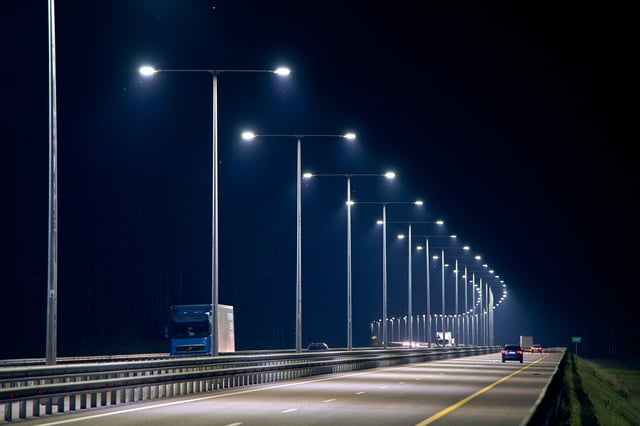
Loos-en-Gohelle, a municipality of roughly 6,900 residents in France’s Pas-de-Calais department, launched a citizen-controlled street lighting pilot on June 9, 2026, allowing inhabitants to reactivate public streetlights from their smartphones for ten-minute windows during nighttime shutoff periods. The experiment, confined to two initial zones in the town center and the Quartier Ouest, extends a decade-long energy-reduction program that has already converted the municipal lighting stock to LED and introduced systematic nocturnal extinction. The deployment makes Loos-en-Gohelle one of the latest additions to a national network that now counts more than 1,000 equipped French municipalities.
Loos-en-Gohelle’s Track Record as a Sustainability Testing Ground
Loos-en-Gohelle occupies a former coal-mining district in the Pas-de-Calais and has transformed over decades from an economically distressed commune into a nationally recognized laboratory for ecological transition. The town operates a dedicated website, Ville Pilote, documenting its sustainability projects, and holds the designation of Territoire à Énergie Positive, targeting 100 percent renewable energy by 2050. That institutional orientation makes the adoption of demand-driven street lighting a logical extension of existing policy rather than an isolated technical decision.
The municipality had already implemented two prior measures to reduce public lighting consumption: a fleet-wide conversion to LED fixtures and the introduction of full nocturnal extinction across the network. The “J’allume ma rue” pilot now bridges the gap between those energy savings and the residual security concerns that accompany darkness in public spaces.
How the On-Demand System Operates
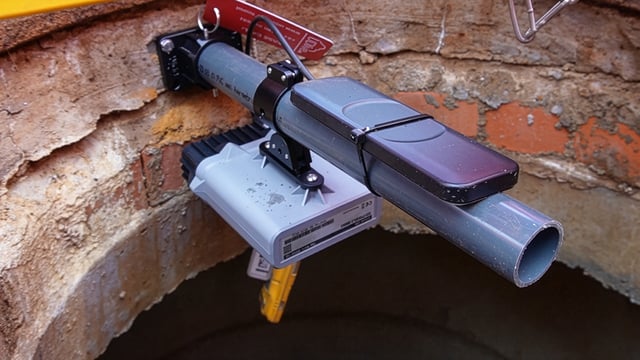
The system is built around a connected controller called the Candela EP, developed as a joint product by French firms Photon Group and Odelco. The module installs directly into existing street lighting control cabinets in the standard European DIN rail format, making it compatible with virtually any existing electrical enclosure, and connects to both Linky smart meters and legacy metering infrastructure for consumption monitoring.
Each cabinet governs an average of fifteen light points, and installation takes less than one hour per unit, according to Olivier Bozzetto, the electro-computer engineer at Odelco who created the technology. Once installed, the system uses an astronomical clock to manage scheduled extinction and dimming cycles, with support for DALI, 0-10V, and LoRa communication protocols for fixture-level control where needed.
Residents access the service by navigating to jallume.fr on a smartphone and tapping an illuminated lamp icon. The platform activates lighting through an interface layer rather than a direct electrical command, and geolocation causes streetlights to track the user’s route automatically, switching on as they advance and off behind them. In Loos-en-Gohelle the lighting window is set at ten minutes per activation, a parameter municipalities can adjust through the administration interface.
Energy Savings and Security: The Dual Mandate
Public lighting accounts for roughly 40 percent of a municipality’s electricity bill, which was already one of its largest expenditures before energy prices rose sharply. Nocturnal extinction cuts that figure substantially, but the perception of insecurity in unlit streets has led many councils to look for middle-ground solutions.
Surveys indicate that 72 percent of French residents support nocturnal shutoff in principle, yet concerns about personal safety remain a persistent point of friction for local governments weighing extinction policies. The on-demand model attempts to resolve that tension by shifting the trigger from a fixed schedule to actual user presence.
At the platform scale, the Photon Group “J’allume ma rue” network reports 80 percent energy savings across deployments and has recorded more than 1.32 million individual lighting activation requests to date. A case from Urrugne, a Basque Country municipality of 12,000 inhabitants, illustrates the consumption impact: the town reduced its annual lit hours from roughly 4,100 to 1,365, cutting a projected annual lighting bill from 164,000 euros to approximately 64,000 euros.
A French Innovation Now Exceeding 1,000 Municipal Deployments
Olivier Bozzetto originally developed the Candela EP controller in 2016 for his own town of Pont-de-l’Arche in Normandy, framing it as a technical exercise to reconcile residents who disagreed on whether nocturnal extinction was acceptable. The product only became commercially available in 2021 through a partnership with Photon Group.
The system has since been installed across more than 1,000 municipalities and nearly 2,900 control cabinets. Deployments span a wide range of scales and geographies: from the Communauté d’agglomération de Cergy-Pontoise in the Paris region, where the system has been progressively expanded since 2023 across multiple member communes, to smaller communes in the Gironde and the Pays Basque. Eysines, a commune near Bordeaux, connected 3,900 streetlights across 125 electrical cabinets, with an initial investment of 75,000 euros and an annual maintenance subscription of 10,000 euros.
The Kurrant platform, which monitors smart city infrastructure deployments across Europe, has documented parallel challenges in French small-city lighting modernization: its reporting on Saint-Leu-d’Esserent illustrates how budget-constrained municipalities are using LED conversion and demand-responsive controls as their primary entry points into smart city infrastructure, a pattern that the Loos-en-Gohelle pilot reinforces.
Pilot Scope and the Path to Potential Citywide Rollout
The June 9 public meeting that preceded the launch served as both an operational briefing and a deliberative session, with the municipality inviting residents to ask questions about lighting policy, energy expenditure, biodiversity impacts, and the perception of nighttime safety. The two pilot zones, the Centre-ville and the Quartier Ouest, were activated that same evening.
The town has stated that a successful experiment could form the basis for extending the system across the entire municipality. No timeline or budget for a wider deployment has been publicly announced. The pilot also fits within a broader governance approach that Loos-en-Gohelle has applied consistently across sustainability projects: testing at small scale, measuring outcomes, and using resident feedback as a condition for expansion.
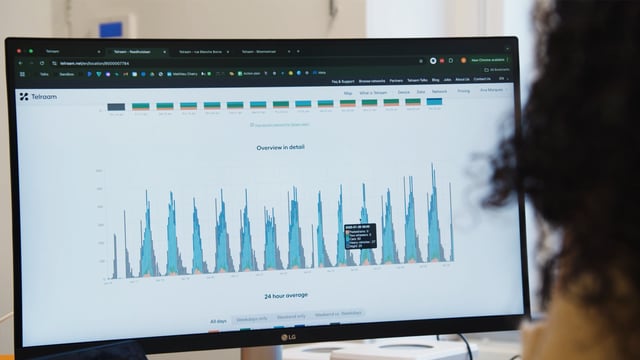
The integration of API connectivity in the Candela EP platform supports several operational extensions beyond the resident app. Emergency services can be granted elevated access to activate lighting across entire zones for planned or unplanned interventions, and the system logs consumption data, voltage anomalies, and cabinet opening events to support both maintenance and fraud detection.