in Barcelona
 3 to 5 Nov 2026
The Cieza City Council in Spain’s Region of Murcia has activated a digital twin of the municipality, a virtual model designed to support urban planning, scenario simulation, and data-driven management of public services. The platform went live on June 4, 2026, and was developed using geospatial technology from Esri.
The project positions Cieza, a town of roughly 35,500 residents, among a small but growing group of mid-sized Spanish municipalities deploying territorial digital twins, a category until recently dominated by larger cities such as Segovia and Barcelona. Neither the council nor the vendors have disclosed the investment amount or a full implementation timeline.
A Geoportal With Lidar Data Underpins The Model
The digital twin builds on a municipal geoportal that consolidates geographic information and Lidar data into a single territorial information platform. The geoportal forms part of Cieza’s broader smart city platform and aggregates layers covering the street network, land use, public transport, mobility, the municipal population register, urban planning, cadastral records, and municipal services.
Through GIS viewers and dashboards, council staff can cross-reference these datasets to plan service delivery, assess accessibility to public facilities, optimize street cleaning routes, and manage urban mobility. The Cieza City Council describes the architecture as scalable and interoperable, allowing the system to evolve incrementally toward more advanced capabilities, including artificial intelligence integration.
Solar Mapping Emerges As An Early Use Case
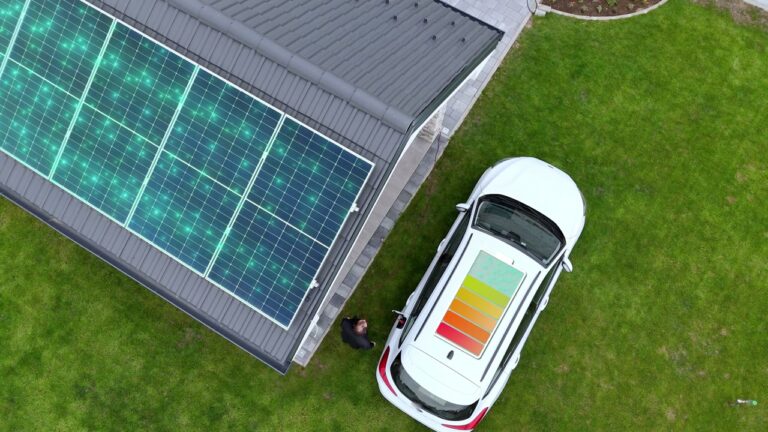
Among the first applications is the calculation of solar radiation on building rooftops across the municipality. The analysis is intended to help residents evaluate the viability of photovoltaic installations and to identify zones with limited shading, linking the geospatial platform to local energy transition goals.
The council can also run urban scenario simulations within the twin, testing how the built environment responds to different planning decisions before committing resources. This mirrors the approach taken by other Esri-based municipal twins in Spain, including the Segovia digital twin, which combines Lidar, satellite imagery, IoT sensors, and cadastral data in a hyperrealistic 3D model of that city’s urban core.
Tourism Digitization Adds A Second Phase Funded By EU Recovery Money
The geoportal has also been extended with tourism-focused tools under the destination sustainability plan “Cieza, mucho más de lo que ves,” a program backed by approximately 3.5 million euros in NextGenerationEU funding channeled through Spain’s Recovery, Transformation and Resilience Plan.
This second phase delivers interactive viewers for 360-degree cameras, real-time bus arrival information, Holy Week procession routes, flood-prone zones, and the municipal General Development Plan, alongside dashboards on population, urban trees, and cadastral data. The tourism layer reflects a wider pattern in Spain, where recovery-fund tourism plans have become a common financing vehicle for municipal geospatial infrastructure.
Small Municipalities Enter A Market Shaped By National Funding Programs
Cieza’s deployment lands amid sustained public investment in local digitalization across Spain. As Kurrantly News reported, the Spanish government recently allocated 89.15 million euros through the RedCyTI program to fund municipal digital transformation projects, the sixth major smart city funding round since the country adopted its National Smart Cities Plan in 2015.
For technology vendors, the segment of municipalities under 50,000 inhabitants represents a significant expansion opportunity. Esri’s GIS software is used by more than 350,000 organizations worldwide, and the company has been promoting territorial digital twins to Spanish local governments through the Spanish Smart Cities Network, which counts more than 140 member councils.
The Cieza project signals that the modular geoportal-first approach, starting with consolidated geographic data and layering simulation capabilities on top, is becoming a replicable pathway for smaller administrations with limited digital maturity to reach digital twin functionality at their own pace.