in Barcelona
 3 to 5 Nov 2026
The Friuli Venezia Giulia regional council, which sits in Trieste, has approved a non-binding motion committing the regional government to evaluate adaptive streetlighting as a road safety measure, according to a Friulioggi report published on 22 October 2026. The motion, an ordine del giorno tabled by Forza Italia councillor Roberto Novelli and co-signed by councillors Andrea Cabibbo and Michele Lobianco, rests on 2025 figures for the province of Udine of 1,314 accidents, 1,741 injured people and 34 deaths.
Novelli put the social cost of that toll at more than 156.6 million euros for the province in a single year, a figure that combines an estimated 1.81 million euros per death, 45,000 euros per injured person and more than 12,000 euros in material damage per accident. The report does not say which costing methodology sits behind those unit values, and the total is the councillor’s own estimate rather than an official statistic.
What the Motion Asks the Giunta to Evaluate
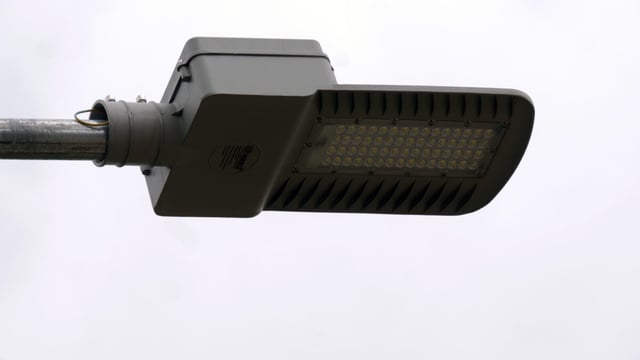
The text asks the regional executive to assess lighting that raises its output when a pedestrian, cyclist or vehicle approaches and lowers it when the road is empty, using sensors, traffic detection and remote management of individual luminaires. Suggested pilot sites are pedestrian and cycle crossings, bus stops, peripheral areas and small comuni and hamlets, which could receive regional support to adopt the technology.
Nothing in the motion fixes a budget, a list of roads, a procurement route or a start date, so the practical effect is limited to instructing the Giunta to study the question. An ordine del giorno carries political weight inside the council but creates no spending obligation, and any pilot would still need a funding line in a future regional budget.
Scale of the Problem Against National Data
The Udine figures sit within a national picture that ISTAT set out in its release of 24 July 2026, which recorded 177,207 injury accidents in Italy in 2025, 2,868 deaths, a fall of 5.3 percent on 2024, and 237,822 injured, a rise of 2.2 percent. The statistics institute added provincial detail in an update dated 15 October 2026, which is the likely source of the Udine totals, although the Friulioggi report does not name its source.
On those national numbers the 34 deaths in the province of Udine represent 1.2 percent of the Italian total. The ISTAT release does not break out the share of accidents occurring after dark, which is the figure that would show how much of the harm adaptive lighting could address.
A Regional Lighting Law That Already Mandates Dimming
Friuli Venezia Giulia has regulated public lighting since Regional Law 15 of 18 June 2007, written to limit light pollution and protect astronomical observatories. Article 8 requires new installations to include devices that cut output by at least 30 percent at full operation from 23:00 standard time, and to adjust output to traffic volume on new road lighting, with exceptions where safety would be compromised.
The same law obliges each comune to adopt a municipal lighting plan and sets adaptation deadlines of 5, 10 and 15 years for existing fixtures depending on lamp wattage. Dimming is therefore established regional practice, and the new motion shifts the question from scheduled reduction at night to reduction triggered by detected presence, which requires a sensor and a communications layer at each pole or group of poles.
Benchmarks From Adaptive Projects Elsewhere
The closest documented benchmark found for presence-based control is a pilot in Aarau, Switzerland, run by the municipality with the energy provider Eniwa on Furorastrasse. According to project documentation published by a lighting supplier, 23 SITECO LED luminaires, each paired with a TVILIGHT infrared motion sensor, dim to 20 percent in sleep mode, rise to 100 percent on detection and return to sleep after holding for 15 seconds.
Eniwa reported additional energy savings of 31 percent against a standard LED installation with fixed dimming schedules. That figure comes from the project’s own reporting, covers one street of 23 luminaires and has not been independently audited, so it cannot be applied directly to rural Friulian roads with different traffic patterns.
Procurement and Funding Questions the Motion Leaves Open
Italian public lighting contracts are shaped by the national minimum environmental criteria for lighting design and fixtures adopted by ministerial decree on 27 September 2017, which municipalities must reflect in tenders. Any regional pilot would have to sit inside those rules and inside existing concession or service contracts, many of which bind comuni to a single operator for years and limit their freedom to add sensors or controls.
Small comuni, the group the motion names as potential beneficiaries, are also the ones with the least technical staff to specify and manage a networked lighting system. A regional programme would need to decide whether it funds hardware, connectivity and software together or only fixtures, and who carries the data and maintenance costs once a grant ends.
The motion also treats energy savings and safety as one benefit, although the two pull in different directions: a system tuned to cut consumption keeps lamps dim until a detector fires, while one tuned for safety must raise light early enough for a driver to see a pedestrian at a crossing. Whether the Giunta designs its pilots around measured changes in night-time collisions at the chosen crossings, rather than around kilowatt-hours saved, will decide if this evaluation produces evidence that justifies a wider rollout.