in Barcelona
 3 to 5 Nov 2026
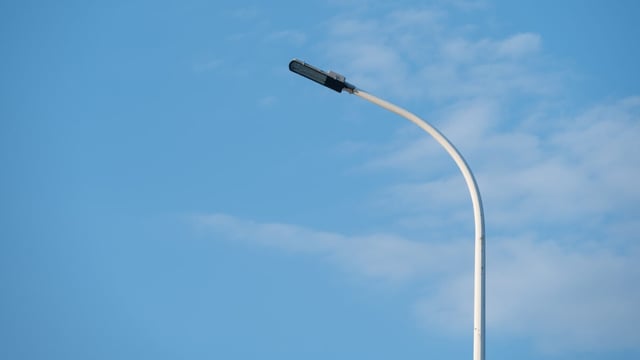
The Italian city of Monza, in Lombardy, has completed the replacement of all 12,688 public lighting points under a public-lighting concession held by Acinque Tecnologie, and residents can now report faults by scanning a QR code fitted to each pole, according to figures presented by the municipality and the concessionaire on 22 October. The programme, which began in autumn 2023, represents an investment of more than €13 million inside a 19-year concession that Il Giorno reported was valued at almost €45 million when it was signed in April 2023.
A Retrofit That Outgrew Its Original Scope
The work covered more than the luminaires themselves: 644 new poles were installed against 951 initially planned, because inspections showed that the remaining poles could still carry the service, while 224 electrical panels were replaced and more than 6,000 cable joints were renewed against a plan for 2,400, an increase of 150%. The new joints are larger, insulated and fitted with rodent protection, a specification that reflects the damage found in the buried network.
The length of cable replaced or laid rose from 32 kilometres in the initial plan to 80 kilometres, on a network of 190 kilometres in total, according to Il Giorno. Mayor Paolo Pilotto attributed the larger volumes to a decision to intervene on the basis of citizen fault reports rather than on the original paper survey.
The consortium led by Acinque Tecnologie, which also includes A2A Illuminazione Pubblica and A2A Smart City, was reported in 2023 to have targeted completion of all works by December 2024, so the final handover came almost 22 months after that date. The initial lamp count in the 2023 plan was 12,549 fixtures, against the 12,688 points ultimately replaced.
Fault Reports Fell Until the Panel Consolidation Began
The municipal figures give a four-year record of reported faults and problems: 1,805 in 2023, 1,704 in 2024 at an average of 142 a month, and 1,163 in 2025 at an average of 97 a month. Between January and September 2026 the city received 951 reports, an average of 106 a month, which is 9% above the 2025 monthly rate.
Giovanni Chighine, chief executive of Acinque Tecnologie, explained the 2026 increase as a side effect of consolidating electrical panels, which is exposing weaknesses on ageing lines that were previously masked. The QR codes are meant to shorten the response chain: scanning a pole opens an Acinque web app where the resident states the problem and the pole number, the report reaches the operations centre of Acinque Tecnologie automatically, and the resident receives a link to follow the repair in real time.
> “Behind a streetlight there is a concrete choice for safety, efficiency and quality of life,” said Annamaria Di Ruscio, vice president of Acinque, at the 22 October presentation, as reported by MBNews.
Di Ruscio also stated that a reported fault will be repaired within one hour, and no later than two, a service target that the 2026 monthly report volumes will test directly.
Energy Targets and Dimming Schedule
The new installations allow intensity regulation: between 23:30 and 05:30, the light level can be reduced by up to 30% on some streets. The city estimates that the programme will avoid 1,500 tonnes of CO2 a year. The 2023 concession documents projected a 77% cut in electricity consumption from the LED conversion, against an annual electricity bill that Il Giorno put at €3.5 million, alongside about €2.2 million a year for lamp maintenance and management.
Ten additional lighting upgrades worth more than €400,000 were delivered in parallel at Piazza Castello, the Giardini Nei, the forecourt of the central railway station and Via Edison. New points were also added in the Parco della Memoria on Via Messa, in the park on Via Guardini and in the area between Via Pacinotti and Via Marsala, while Piazza Trento e Trieste received new lines, joints and RGB floodlights able to produce coloured lighting scenes.
Poles as Carriers for Other City Services
The 2023 concession included a digital layer on top of the lighting: fibre links to more than 100 public buildings and schools, 100 additional CCTV cameras on top of the 170 already installed, five air-quality monitoring stations, about 100 sensors in road manholes, 42 public Wi-Fi access points and two trial smart benches. Under the contract the resulting digital infrastructure becomes municipal property.
Carlo Abbà, the city councillor responsible for the smart city, said that the poles can now support services beyond lighting, with video surveillance and traffic-flow monitoring named as the first candidates. The 644 new poles were specified to take such equipment, which gives the municipality mounting points for sensors without new civil works.
What Comes Next in 2027
The consolidation of electrical panels is scheduled to finish in the first half of 2027, and the monthly fault count recorded after that date will show whether the 2026 rise in reports was a transitional effect or a sign of further ageing in the 190-kilometre network.