in Barcelona
 3 to 5 Nov 2026
Go Eve, the electric vehicle charging company spun out jointly from University College Dublin and Imperial College London, has secured £750,000 from Innovate UK and private investors to fund an 18-month engineering project on its patented DockChain technology, Tech.eu reported on 21 October 2026. The money comes through the Growth Catalyst, Investor Partnerships programme and will be spent by the company’s engineering team in Wolverhampton on custom hardware, firmware and software, with a production-ready version of DockChain targeted for 2027.
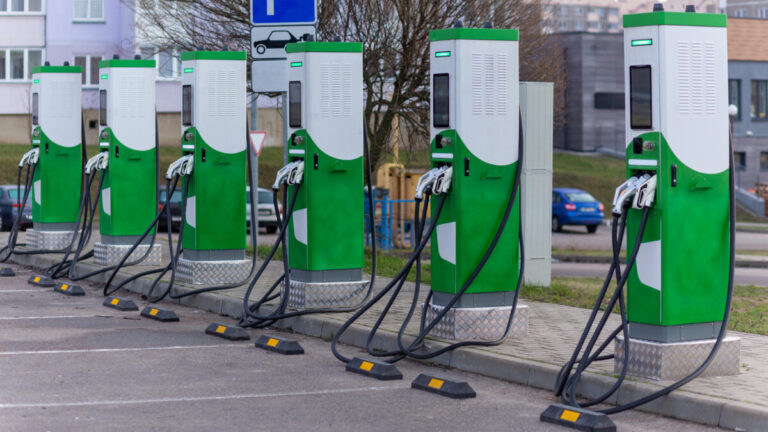
DockChain allows a single DC fast charger to serve several parking bays by keeping multiple vehicles plugged in and delivering power to them one at a time, which Go Eve says reduces the number of chargers and the amount of electrical infrastructure a fleet depot needs. The company is supported by NovaUCD and has said it is seeking fleet operators to trial the system at sites with limited charging capacity, varying charging priorities or potential for vehicle-to-grid services.
A Seed Round Followed By Public Money Aimed At Fleet Behaviour In The Field
Go Eve was founded in 2021 by Hugh Sheehy, John Goodbody, Professor Robert Shorten, Dr Pietro Ferraro and Andrew Cullen, and announced a £3 million first funding round on 10 July 2023, according to University College Dublin. Investors in that round included The Pearl Family Office, Carter Gem, Automotive Ventures, Kero Development Partners and Cur8 Capital, while Imperial College London holds a shareholding as a co-owner of the spin-out.
Building in this space?
Kurrant Ventures backs start-ups digitalising cities and utilities, and opens doors to the operators that buy from them.
- Latitudo 40
- GoodVision
- Meersens
- Cortexia
The £750,000 award is therefore equal to 25 percent of the seed round, and it is directed at a narrower task than the original product launch: the university described the 2023 money as funding for supply chains and production scale, whereas the new project concerns how individual vehicles respond at the connector.
Why Sequential Charging Depends On How Each Vehicle Restarts
The engineering problem the project addresses comes from fleet installations already in service. Go Eve says some electric vehicles do not begin charging on the first attempt, and others fail to restart after power flow has been paused for grid or priority reasons, which matters because sequential charging requires every paused vehicle to resume reliably without a driver returning to the bay.
The funded work will build custom hardware, firmware and software to start, stop and restart sessions automatically without anyone physically disconnecting a car. In the words of John Goodbody, co-founder and Marketing Director of Go Eve, in the company’s announcement as reported by Tech.eu: “We’ve already shown that fleets can serve more bays without multiplying the number of fast chargers.”
The same control layer is also the basis for the second line of work in the project, which will examine whether DockChain can support bidirectional charging and vehicle-to-grid services, allowing fleet operators to earn revenue from vehicles that are parked and not scheduled to move.
Where The Technology Sits In The Fleet Charging Market
The commercial argument for DockChain rests on installed cost per bay. A conventional depot that wants DC fast charging at every bay must buy a separate charger and size the grid connection for simultaneous peak demand, whereas a shared charger serving a chain of bays defers that cost by accepting that vehicles will be charged in turn.
That trade-off suits fleets whose vehicles are parked for long periods, such as overnight depots, and suits less well any site where many vehicles need a fast top-up in the same window. Go Eve’s own description of target sites, those with limited charging capacity or varying charging priorities, reflects this boundary.
Go Eve first tested the concept with a pilot installation at the Imperial College London campus, completed in November 2022, as described in the 2023 university announcement, and its founding team includes the academic who invented the technology at University College Dublin before moving to Imperial’s Dyson School of Design Engineering.
What The 18-Month Project Has To Deliver Before 2027
The project timetable places the production-ready release in 2027, and existing units in the field will be eligible for upgrades, which means the redesigned control hardware has to be retrofittable to chargers that fleets have already installed. The recruitment of fleet trial sites is the next visible step, since the restart behaviour the company is trying to fix can only be measured across a varied mix of vehicle models and charging priorities.
The measure that will decide whether the investment changes the economics of multi-bay charging is the first-attempt start and post-pause restart rate across those trial fleets, set against the number of bays each fast charger can serve before waiting times breach a depot’s departure schedule.