in Barcelona
 3 to 5 Nov 2026
The UK’s Water Services Regulation Authority (Ofwat) has published its first artificial intelligence adoption plan for the water sector in England and Wales, setting out on 12 June 2026 how it expects companies to use AI during a period of deep regulatory upheaval. The plan encourages wider deployment across leakage detection, network management, billing and regulatory reporting, yet it also concedes that the sector cannot reliably quantify a fast-emerging counter-pressure: the water that AI data centres themselves consume. It arrives as the government prepares to abolish Ofwat and transfer its functions to new regulators, leaving an outgoing watchdog to lay foundations its successors will inherit.
An Outgoing Regulator Writing Rules For Successors That Do Not Yet Exist
The plan is explicitly framed as a transition document rather than a finished framework. Ofwat describes it as its best intentions for the work, while warning that delivery is constrained by the competing demands of reform and limited short-term resources.
That caution reflects the regulator’s own position. Following the Independent Water Commission led by Sir Jon Cunliffe, which recommended scrapping Ofwat in July 2025, the government’s January 2026 white paper “A new vision for water” confirmed plans for a single new regulator in England and the transfer of economic functions into Natural Resources Wales for Welsh water.
The document therefore aims to set durable principles, an early industry taxonomy and monitoring approaches that the future English and Welsh regulators can build on. Ofwat says it is coordinating with the Environment Agency, the Drinking Water Inspectorate, Natural Resources Wales and Natural England to avoid duplicating burden on companies during the handover.
Where AI Is Already Embedded In Day-To-Day Operations
Ofwat’s snapshot, gathered from chief data officers and AI leaders across the regulated companies, found that every firm reported some form of live or embedded AI use. The most common applications cluster around leakage and network operations, asset maintenance, billing and debt, customer contact handling, and regulatory reporting and data quality.
The landscape is blended rather than purely generative. Established machine learning and rules-based models sit alongside newer generative tools, with Microsoft Copilot cited as a widely used product, while agentic AI remains largely experimental and not yet embedded in core processes.
Wastewater is an early proving ground, where companies use machine learning on sewer telemetry, rainfall forecasts and historic blockage records to predict spills and prioritise cleaning ahead of heavy rainfall. Ofwat-funded innovation projects illustrate the direction of travel, including Safe Smart Systems, led by Anglian Water, which applies machine learning to balance supply and demand in near real time, and River Deep Mountain AI, led by Northumbrian Water, which tested AI and satellite data for river water quality monitoring.
The Demand Ofwat Concedes It Cannot Yet Measure
The plan’s most striking admission concerns a gap rather than a use case. Ofwat acknowledges that companies need to extend the evidence base on how AI adoption and its supporting infrastructure could affect water demand, and says its Water Supply team is still working with companies and other regulators to understand likely demand from data centre growth.
The plan describes “rising AI adoption and its impact on water consumption” as a priority area where water companies want more investment and deeper research, it states in the June 2026 document. Ofwat signals that this question will feed into the next round of water resource management planning.
The tension is structural. The same regulator promoting AI to cut leakage and improve efficiency is also conceding it has limited visibility into how AI infrastructure will draw on constrained supplies, at a time when supply is already tightening from climate pressure, population growth and ageing assets.
What Independent Studies Reveal About AI’s Water Footprint
External research has begun to fill the gap Ofwat flags. Analysis published by Chatham House notes reported plans for around 100 new UK data centres by the early 2030s, a sector expected to become a significant new source of demand even though it accounts for a small share today.
Siting is the sharper concern. A report from the charity Global Action Plan found that 84% of proposed water-intensive data centre developments are planned for areas already water stressed or projected to be so by 2040, and estimated that a single hyperscale facility can require enough water each day to meet the needs of around 10,000 people.
Metered evidence remains thin but is growing. A study for the sector’s Strategic Panel, reported by market operator MOSL, put current data centre potable water use in England at roughly 1.879 million cubic metres a year, about 0.2% of the non-household market, with a clear upward trend and consumption heavily concentrated in a handful of large facilities. Thames Water has estimated that a large data centre can use between 4 and 19 megalitres a day, equivalent to more than 50,000 households, and the Environment Agency already models a national supply shortfall of around five billion litres a day by 2055 without major new investment.
The Vendors And Platforms Behind The Rollout
On the supply side, Microsoft Copilot features prominently in company adoption and in Ofwat’s own internal use, which began with a phased rollout in 2025 before moving toward agent-based productivity trials. Ofwat has also deployed its strategic data platform, named Ocean, to build trusted data structures for analytics and machine learning.
Commercial AI platforms are entering the sector at pace. As Kurrantly News previously reported, Leep Utilities became the first UK water company to migrate fully to Kraken Technologies’ platform in a £10 million deal aimed at cutting leaks and accelerating smart meter rollout, an example of the customer-facing analytics Ofwat expects to grow.
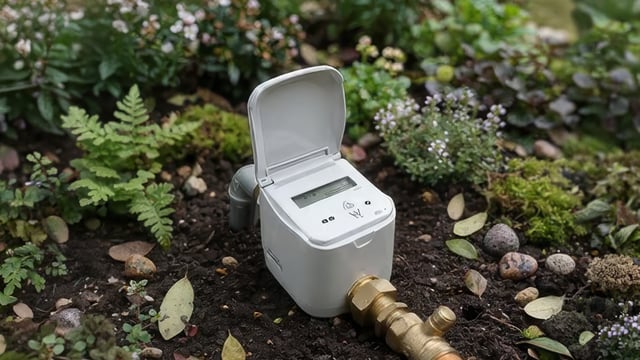
Underpinning much of this is data infrastructure. Ofwat supported the largest smart meter programme to date at its 2024 price review, with 10 million meters due across 2025 to 2030, generating the granular demand data that machine learning models rely on. The regulator says it intends to lean on existing frameworks such as the government AI Playbook and the National Cyber Security Centre’s secure AI development guidance rather than write rules from scratch.
Five Workstreams, A Reporting Gap, And Why The Timing Cuts Both Ways
Ofwat’s plan rests on five areas: understanding adoption, developing guidance, enabling innovation, building monitoring and reporting, and strengthening its own capability. It also intends to explore regulatory AI sandboxes, synthetic datasets and an adapted ISO 56000 innovation framework, though companies indicated limited immediate appetite for sandboxes.
The market context is one of heavy innovation spending. Ofwat’s Water Innovation Fund has awarded more than £190 million to over 100 projects since 2020 and was extended by £400 million for 2025 to 2030, alongside a £100 million Water Efficiency Fund, with AI and data solutions featuring across recent competitions.
The deeper challenge is one of sequencing. By developing data foundations and monitoring metrics now, Ofwat hopes the future regulators inherit usable infrastructure, yet the plan repeatedly notes that transition pressures and resource limits could slow delivery, even as the data centre demand question it has identified grows more urgent. Louise Blais, Ofwat’s Director of Data, is named as the lead contact for the programme.