in Barcelona
 3 to 5 Nov 2026
Schréder, the Brussels-headquartered smart outdoor lighting group, has completed the acquisition of Sydney-based EdgeMachines, a specialist in low-power IoT sensing and edge AI for urban environments. The deal, announced on June 8, 2026, formalises a commercial partnership that had already produced live deployments in more than 20 cities across Europe, Australia, and New Zealand.
From Partnership to Full Integration
The two companies began working together approximately a year before the acquisition, jointly developing the Schréder SENSE ONE, a compact multi-purpose sensor. That product embeds EdgeMachines’ edge AI and FPGA-accelerated inference hardware directly into Schréder’s street lighting infrastructure, enabling real-time classification of traffic, pedestrian movement, parking occupancy, air quality, and noise without routing raw data through a central server.
By bringing the EdgeMachines team fully in-house, Schréder wants to consolidate the sensor intelligence layer into its own product roadmap rather than managing it through a third-party agreement. The acquisition positions the SENSE ONE and the broader EXEDRA sensing architecture as proprietary capabilities, not licensed components.
Considering a deal like this?
Kurrant advises buyers, sellers and investors in smart city and utility technology, from target search to closing.
- Heyliot sale to BH Technologies
- Engie: Flashnet sale to Lucy Group
- Birdz (Veolia) business carve-out
How the Technology Works
EdgeMachines built its platform on an explicit design constraint: process everything on the device. Its sensors use FPGA and ASIC accelerators to run AI inference locally, meaning that sound events, pedestrian counts, vehicle speeds, and environmental measurements are classified before any data leaves the pole. This privacy-by-design model eliminates the need for high-bandwidth cellular or fibre backhaul and removes the legal complexity of transmitting raw video or audio feeds from public spaces.
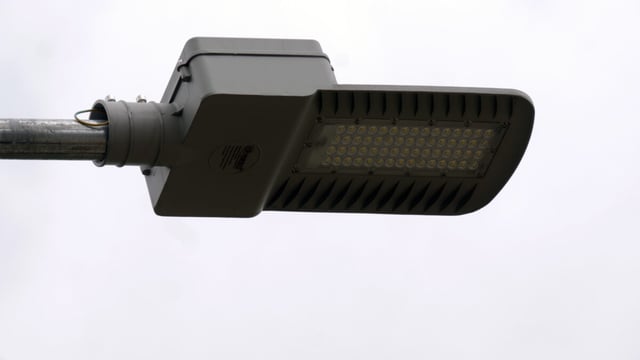
The SENSE ONE sensor is compatible with the Zhaga Book 18 standard, the industry specification that defines the mechanical and communication interface between outdoor luminaires and sensing modules. In practical terms, this means the device can be inserted into any compliant streetlight socket without rewiring or pole replacement. Schréder has also confirmed compatibility with other standard street lighting interfaces already present in deployed infrastructure.
All data streams feed into Schréder EXEDRA, the company’s IoT platform, which runs on Microsoft Azure. Cities access consolidated dashboards, automated alerts, and API endpoints that connect with third-party systems including traffic management and urban operations software.
Deployments Already Generating Operational Data
The partnership had moved well beyond pilot phase before the acquisition closed. In Logan, Australia, the city is now collecting vehicle speed data and pedestrian and vehicle counts via the lighting network, feeding directly into road safety analysis. In Oeiras, Portugal, a municipality west of Lisbon that has repeatedly ranked among Portugal’s leading smart city authorities, the system is monitoring crowd density, air quality conditions, and real-time parking availability for citizens.
These are not isolated pilots. Schréder reports the combined platform is live across more than 20 cities on three continents, a deployment base that gives the combined entity a meaningful head start in a market where most competitors are still running controlled trials.
“Joining Schréder is the right next step to scale this technology globally and help more communities make safer, more sustainable and more informed decisions,” said Alex McCarthy, co-founder of EdgeMachines, in the company’s June 2026 press release.
The Infrastructure Economics Argument
What distinguishes this acquisition commercially is the cost structure it enables for municipal buyers. Cities that have already installed Schréder EXEDRA-managed lighting, or that are running Zhaga-compatible luminaires from any manufacturer, can add the full sensing capability without planning new poles, deploying separate wireless networks, or managing a separate vendor relationship. The capital expenditure is the sensor module; the operating infrastructure already exists.
This is a significant argument in a public sector environment where budget cycles are long and new network deployments require separate procurement, planning permission, and civil works. The greenfield alternative, building a dedicated sensor network from scratch, carries substantially higher cost and deployment timelines measured in years rather than months.
Strategic Context: Schréder’s Ongoing Expansion
This acquisition is the latest in a series of moves by Schréder to extend its addressable market beyond luminaire manufacturing. In December 2024, the company acquired a 49% stake in Photinus, a solar lighting specialist active across Austria, Germany, Switzerland, and the Middle East, as reported by Kurrant. In April 2026, it completed the acquisition of NLS Lighting in the United States, expanding its North American manufacturing footprint. A joint venture with Bahra Electric in Saudi Arabia, announced in early 2026, further extends its reach into Gulf infrastructure markets.
The EdgeMachines deal is strategically different from those moves. Where the others expand geographic or product range within the lighting category, this one aims to shift the platform’s value proposition from infrastructure management to urban intelligence.