in Barcelona
 3 to 5 Nov 2026
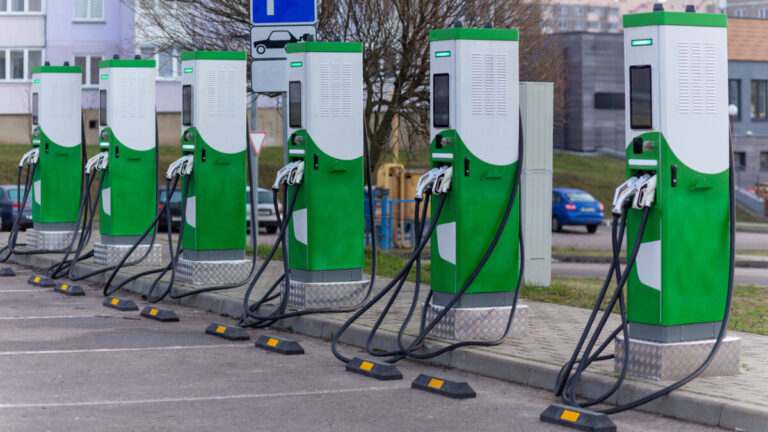
Wallonia has selected ENGIE Vianeo as the concessionaire for a region-wide public electric vehicle (EV) charging rollout covering 242 municipalities, with the energy group’s EV mobility brand set to install 1,625 charging stations delivering 2,926 individual charge points over the next two years. The contract, announced on 13 April 2026, extends ENGIE’s operational footprint in Belgium just weeks after the group secured a parallel deployment in the Brussels-Capital Region, and addresses a long-standing infrastructure gap between Wallonia and its northern counterpart.
A Decade-Long Concession Built on a Private-Funding Model
The concession has been awarded to Electric Mobility Infrastructure, a subsidiary operating under the ENGIE Vianeo brand, under a structure that notably excludes public subsidies. Under the terms set by the Walloon government, the operator will bear the full capital and installation cost and will recover its investment through charging revenue, with the regulated tariff expected to settle around 48 cents per kWh — a rate that sits within the current Walloon market range of roughly 30 to 60 cents per kWh.
Deployment milestones require the concessionaire to commission at least half of the 1,625 stations by spring 2027 and to complete the network by spring 2028. The concession itself will run until spring 2038, and the contract stipulates that a minimum of 95 percent of the pre-identified sites must be built, with explicit provisions for rural and peri-urban coverage rather than concentration in high-density zones.
Track tenders like this
New smart mobility tenders across Europe, flagged daily with an AI summary.
Closing the Gap With Flanders
The Walloon award is best understood against the region’s structural infrastructure deficit. End-2025 data cited by Belgian government sources placed Wallonia’s public charging footprint at roughly 3,700 stations, compared with approximately 22,310 stations in Flanders — a disparity that federal and regional mobility officials have repeatedly flagged as a barrier to EV adoption in the French-speaking south.
A 2021 Walloon plan to deploy around 6,000 stations and 12,000 charge points by 2026 was effectively shelved and has now been replaced by the current concession framework. The new model, inspired by neighbouring jurisdictions, consolidates the rollout under a single regional concession rather than fragmenting it across individual municipal tenders.
Governance Through Territorial Development Agencies
Coordination of the Walloon rollout is being handled through the region’s eight Territorial Development Agencies (ADTs), which act as the concession’s contracting authorities. IDETA, the intermunicipal agency for Wallonia Picardy, has been designated as the lead coordinator across the ADTs.
Municipal authorities will issue the necessary road-use permits for installations on public land, while the ADTs oversee local technical coordination with the operator. Target locations include town centres, village squares, sports facilities and other publicly accessible sites, with the 22 kW AC power rating aligned to typical daily urban and commuter charging cycles.
The deployment is linked to both the Plan de Relance de la Wallonie and Belgium’s National Plan for Recovery and Resilience (PNRR), the national framework channelling EU NextGenerationEU funding into infrastructure modernisation.
A Consolidated Belgian Platform
The Walloon contract follows ENGIE Vianeo’s March 2026 selection by the Brussels-Capital Region for 835 charging stations and 1,640 charge points, as previously reported by Kurrant. Combined with its earlier Flemish concession covering Antwerp, Limburg and West Flanders — a 2,800-station, 5,600-charge-point scope — the operator now holds concessions in all three Belgian regions.
According to ENGIE, the combined Belgian network stands at approximately 7,000 charge points across 3,500 stations, making it the country’s largest public charging footprint. The group has set an intermediate national target of 12,000 charge points by 2028, meaning the Walloon and Brussels rollouts together account for the bulk of planned growth over the next two years.
The Belgian buildout is supported by backend IoT infrastructure delivered through a partnership with BICS, which supplies cellular connectivity and IoT SIM management for remote diagnostics, firmware updates and real-time availability data across the network.
European Ambitions and Sector Context
At group level, ENGIE is targeting 25,000 charge points across Europe by 2030, of which 1,000 are earmarked for heavy goods vehicles along European freight corridors. The operator currently runs a network of approximately 11,000 charge points across France and Belgium, with deployment under way in Germany, where ENGIE Vianeo is positioning particularly around heavy-duty vehicle charging.
ENGIE Vianeo’s HGV ambitions follow a 2023 contract with Siemens for 320 high-power DC units on French motorway service areas, provided under the Sicharge D product line — a footprint that anchors the group’s long-distance corridor offering alongside the AC-oriented municipal deployments now being rolled out in Belgium.
ENGIE posted full-year 2025 revenue of €71.9 billion, and the group has stated its intention to rank among Europe’s top five public EV charging operators by the end of the decade. The Walloon award, while modest in absolute kW terms, is strategically significant: it gives ENGIE contiguous operational coverage across a market of roughly 11.7 million people and consolidates a template — single-region concession, private financing, ADT-led governance — that other underserved European regions may find instructive.