The District of Columbia has awarded a combined $609,500 in public EV charging grants to three companies, with New York-based Voltpost among the recipients, marking the city’s latest push to close the urban charging gap as electric vehicle adoption continues to accelerate.
A Grant Shared Across Three Charging Approaches
The D.C. Department of Energy and Environment (DOEE) distributed the funding across Voltpost, Brooklyn-based curbside charging provider It’s Electric, and EV infrastructure developer PowerUp America. DOEE opened the grant application last August, selecting proposals based on deployment cost, design, and the potential to expand access in underserved locations. The $609,500 pool sits alongside a parallel $9.6 million DOEE and D.C. Department of Transportation initiative focused on fast charging near major interstate corridors, part of a broader, multi-layered charging buildout the District is pursuing across all eight wards.
Retrofitting What Is Already There
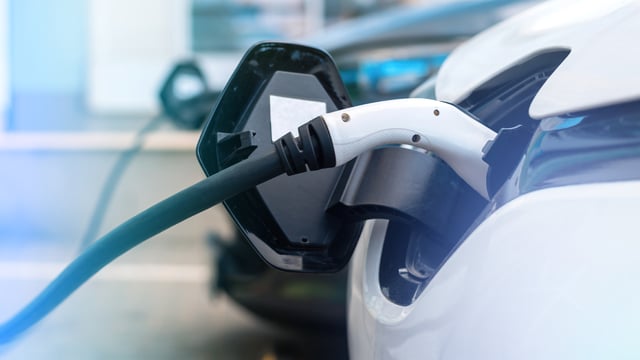
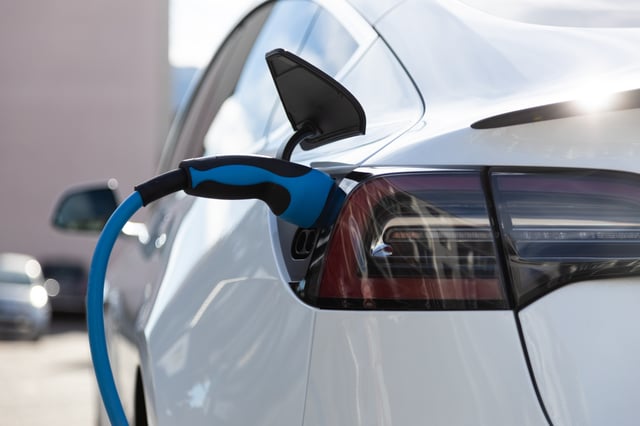
Voltpost’s portion of the grant will fund the installation of up to 16 Level 2 pole-mounted chargers distributed across the District. The company, founded in 2021, retrofits existing lampposts and utility poles into charging stations rather than constructing new standalone infrastructure. Its latest hardware, the Voltpost Air, can be installed in a matter of hours on wooden or metal poles, uses a retractable cable system to reduce vandalism risk, and is connected wirelessly via AT&T’s network. Drivers locate, initiate, and monitor sessions through a companion mobile app.
The economic argument behind the model is straightforward. Traditional EV charger deployments typically require significant trenching and construction work to run new cabling to a site. By routing power through existing conduit or dropping it down from overhead lines on a utility pole, Voltpost’s approach removes that cost layer, with savings estimated in the tens of thousands of dollars per installation. The smaller physical footprint also preserves curbside space, a premium in dense urban environments.
DOEE noted that Voltpost’s proposal was selected in part because of its competitive deployment costs, the pole-mounted design’s compatibility with curbside locations, and the option to incorporate carsharing vehicles into the charging plan. The agency described the retractable cord system as a practical solution to persistent urban charging problems, including cord cutting and space constraints. Charger sites are still being finalised in consultation with local utility Pepco and the District Department of Transportation, with a stated priority for areas currently underserved by charging infrastructure and locations near community anchor institutions such as libraries, parks, and recreation centers.
Federal Headwinds and a Resilient Pivot
Voltpost’s DC deployment comes after a turbulent period for the company at the federal level. The firm had previously been awarded a Charging and Fueling Infrastructure grant under the Infrastructure Investment and Jobs Act (IIJA) to deploy chargers in the capital, but that funding was frozen by the Trump administration in early 2025, along with the broader $5 billion National EV Infrastructure (NEVI) programme. The freeze affected three separate federal projects Voltpost had been awarded, disrupting the company’s expansion plans for the year. In January 2026, a federal court ruled the freeze unlawful and ordered the U.S. Department of Transportation to release the funds. The company noted that some competitors were forced to exit the U.S. market or shut down entirely during that period.
The district-level grant now provides a foundation for Voltpost to resume deployment while federal funding channels remain uncertain. The company has indicated it views the DC award as a bridging project, one that also positions it to take advantage of NEVI funds as more states complete the infrastructure buildout required to unlock that programme. Voltpost currently operates in New York, Michigan, Illinois, Massachusetts, Connecticut, California, and the District, with further state expansions described as imminent.
Leading EV Adoption Creates Demand for Neighbourhood Charging
Washington, D.C. provides a meaningful test environment for urban charging innovation. Electric vehicles accounted for approximately 20% of all new vehicle registrations in the District during the fourth quarter of 2025, placing it ahead of every U.S. state on that metric. That level of adoption, concentrated in a dense, largely renter-occupied urban core where private home charging is limited, creates acute demand for accessible public charging at the neighbourhood level.
The Voltpost approach mirrors strategies that have already scaled in European cities. Ubitricity, a subsidiary of Shell, has deployed more than 10,000 lamppost chargers across the United Kingdom, with London alone accounting for a significant share. Voltpost recently hired a former Ubitricity business development leader who oversaw 2,000 lamppost deployments in the UK and subsequently worked on the SureCharge lamppost network in London, signalling a clear intention to learn from that model and adapt it to the American regulatory and infrastructure context. The Voltpost Air is also Build America Buy America compliant, a requirement for federally funded programmes and an increasingly important commercial differentiator.
On the manufacturing side, Voltpost has partnered with Connecticut-based EVSE LLC to produce the Voltpost Air at scale, with AT&T providing wireless connectivity across the platform. The hardware is designed for compatibility with wooden and metal poles of varying diameters, giving municipalities flexibility on site selection without requiring bespoke infrastructure modifications.
Broader District Charging Strategy
The DOEE grant is one component of a wider municipal effort. The District is simultaneously pursuing fast-charging deployment along interstate corridors, a neighbourhood curbside pilot spanning all eight wards, and a dedicated programme to help multifamily residential buildings install chargers. Together, these initiatives reflect an attempt to address the full spectrum of charging needs, from long-distance highway travel to the everyday low-speed top-up that dense urban residents depend on.
For readers following pole-mounted and smart urban infrastructure developments in North American cities, Kurrant’s earlier coverage of LG CNS’s smart pole deployments in Georgia illustrates a parallel approach to repurposing street furniture, combining EV charging with environmental sensors, public Wi-Fi, and connected services within a single pole-mounted platform.
The performance and utilisation data collected from Voltpost’s DC installations will feed directly into the city’s broader assessment of which charger types deliver the best outcomes for on-street deployment. DOEE has described the programme as an intentional test of diverse charging technologies, with the findings expected to inform future procurement decisions as the District expands its on-street charging footprint.