Drones + AI: Building Efficiency’s Power Couple
View transcript auto-generated
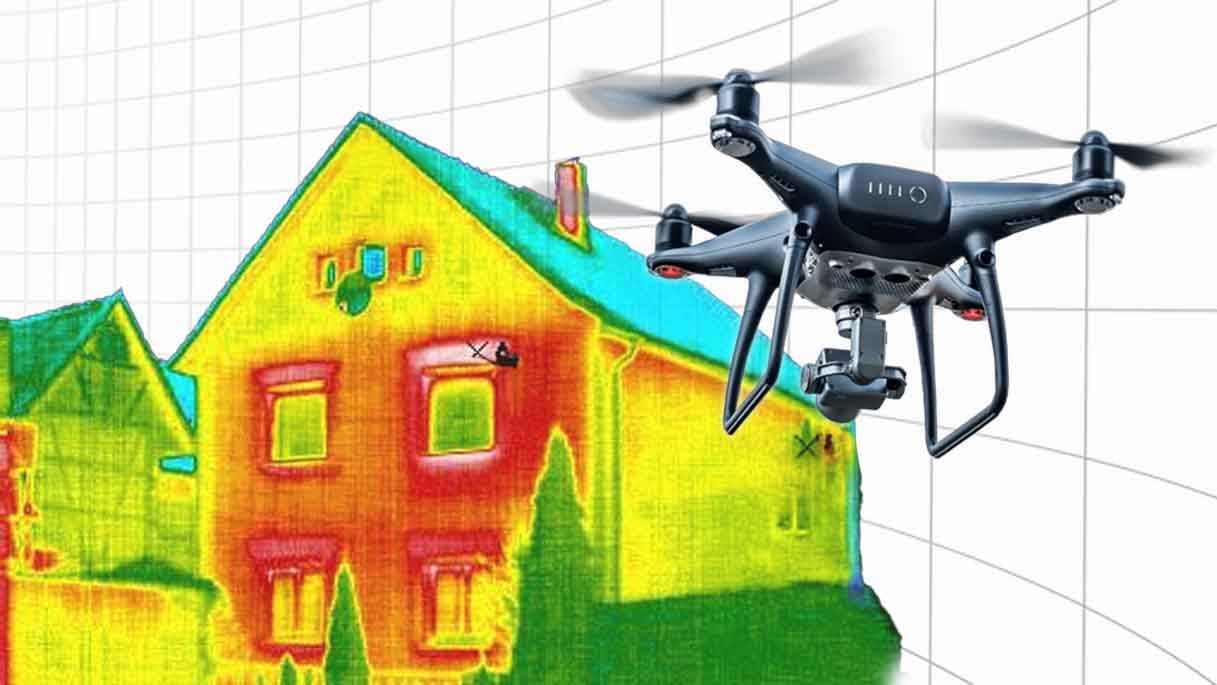
Drones. They've helped create some of the coolest videos you've seen, those 4K ones with great views and vibrant colours, or in movies, that scene in Skyfall. But these unmanned aerial vehicles are proving their work isn't just pretty, but that, when paired with AI, they could help with some of the key pains municipalities and utilities face. In the smart city and utility industries, we've seen drones used for projects in safety, wildfire prevention, leak detection in pipes. And lately, one of the main use cases, we're seeing: building efficiency. With municipalities around the world looking to hit certain emission targets and experiencing energy price surges, as well as high electric demand, cities are looking to understand where energy is lost in buildings, especially considering that in cities like New York, 40% of emissions come from heating and cooling buildings. The UK is set on becoming net zero by 2050. With this in mind, the city of Coventry entered a 15-year partnership with electric utility service provider E.ON to decarbonize the city with innovation and scale as part of the strategy. This is where drones paired with AI come in. The power couple. Within the scheme, the city and the energy provider partnered with startup Kestrix to test camera equipped drones to find homes that are losing heat and could benefit from insulation, all to curb emissions, and also help residents’ bank accounts. Really enables E.ON and Coventry to move at pace in the decarbonization journey within the city. So we're really able to survey houses at mass, which gives us great insight and data into the city and really enables us to see where the most vulnerable customers are and the properties that really need our attention. For the pilot, the city and the companies are surveying Hillfields, an area where there are many old houses that on many occasions need modern insulation. They're checking 4000 homes in the area. So what's the process like of coupling AI and drones? Well, Kestrix partners up with drone companies. The drones, equipped with infrared cameras, fly over homes and collect images and temperature data to see heat loss hot spots. Kestrix ingests the data gathered by the drone into its platform, where through AI, data gets processed and hot spots are interpreted to quantify the rate of heat loss. The algorithm also takes into consideration variables that could affect interpretation, like outside temperature, for example, and then generates recommendations of retrofits. E.ON and Coventry can log in to the SaaS platform and see a regular image of the home or the 3D heat loss version on a map with information and recommendations. It takes a few minutes to gather data on one home with the drone, whereas conventional methods require hours and can be intrusive, meaning teams have to enter the homes. And as we know, AI just processes the data at incredible speed. By having a 3D essentially heat loss map of the entire city of Coventry, the strategic energy partnership has a better sense of actually where to distribute insulation measures. And then of course, once those measures are actually distributed, continue using Kestrix to verify the outcomes of the retrofit measures that are delivered over that 15 year period. It's still a controlled pilot, but the idea is to scale to other areas of the city once output is analyzed. Scale is the key word of this project. Drones allow for a very quick scan and AI leads to a very fast analysis. This means they can do more in a lot less time. Once all the data is gathered and analyzed, there's the question: What comes after understanding where the issue is? Drones collect the data and AI identifies, analyzes, and recommends where the focus needs to be put. But after that, the city will have to come up with a plan to help those homes. There is funding allocated like the Great British Insulation Scheme, which was launched in 2023 with a funding of 1 billion pounds to improve insulation in homes, especially those with lower EPC ratings. The partnership will have to promote these funding so that the technologies serve their purpose. If successful, the city will be an example of how technology can help them reach goals a lot faster.


📰 Latest News

🎬 Kurrant Originals


🎥 Recent Event Coverage

🎯 Featured Case Studies
Real client work behind the news — strategy, M&A and engineering projects we've delivered for cities and utilities.



Stay in the Loop
Get smart cities and utilities insights delivered your way. Choose your channel
Join our WhatsApp Channel