 in Barcelona
 3 to 5 Nov 2026
As we move into the new year, we look back at the stories we covered in 2021. A year that saw cities use technology to become more resilient. As the COVID-19 pandemic proved, you never know what's around the corner. Join us as we take a look at the top trends supercharging our cities and the questions that still need to be answered in 2022. Cities are increasingly turning to AMI to manage water usage. The technology uses two -way communication to send data directly from water meters to a city headquarter, requiring less manpower and better leak detection compared to traditional methods. Vendors tell us a high price tag historically depressed demand, but that's changing. Tampa, Florida has become one of the latest to invest in the technology using a LoRaWAN network provided by Senate to power its smart meters. Valley Water in Australia, the utility is deploying almost a million NBIOT smart meters. Experts continue to debate which connectivity is best for a water utility, but one thing is clear, the drive to digitalize our water distribution networks isn't slowing down. Ultrasonic sensors have long ruled the smart waste market, but that's changing with the rise of radar. Both sensors measure the amount of waste in a bin, but Radar can see through liquids and solids in a way ultrasonic can't. Vendors mainly use radar in small bins because of its limited detection range, but that's expected to change with new innovation, and the price, too, is expected to come down, so it's more affordable to deploy. AI computer vision is also getting traction, as seen here in Amsterdam. The city is using the technology to detect litter and graffiti. And Philadelphia might be next after successfully deploying the technology to detect potholes. While there are some concerns about privacy, edge processing appears to help. The New York Power Authority has invested in a technology that uses the same anomaly detection algorithm found in the Israeli Iron Dome to monitor its transformers, frequently the source of major explosions. The system developed by MPress will shut down the transformer and reroute power if a problem is detected. NYFA is the largest public utility. in the United States, and like many others, it's on a mission to future-proof its resources. The utility is also working with cities across New York to retrofit their streetlights with LEDs. A key requirement, NYPA says cities must invest in control nodes to monitor their streetlight networks in order to participate in its renovation program. The controls allow for the automatic reporting of outages, ultimately minimizing maintenance costs. In 2021, the New York Power Authority equipped 58,000... streetlights with those nodes, another 120,000 or so are in the pipeline. Low -cost air quality sensors favored by consumers and once dismissed by the scientific community for their poor accuracy have emerged as a valuable tool in measuring hyperlocal air quality as seen in San Francisco. The EPA has begun to integrate data from the low-cost sensors into its smoke and heat map of the California wildfires. To overcome the potential for inaccuracies, the EPA has developed a corrective algorithm, a similar approach to researchers from the University of Utah, who developed a machine learning algorithm to measure data from low-cost sensors with the data from the expensive air quality monitors. Kansas City, Missouri is among the early adopters of the solution. But will low -cost air quality sensors ever hold any weight independently from their expensive counterparts? Electric vehicles are poised for a huge year in 2022, and we saw cities make significant investments to support this shift in 2021, building out level two and fast charging stations and a push to tackle their charging deserts. But should cities invest in charging stations with the CCS or the Chatham standard? It's a question at the heart of the plug war. It comes to cities look to make their transportation systems more connected and automated. and a further push to reduce congestion and carbon emissions. Just take a look at Denver, where cars with V2X technology send out signals every second detailing their speed, direction, and other info from their internal sensors to nearby road sensors. Ultimately, the goal is for those roadside units to communicate back to the cars about their traffic conditions and other news. The project uses cellular V2X, and that's a good thing, as the United States this year decided to mandate CV2X. over the other communication protocol, DSRC. But it's not without some controversy. So that's a look at some of the top trends of 2021. How will they evolve in 2022? Be sure to stick with Current Insights as we continue to explore the rise of smart cities.
2021 Year in Review
In this video
-
 Maarten Sukel
AI Lead, City of Amsterdam
-
 Kevin Luteran
Smart Street Lighting NY Program Manager, NYPA
-
 Pierre Emmanuel Gaillardon
Associate Professor, The University of Utah
-
 Ron Stupi
Sr. VP & Chief Operating Officer, Building & Infrastructure Division, NA, Bureau Veritas Group
-
 Máté Lipcsei
Smart City Manager, Commsignia
-
 Jim Misener
Sr. Dir., Product Management & Global C-V2X Ecosystem Lead, Qualcomm
About this video
This video offers a retrospective look at the pivotal year of 2021, focusing on how cities around the world utilized technology to adapt and become more resilient in the face of the Covid-19 pandemic. It delves into the accelerated digital transformations that cities underwent to tackle the challenges posed by the pandemic.
Throughout the video, viewers are presented with various examples of how technology played a crucial role in urban resilience. It highlights the key trends that emerged in 2021. These trends are not only contextualized within the pandemic's challenges but also as part of a broader narrative of urban evolution.
Looking forward to 2022, the video raises important questions about the future of urban living. It prompts viewers to consider how cities can sustain and build upon the digital momentum gained during the pandemic.
This retrospective is ideal for urban planners, policymakers, technology enthusiasts, and anyone interested in the intersection of technology and urban development. It provides a comprehensive overview of the recent past while also offering food for thought about the future of our cities.
The video is recommended for viewers who want to gain insights into how cities have navigated the challenges of the pandemic with technology and what the future may hold for urban landscapes in a post-pandemic world.
Read the transcript machine-generated
Latest Originals
See all 4:45
AI Agents in Digital Twins: Bringing Promises to Life?
 5:57
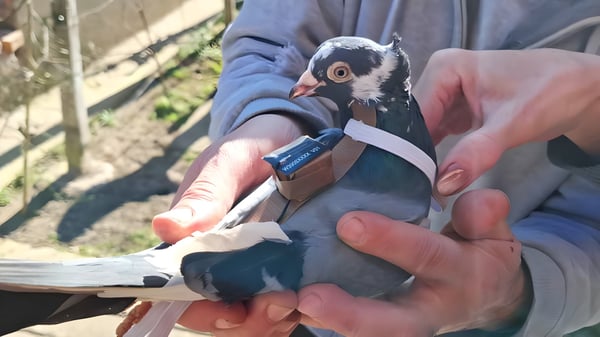
Nature as a Sensor: Rethinking Smart Cities, Utilities
 2:57
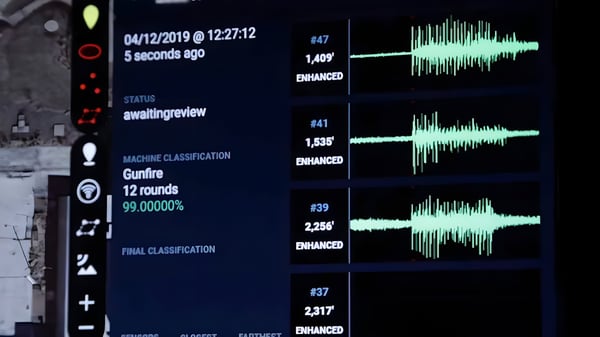
Audio, the Forbidden Fruit of Smart Cities in France
 2:56
Why did the metaverse fail?
 4:54
High-resolution, Predictive Weather Data: The Next Step for Mobility
 5:20
The State of the Smart Traffic Industry in 2026
Latest news
All news- Tivoli Signs Smart City Protocol With Mobile Operator WINDTRE26 Nov 2026
- MicrodB Says Its dBFlash Noise Radar Is The First Homologated In France26 Nov 2026
- National Reconstruction Fund Takes Myriota Investment To A$45M In Series C First Close26 Nov 2026
- Huy Grants Road Permit For 22 Public EV Charge Points Under Wallonia’s Regional Rollout26 Nov 2026
Kurrant advisory
Planning a smart city or utility project? Talk to Kurrant.
Behind these interviews is Kurrant's advisory team, working with utilities, cities and the companies that serve them.
- Strategy AdvisoryKurrant is actively involved in resolving the challenges that cities, utilities and industry players are facing.
- M&A AdvisorySmart city and utility expertise for successful deals, turning insights into strategic gains.
- Engineering & ProcurementBetter engineering and procurement decisions, by identifying and developing digital and IoT solutions across use cases.
Or write to us: contact@kurrant.com
Send us a message