 in Barcelona
 3 to 5 Nov 2026
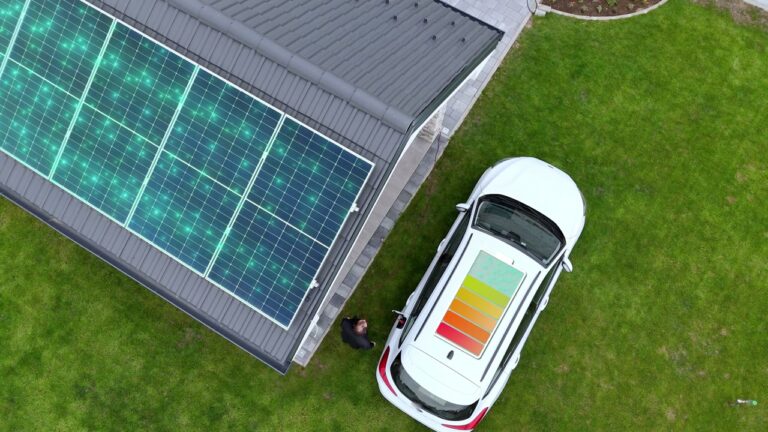
New Orleans is a city where culture and fun are the main stars. But for a few days, it was all about street lighting with the Streets and Area Lighting Conference, or SALC, taking place. At the Hilton Hotel, the event attracted some 900 visitors, according to organizers exhibiting and exploring all the solutions on display. So we took this opportunity to discuss with vendors and utilities how the street lighting industry is doing here in the US. In terms of tech trends, nothing new. The industry is still focused on turning streetlights smart with smart controllers, and when it comes to adding smart city tech to the poles, it’s still mostly about cameras, for security and for traffic management. There are, however, new trends in strategies. When it comes to the infrastructure we saw utilities approaching the different booths offering solar streetlights. As they’ve evolved, with smaller batteries and smart nodes, utilities are exploring them for new build residential communities, to avoid having to build new electrical infrastructure. They're trying to set agreements in place with these residential developers or the city to basically charge a monthly fee for that light and that monthly fee is for the infrastructure, not the energy usage. In terms of strategy, leasing is what they're focusing on. Utilities are exploring smart city tech. They have piloted a lot of solutions in an ‘as-a-service’ manner, but the leasing of the poles to companies, cities and agencies is what is making the most sense to them right now. The smart street lighting industry is going through a sort of upswing. Not huge growth, but new smart street lighting projects are happening, as well as scale. Right now, they seem to have good capital budgets, with utilities like Duke Energy equipping all their streetlights with smart nodes at a very fast pace, as well as Georgia Power looking to follow in their footsteps. However, one of the challenges utilities face is swings, so they have budget one day, and the next it’s cut. Despite the growth, there are several challenges for vendors and utilities now. There’s the fact that street lighting departments in utilities have a lot of staff rotation, making it harder for vendors and utilities to start projects. And then there’s the justification and regulation of smart controllers for utilities. Dimming isn't allowed under regular circumstances, meaning controllers can't work to their full potential. The amount of scrutiny that has to go in these large technology deployment projects, and from a utility on a regulation, they have to be pretty focused on IT and security and getting through that process, which in my mind hasn't been updated with the latest and greatest technologies, it’s taking a lot longer, not just for vendors, but for the organizations who want to buy these new technologies. The process itself needs to be a little, probably a little more efficient and a little more tailored to the new technologies, you know, cloud and mobile and communications and cellular and all that. We have seen smart controller projects fail in the past. Most of the times, it’s due to the wrong technology choice which leads to unexpected costs, lack of control over cellular costs when each light controller has its own SIM card, control software which is not scalable enough to handle large projects or solutions that require more complicated installation and configuration than anticipated. The smaller co-op utilities oftentimes can't manage a lot of complexity, and when you get to smart controllers, oftentimes you're talking about bringing that information back to the office through a cellular network and having a user interface that allows you to see all your lighting. And while that's very valuable, it's something where the overhead is too much for the very small utility. And another of the challenges we discussed with vendors and utilities during SALC is the sourcing of materials, which have to be American made, meaning EU vendors could struggle more. We had challenges in be compliance with the requirements in the market. So starting from the necessary certifications, to be able to sell in the US, this actually gave us the opportunity to innovate even more than what we were doing in Europe. Now, the new regulations that are in place, like the BABA and, all the federal funding that is available in the market, you need to be compliant to them. So the next step for us would be to have a production line here in the US. The interest in deploying smart controllers is still obvious. Talking to major utilities, smart controllers will continue to be a focal point for them, as many of them see the value. The industry will have its ups and downs, but is set to continue its smart street lighting journey, exploring how they fit in the smart city industry as well as how they can find new sources of revenue from this crucial, now more and more controlled infrastructure. From New Orleans, Emma Lozano Doogan.
Inside the Streets & Area Lighting Conference (SALC): Trends and Challenges
What an enlightening week in New Orleans, where the Street & Area Lighting Conference, or SALC, has taken place. We've explored, along with Dave Basil from Terrago, Mohammed Shohebuddin from Clearworld, Kim Gubala from Evluma, and Alexandru Buzazu from Flashnet, as well as major utilities like Georgia Power, the trends in tech and strategy in the streetlighting industry in the US.
View transcript auto-generated








Future-Proof Your Street Lighting
with Open Standards
At Kurrant, we advocate for interoperability in street lighting systems. It reduces costs and ensures your smart lighting infrastructure evolves with the best available technologies, regardless of manufacturer.
📰 Latest News
🎬 Kurrant Originals
🎥 Recent Event Coverage

Featured Case Studies
Real client work behind the news. Strategy, M&A and engineering projects we've delivered for cities and utilities.
Stay in the Loop
Get smart cities and utilities insights delivered your way. Choose your channel
Join our WhatsApp Channel