 in Barcelona
 3 to 5 Nov 2026
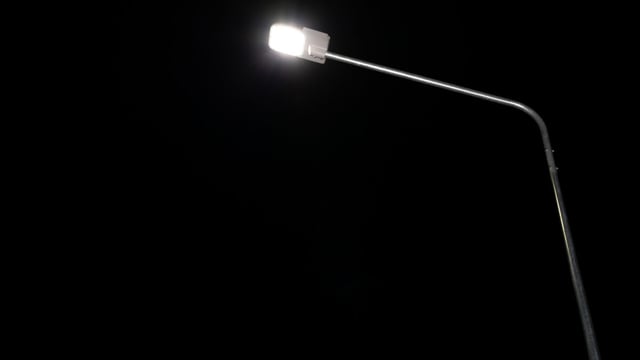
The US electric utility industry has embraced smart technology to manage resources more efficiently, with a strong focus on grid edge projects like smart meters and street lighting controllers. Since they say a smart city starts with smart street lighting, let's focus on the streetlights. Many utilities begin the journey when they look to convert luminaires to LED for the savings, seizing the opportunity to also install smart controllers to bring every lighting point into the control center and collect information on their assets. But digitalization and data gathering don't come without their challenges. In fact, we've seen smart controller projects in the US brought to a halt mid-deployment. Why? Factors like the size of the utility, the value each of these companies gives to street lighting, budgets and justification. We spoke with Tim Hester from Georgia Power to explore trends, challenges and where smart cities and street lighting meet in the US. In Georgia, we've put network lighting controls on all of our roadway fixtures. We started there. We see the benefits of it and we're going to be expanding it more into our commercial, industrial market and our regular commercial markets. Generally, it boils down to cost, because when you're adding a network lighting control to a fixture, you're adding anywhere $100 plus per fixture to that just to have that control. Then there's also usually ongoing fees to get that data into a central management system. And so it's not just a one time cost of the network lighting controls. There's ongoing costs that you have to incorporate. So you've got to be aware of those costs as well. So sometimes people may deploy it. They don't see the benefit and maybe stop. Something that's unique about Georgia Power. It's Southern Company, which is our parent company. We have our own communication system called Southern Linc. So we will actually be deploying Southern Linc SIM chips inside those network lighting controls, and we will be providing all the communications internally within our company, not relying on other cellular manufacturers like AT&T or Verizon or one of those manufacturers to provide that backhaul. We're going to provide that backhaul of data ourselves. Because of Southern Linc, we have this large network across the entire southern system, which is Georgia, Alabama, Mississippi. So we have this pretty large network already built, and it's for our integrated system where our line crews and others are communicating together with each other. But it's a 4G system. It's 4G, 5G system. So we can actually talk and use that bandwidth for these network lighting controls. So it's a really good opportunity for us. At Georgia Power right now we do have a co-location program. So we do allow telecommunications equipment on our poles. We specify poles for that. So we're doing a lot of 4G and 5G applications with folks like Verizon, AT&T, and some of the others, CommScope. And some of the others. And we do a lot of 4G, 5G applications on our lighting poles. So we're doing that. So we are in the space where we're providing cameras on a lot of our lighting poles. We currently are not doing any integration with light fixtures and cameras, although we have a pilot program that we're about to do in one of our cities in a small park where we're going to have a lighting fixture that has a network lighting controls built in, it'll have cameras built in, it will have environmental sensors built in and build its own Wi-Fi network, all in one, one fixture. So you're basically at a town park area, we'll create a Wi-Fi network and have security all based with one fixture. Georgia Power's journey to smart street lighting shows both the hurdles and opportunities US utilities are facing. As the street lighting departments move from just LED to integrating smart controllers, proper planning, as well as the proper tools will be the key to successful projects. Georgia Power is an example of a utility that has bet on smart solutions, but also learned from their first deployments, allowing them to find more efficient ways to reduce costs by relying on internal communications. Also avoiding overlapping. The question now is: Can hardware, network and software suppliers make their solutions more scalable, more plug and play, more interoperable and profitable for large and small utilities?
The Challenges of Smart Street Lighting: A US Utility Perspective
The US electric utility industry has embraced smart technology to manage resources more efficiently, investing in grid edge projects like street lighting controllers. For many, the journey begins with converting luminaires to LED, and then seizing the chance to add smart controllers that connect every lighting point to the control center. But digitalization and data collection bring challenges.
In this episode, we speak with Tim Hester, Lighting Field Operations Manager at Georgia Power, about the hurdles and opportunities shaping smart streetlighting in the US.
View transcript auto-generated








Future-Proof Your Street Lighting
with Open Standards
At Kurrant, we advocate for interoperability in street lighting systems. It reduces costs and ensures your smart lighting infrastructure evolves with the best available technologies, regardless of manufacturer.
Similar Picks
📰 Latest News

🎬 Kurrant Originals

🎥 Recent Event Coverage


Featured Case Studies
Real client work behind the news. Strategy, M&A and engineering projects we've delivered for cities and utilities.

Stay in the Loop
Get smart cities and utilities insights delivered your way. Choose your channel
Join our WhatsApp Channel