 in Barcelona
 3 to 5 Nov 2026
Make sure you vote. Take your family out to vote. Take a friend out to vote. Take somebody you don't even like out to vote. When Michael Nutter became Philadelphia's mayor in 2007, he had his hands full. The senseless murders in Philadelphia that social scientists are calling urban genocide. Money Magazine says Philadelphia is the worst place in the country to sell a home right now. The term smart city didn't really exist. but Nutter was eager to find out how technology could help. Data and analytics drove homicides to a 50-year low. A divided city became connected for all with a bike-sharing system. And a series of green initiatives put Philadelphia on the map as one of the most sustainable cities in America. This is all with technology helping us to deliver services in a much more efficient and timely manner. He did this while joining forces with some of the most influential mayors in the country, whose experiments now serve as a blueprint for smart cities across the United States. It's time to get to know Philadelphia's former mayor, Michael Nutter. Let us have a great city! It's fun! So in May of 2006, we take a poll, a nationally recognized pollster, paid good money, and the poll said that basically no matter who runs, you can't win. Well, how much did we pay for that? Michael Nutter was a surprise favorite in Philadelphia's 2007 mayoral race. He faced two congressmen, a veteran legislator, and a billionaire businessman. And this was just to win his party's nomination. Ultimately, his tough talk on crime set him apart. I really thought that I could bring needed change and leadership. It doesn't matter what the weather's doing, what matters is what you're doing. now a day polls open at seven they close at eight take five minutes if we do our work there is no question what the result will be on election day his plan to create crime emergencies in some of the most violent neighborhoods resonated with voters and he won the election we had 23 police districts or in some jurisdictions they might be called the precincts you know whatever the case may be but we found in looking at all data that nine of those 23 police districts represented 65 % of the homicides in the city. And so that immediately told us, of course, that we should rebalance how we deployed officers. We had a 15 % reduction in homicides in the city of Philadelphia, followed by 8 % the following Philadelphia is the city of neighborhoods and clearly- near neighborhoods that are totally distressed. Philadelphia is America's fifth largest city. It's also home to one of the largest gaps between the rich and poor in the nation that are aimed to change that with technology. We don't have to live in Philadelphia. He pushed to bring more transparency to the government by hiring the city's first chief data officer. Chicago was the only other city at the time to have this position. And he signed the city's first open data policy that mandate. release of city held data. There are issues about privacy and surveillance and you have to have rules and regulations and adhere to them but also explain to the public be honest with the public about what it is that you're trying to do. Transparency grew in importance as data became the fuel for many city services. In 2008 his administration unveiled the 3-1-1 app. It's a non-emergency system where residents could submit service requests and receive updates from the government. We developed service delivery agreements with the departments and agencies, the internal tracking process that said, you know, this is how long it should take to fill a pothole. This is how long it should take to pick up trash if we've missed it. This is how long it should take to tear down a derelict building. And held ourselves to those standards and then measured the actual time it took from complaint to completion against the internal standards that we had set. Again, this is all with technology. Are you excited to ride? I am looking forward to this. This is seven years in the making. Nutter was also a driver behind many of Philadelphia's green initiatives. He unveiled a bike sharing system that aimed to get the entire city on a bike. Stations are placed in all areas residents could pay without a credit card. Best bike to work day ever. In many instances, these bike share programs in the past were primarily downtown initiatives. And in our particular case, we wanted bikes out in West Philadelphia, in North Philadelphia, in South Philadelphia. That gave people greater access at very low cost points to be able to get around their city. It was all part of his plan to make Philadelphia the greenest city in America. To do that, he hired the city's first sustainability officer and together they improved air quality towards federal standards, reduced greenhouse gas emissions by 20 percent, and diverted 70 percent of solid waste from landfills. You know, when I was in office in 2008, people actually paid us money, good money, for our recyclable materials. Under Nutter's administration, Philadelphia sold its trash to companies for $65 a ton. At the time, the United States was sending the bulk of its recycling to China. But in 2018, the country restricted the imports, ending any market for recyclables. And as a result, cities like Philadelphia are now incinerating nearly 50 % of its trash. You know, are there opportunities to create energy from the waste? Can you pelletize it? Can you create new product? Those are questions now on his mind as Nutter takes up his latest job out of office as a board member of Rubicon. Rubicon is a software company whose solutions enable cities to make database decisions about their waste. And if there's anything we learn from this get to know, it's that data and sustainability are two areas Mr. Nutter knows well. Often I'm a translator and helping each side better communicate with each other, trying to understand the goals of the government. government. What is it that you're really trying to accomplish and simultaneously explaining some of the solutions that a great company like Rubicon can provide to that government. Nutter left office in 2016 after serving two terms and after Philadelphia received more than 150 awards for innovative programs and good government practices. If you have questions for Mr. Nutter be sure to hit the button below and as always stick with current ins
Philadelphia Fmr. Mayor Tackled The City’s Top Threats with Data
City leadersCity StrategyPhiladelphia
In this video
-
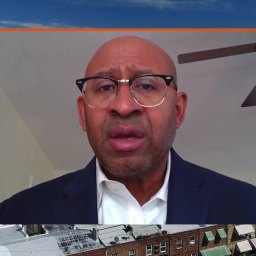 Michael Nutter
Former Mayor, City of Philadelphia
About this video
In the latest installment of "Get to Know" , we feature an in-depth interview with the City of Philadelphia former Mayor, Michael Nutter. Recently named to the board of Rubicon, a pioneering smart waste software company, Nutter delves into his experience and insights on utilizing data and analytics to spearhead Philadelphia's smart city initiatives.
This insightful discussion is particularly beneficial for those interested in urban development, smart city technologies, public administration, environmental sustainability, and data-driven policy making. It offers a unique perspective on how cities can leverage technology for better governance and environmental stewardship. This episode is a must-watch for city planners, environmentalists, policy makers, tech enthusiasts, and anyone curious about the intersection of technology and urban management.
Read the transcript machine-generated
Latest Originals
See all 4:38
Turning Homes into Virtual Batteries: A New Business Model for Utilities
 4:28
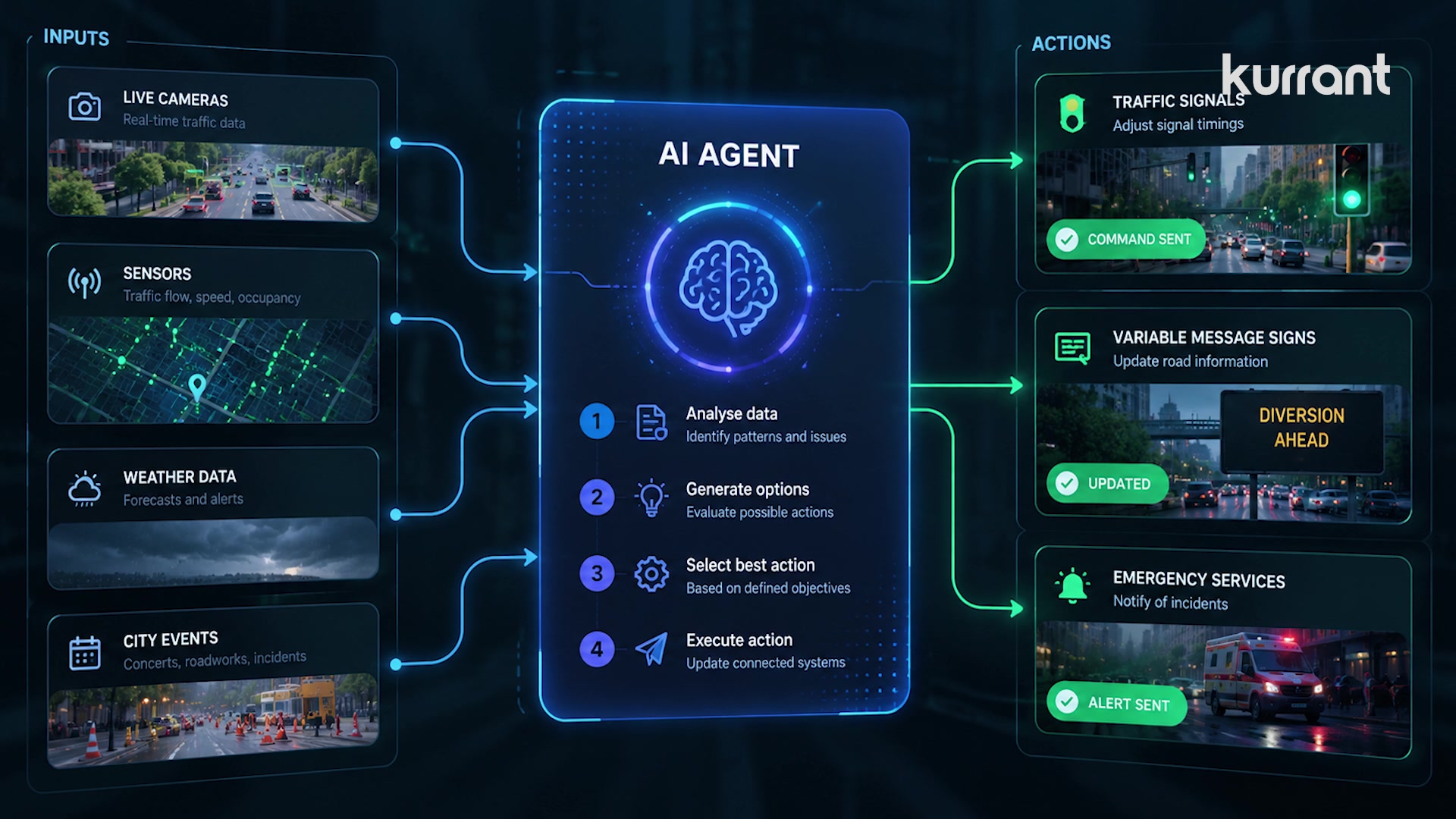
AI in Smart Cities: Real-World Uses, Risks and Investment Shifts
 4:20
Inside Valencia’s Smart City Strategy
 5:20
How Oxfordshire Is Using Low-Cost Sensors to Measure Safer, Greener Streets
 5:17
The Smart Tech Monitoring, Preventing Flooding
 4:24
Miami-Dade County Turns to Smart Solutions, AI to Improve Recycling
Latest news
All news- Bryan Texas Utilities To Replace 50,000 Smart Meters Over Five Years29 Oct 2026
- UK National Parks Launch Wildfire Resilience Programme In Cairngorms29 Oct 2026
- Ameresco Completes $5.9M Water Metering Upgrade Covering 8,000 Meters In Mustang, Oklahoma29 Oct 2026
- Victoria Adds 11 AI Bushfire Cameras To Seven-Unit Plantation Network In A$3.8M Programme29 Oct 2026
Kurrant advisory
Planning a smart city or utility project? Talk to Kurrant.
Behind these interviews is Kurrant's advisory team, working with utilities, cities and the companies that serve them.
- Strategy AdvisoryKurrant is actively involved in resolving the challenges that cities, utilities and industry players are facing.
- M&A AdvisorySmart city and utility expertise for successful deals, turning insights into strategic gains.
- Engineering & ProcurementBetter engineering and procurement decisions, by identifying and developing digital and IoT solutions across use cases.
Or write to us: contact@kurrant.com
Send us a message