The coastal municipality of Burriana in Spain’s Castellón province has brought over 6,300 LED streetlights online through an NB-IoT-enabled remote management system, marking another milestone in the country’s accelerating push toward intelligent public lighting infrastructure.
A Three-Way Partnership Driving the Upgrade
The project is the result of a collaboration between three established players in Spain’s energy and digital services landscape. A joint venture formed by Ferrovial Energía and Endesa selected Telefónica Tech as its technology partner to carry out the digitalisation. The consortium is responsible for financing and executing the upgrade across the municipality, which is home to more than 34,000 residents on the Mediterranean coast.
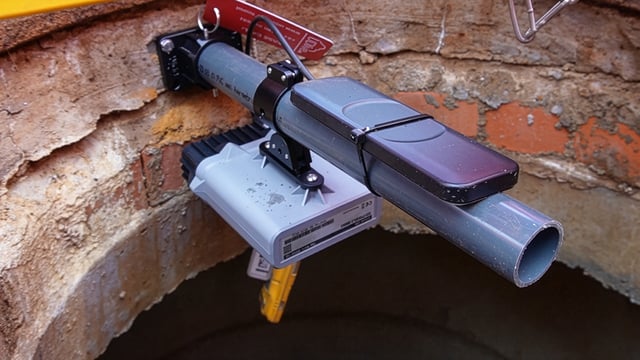
Telefónica Tech deployed its proprietary smart lighting solution using hardware manufactured by Spanish specialist Tellink. Specifically, Tellink’s TSmarT-ZD4i controllers were installed on each luminaire, equipped with NB-IoT connectivity to transmit operational data back to a centralised monitoring platform.
A Granular Light-by-Light Control
Each of the 6,300-plus nodes communicates individually with the central management software, allowing operators to adjust brightness, schedule on/off cycles, and monitor energy consumption at the level of a single luminaire.
This point-to-point architecture distinguishes the approach from cabinet-level control systems, where groups of streetlights are managed collectively. By enabling per-fixture granularity, the system allows Burriana to dim or brighten individual lights based on real-time conditions such as traffic volume, pedestrian activity, or public events.
Energy, Maintenance, and Environmental Gains
The platform enables predictive fault detection by continuously monitoring performance indicators at each lighting point. Rather than relying on scheduled inspections or citizen reports, maintenance crews should be dispatched based on real-time data flagging anomalies such as unexpected energy consumption spikes or lamp failures.
The environmental rationale is equally straightforward. Dynamic dimming in low-traffic periods reduces energy waste, while targeted illumination minimises light pollution, a growing concern for Mediterranean coastal communities with active tourism sectors. The consortium has described the investment as multi-million in scale, though an exact figure has not been publicly disclosed.
Part of a Proven Playbook Across Spanish Municipalities
Burriana is not the first municipality to benefit from this particular consortium model. The same trio of Telefónica Tech, Ferrovial, and Tellink has previously deployed NB-IoT-based lighting solutions in Alcantarilla (Murcia) with 1,200 nodes and Gozón (Asturias) with 5,000 nodes, following pilot projects in Guadalajara, Alcobendas, and Torrejón de Ardoz. More recently, a larger deployment of over 10,000 NB-IoT nodes was carried out in Santiago de Compostela, where the same technology stack is being used to modernise the Galician capital’s entire outdoor lighting network.
The Burriana deployment reinforces a pattern in which Spanish municipalities are increasingly outsourcing both the financing and the technology integration of lighting upgrades to energy-infrastructure joint ventures, with telecoms operators providing the IoT layer.
Spain’s Smart Lighting Market Gathers Momentum
Spain has emerged as one of Europe’s more active markets for connected street lighting. High electricity prices, EU Green Deal mandates, and national sustainability programmes have driven municipalities across the country to move beyond basic LED retrofits toward fully networked lighting systems. Cities such as Barcelona, Madrid, Valencia, and Málaga have led the way with adaptive streetlighting pilots, and mid-sized municipalities are now following suit.
The global smart street lighting market is projected to reach approximately USD 3.6 billion in 2026, with Europe holding the largest regional share, according to industry estimates. Within Spain, the addressable opportunity remains significant: as of 2020, the country had an estimated 4.6 million luminaires that were either sodium vapour or LED without remote control, all of which are candidates for connected upgrades.