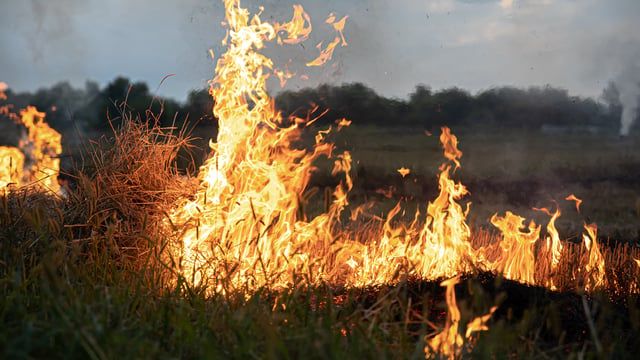
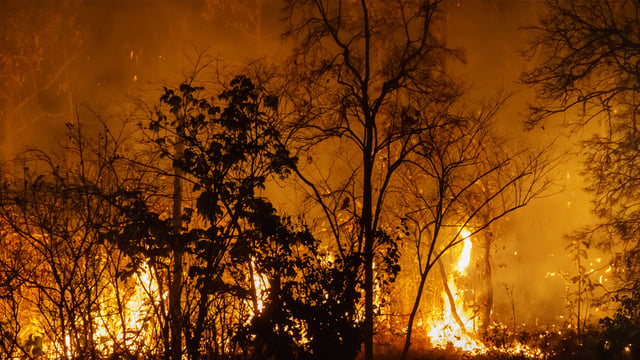
The Arizona Department of Forestry and Fire Management has activated a statewide network of AI-powered wildfire detection cameras, marking a significant expansion of the state’s early-warning infrastructure as fire risk conditions are already emerging weeks ahead of schedule.
Seven Cameras, Statewide Coverage Across High-Risk Terrain
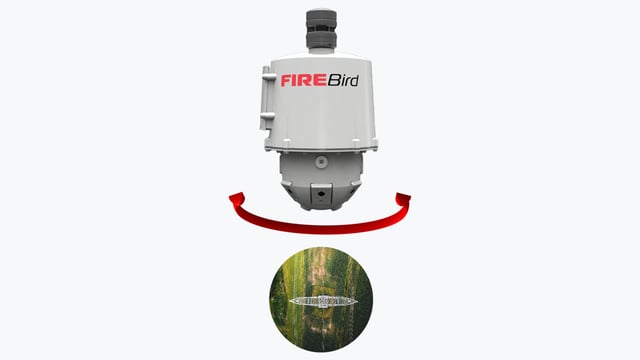
Governor Katie Hobbs formally unveiled the AZFIRECAM program on March 27, coinciding with a ribbon-cutting event for a new DFFM dispatch and incident command center. Seven cameras supplied by San Francisco-based Pano AI have been positioned across a diverse range of fire-prone geographies. Each unit operates around the clock, conducting 360-degree sweeps and feeding continuous visual data into a cloud-based AI system that scans for smoke signatures.
When the system detects a potential ignition, it immediately routes alerts to the Arizona Dispatch Center, cooperating regional dispatch centers, and DFFM operations staff. DFFM dispatchers can also monitor the camera feeds directly from their workstations, integrating the AI alerts into existing response workflows without requiring a separate system. The program is funded from last year’s state budget allocation and carries an annual operating cost of approximately $240,000.
Filling the Gap Left by Declining Human Observation
The deployment addresses a structural gap that has grown as human-staffed fire lookout towers have declined across the western United States. DFFM Director of Operations Russ Shumate noted that the cameras compensate for reduced human coverage by delivering faster and more precise location data than traditional observation methods, even if their range does not match that of a tower-based observer. Each camera monitors a 10-mile radius.
The cameras became operational roughly two weeks before the March 27 announcement, and DFFM officials indicated at least one potential fire event was flagged by the system on the day of the press conference itself. DFFM Fire Management Officer John Truett also noted that this year’s vegetation drying is running four to six weeks ahead of normal, conditions that have already pushed the state past the window for prescribed burns in many areas.
A New Dispatch Center to Match
Alongside the AZFIRECAM rollout, DFFM has completed construction of a new 7,000-square-foot dispatch and incident command facility. The center integrates the AI camera feeds alongside other operational tools to support firefighting coordination and resource allocation. State and federal fire analysts project that 2026 fire activity will ramp up quickly across southern and southeastern Arizona, driven by long-term dryness, abundant fine fuels, and drought-stressed vegetation. Forecasters expect the fire front to push northward toward the Mogollon Rim and northeastern Arizona by May.
Last year’s fire season produced more than 1,600 fires across state, federal, and tribal lands in Arizona, down 26% from 2024, but agency officials cautioned that reduced burn acreage has left a larger fuel load in the landscape heading into this season.
Pano AI’s Expanding Footprint in Arizona
The DFFM deployment is not Pano AI’s first partnership in Arizona. Arizona Public Service (APS), which serves approximately 1.4 million homes and businesses across 11 of the state’s 15 counties, previously deployed more than 30 Pano AI cameras across elevated sites in Flagstaff, Payson, Prescott, Sedona, north Phoenix, and southeastern Arizona. That partnership, formalized in 2025, already yielded a documented result in December 2024 when a camera in Payson detected smoke from the Horton Fire in the Tonto National Forest and alerted APS fire mitigation specialists before human observers had spotted the blaze. The U.S. Forest Service’s Coronado National Forest also confirmed use of Pano AI technology, as did the Fry Fire District in Cochise County, which has used the system for roughly nine months.
Pano AI cameras use ultra-high-definition imaging with AI-driven computer vision to detect smoke within a 15-mile radius of each station. The platform delivers map overlays, weather data, and live video feeds to give dispatchers and fire managers a full operational picture. According to the company, in 2025 its system sent alerts for 735 vegetation fires globally, with more than half representing the first known detection of each event. Pano AI currently monitors more than 50 million acres across the United States, Canada, and Australia.
The AI cameras boom in wildfire-prone areas of the western United States is part of a wider pattern that Kurrant has been tracking across multiple deployment contexts. When Rancho Palos Verdes in California deployed Pano AI cameras covering a 15-mile radius with 360-degree HD cameras, the project cost $700,000 for five years and was funded from a $1.5 million state allocation. That California deployment and Arizona’s AZFIRECAM program illustrate how states are increasingly turning to the same underlying platforms as a cost-effective alternative to the staffed tower infrastructure that preceded them.
Broader Technology Context
The pivot to AI-assisted detection reflects a wider shift in public safety infrastructure, where computer vision systems are taking on monitoring roles previously dependent on human observation. The human-verification step built into AZFIRECAM’s workflow, where dispatchers can review live camera footage before mobilizing resources, is a design pattern that has become standard across similar deployments. Earlier Kurrant coverage of AI wildfire camera deployments across the western United States documented this same verification-before-notification architecture as a key factor in operational adoption by fire agencies skeptical of false-positive rates.
The AZFIRECAM deployment is also timed to coincide with a period of heightened political attention to wildfire preparedness at the state level, following a series of damaging fire seasons across the Southwest. Whether seven cameras prove sufficient coverage for a state the size of Arizona remains an open operational question, though DFFM officials have not publicly disclosed plans for expansion at this stage.