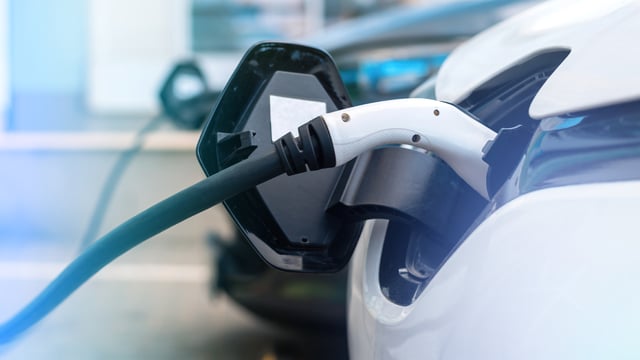
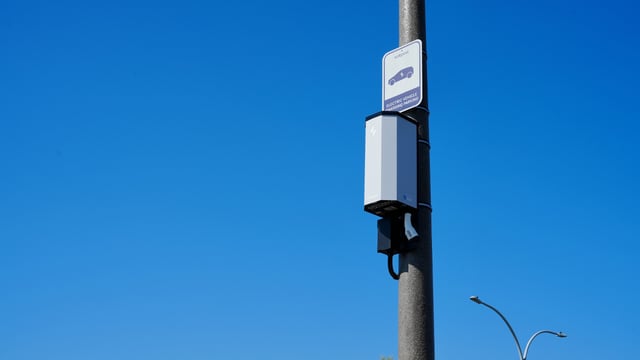
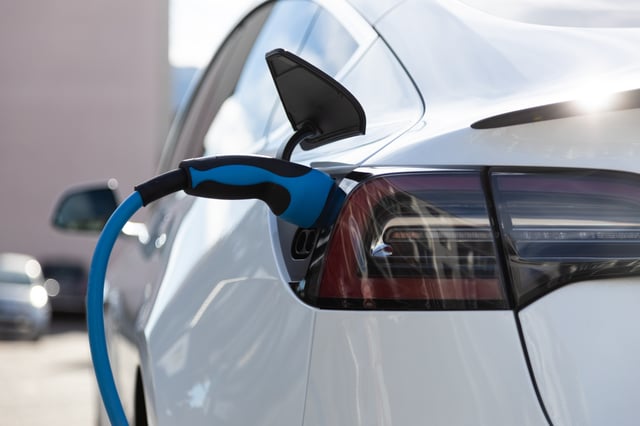
Dubai Municipality has launched a public EV charging initiative covering 600 parking spaces across parks, beaches, and recreational facilities throughout the emirate, backed by a planned investment of AED 150 million (approximately EUR 37million). Delivered in partnership with Emarat EV Charging Stations Company (UAEV), the programme is structured as a public-private partnership and positions public green spaces as active nodes within Dubai’s clean mobility network.
A Phased Rollout Tied to Recreational Destinations
The first phase involves installing 75 EV supercharging stations across 150 parking bays, with completion expected within two years. Deployment will prioritise major destination parks, neighbourhood parks, and public beaches, targeting both high-footfall visitor areas and community spaces used by residents on a daily basis. The remaining capacity, extending to 600 spaces in total, is expected to follow in subsequent phases, though specific timelines for those later stages have not been publicly confirmed.
The placement strategy reflects a deliberate effort to integrate charging into locations where dwell time is naturally long, reducing the friction often associated with charging stops and making the experience of powering an EV a byproduct of existing leisure activity rather than a dedicated trip.
UAEV’s Role and Network Context
UAEV, a joint venture between the UAE Ministry of Energy and Infrastructure and Etihad Water and Electricity, is the operating partner responsible for delivering and managing the charging infrastructure. The company already operates what it describes as the largest EV network in the Northern Emirates, with 122 charging ports currently active, including several ultra-fast units, and plans to expand that to 300 by end of 2025 as part of its broader national rollout.
The Dubai Municipality collaboration extends UAEV’s presence into community-facing public infrastructure, a segment that has historically been underserved relative to highways, commercial facilities, and government buildings.
Policy Alignment and Strategic Framing
The initiative is explicitly aligned with three overlapping UAE policy frameworks: the Greenery and Parks Strategy 2040, which aims to significantly expand Dubai’s network of parks and public green spaces by 2040; the Dubai Economic Agenda D33, which encourages private sector participation in public infrastructure delivery; and the UAE’s national clean mobility target, which calls for electric vehicles to represent 50% of the total vehicle fleet by 2050.
The project also feeds into the UAE Net Zero by 2050 Strategic Initiative and the UAE Energy Strategy 2050, both of which place electrified transport among the priority levers for reducing national carbon output.
Growing Pressure on Dubai’s Charging Network
The timing reflects genuine supply pressure. Dubai recorded more than 40,600 EV registrations in the first half of 2025 alone, with the broader UAE pre-owned EV market growing 41% year on year, according to data from Dubizzle’s Annual Pre-Owned Electric Car Market Report 2025. Dubai’s public charging network has surpassed 1,270 stations, but with fleet growth accelerating and the ratio of vehicles to public chargers under continued strain, expanding charging access in high-traffic public locations is increasingly pressing.
IMARC Group projects the UAE electric vehicle market to reach USD 11 billion by 2033, at a compound annual growth rate of 18.5% through the forecast period. That trajectory makes infrastructure buildout at public venues not merely supportive but structurally necessary.
The unification of EV charging tariffs in 2024, which standardised rates across the UAE and eliminated pricing uncertainty for drivers, has been cited as a factor accelerating adoption, particularly among buyers who had previously hesitated over cost unpredictability.
Public Space as Mobility Infrastructure
What distinguishes this programme from conventional urban charging rollouts is the deliberate co-location of charging with recreational activity. By embedding superchargers within parks and beaches, the municipality is expanding on a model that is gaining traction in several European cities, where leisure destinations are being repositioned as infrastructure hubs. Kurrant has previously covered how public-private models are accelerating EV charging deployment across different contexts, including France’s Elinvest vehicle, which mobilised a EUR 40 million fund to support local authorities in expanding public charging networks.
Dubai Municipality has signalled continued openness to private sector collaboration across its parks and public facilities portfolio, framing the UAEV partnership as a replicable model for future infrastructure concessions.